Midterm Elections 2026: Why a Vote in America on 3 November Reaches Your Loan, Your Fuel and Your Savings
On 3 November Americans choose a new House, a third of the Senate and 39 governors. The result will not change the Federal Reserve overnight, but it will shape the Iran war, tariffs and the dollar. Here is the chain from Washington to a household in Europe.
Die kurze Antwort
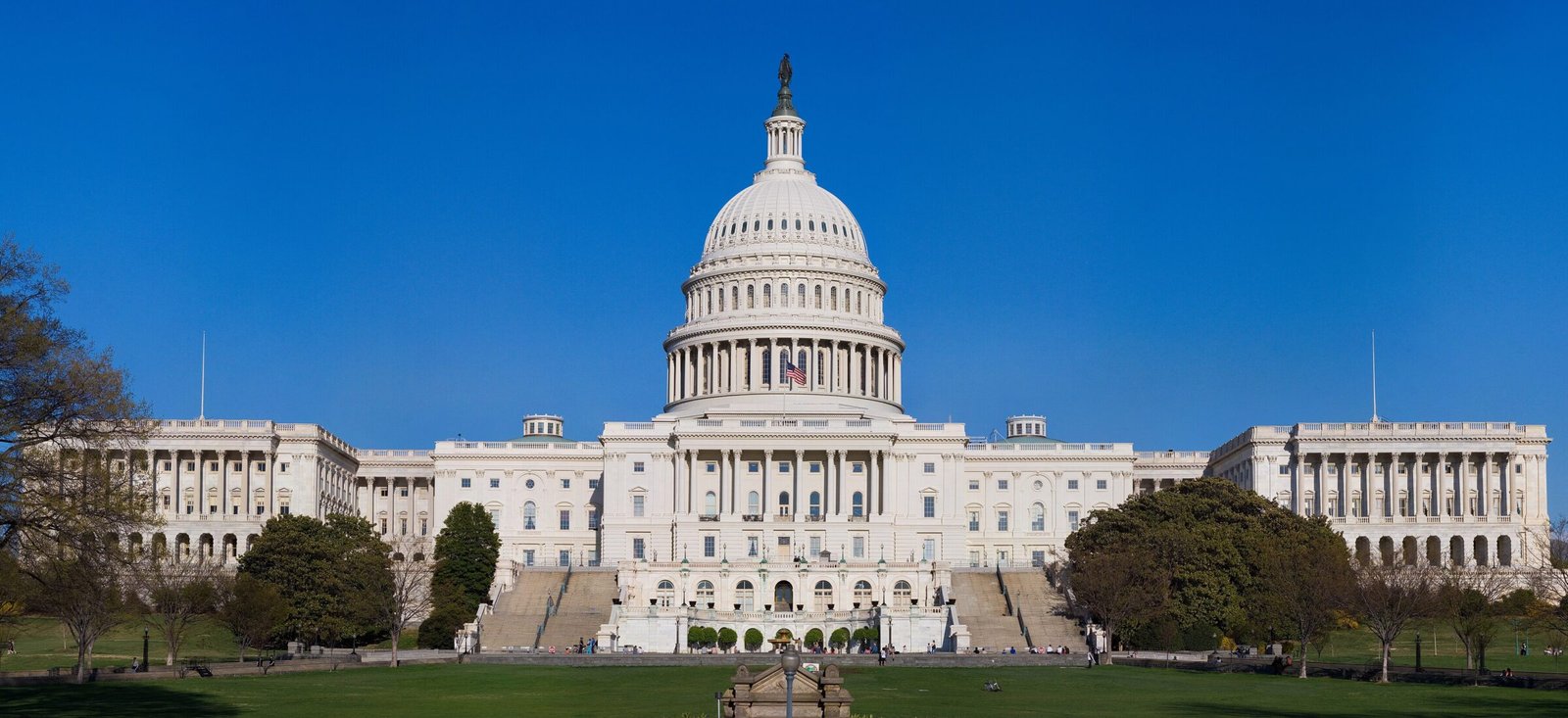
The 2026 US midterm elections on 3 November decide who controls Congress for the last two years of Donald Trump's term. Republicans hold the House 218-214 and the Senate 53-47. Congress controls the budget, war powers and investigations, so the result can shape the Iran war, oil prices and the dollar, which in turn affect fuel, loans and prices far outside the United States.
Election day in the United States is Tuesday, 3 November. By then tens of millions of Americans will already have voted early. The ballot is long: all 435 seats in the House of Representatives, about a third of the Senate, governors in 39 of the 50 states and nearly every state legislature, according to a Reuters explainer.
It is easy to treat this as an American affair. It is not. The country that elects this Congress is fighting a war with Iran, prints the currency in which oil is sold and sets the interest rate that the rest of the world watches. A vote in Ohio or Georgia can end up, by a long but traceable road, in the price of diesel in Niš.
What is actually at stake
Midterms are held halfway through a presidential term. The president is not on the ballot, but his ability to govern is. Today Republicans control both chambers: the House by 218 to 214, with two vacancies, and the Senate by 53 to 47. Democrats need a net gain of four seats in each chamber to take control. Around ten Senate races, including Maine, Ohio, North Carolina, Iowa and Georgia, are seen as decisive.
The political weather is rough for the White House. A Reuters/Ipsos poll in September put President Donald Trump’s approval at 32%, the lowest of his presidency. Democrats appear more motivated to vote, although Reuters cautioned that a Democratic landslide is far from assured, citing Republican spending advantages and voters’ lingering scepticism of Democrats. Money is flowing at record levels: $3.8 billion in political advertising had aired by 12 October, and Elon Musk alone has spent about $366 million supporting Republicans.
What do voters say they care about? Prices. Groceries, housing, healthcare and energy. Reuters found the war’s effect on fuel costs biting into farmers and truckers in a swing district in Nebraska. Americans, in other words, are voting on the same thing Europeans are complaining about at the pump.
| The 2026 midterms in numbers | |
|---|---|
| Election day | 3 November 2026 |
| House of Representatives | all 435 seats; Republicans hold 218-214 |
| Senate | about a third of seats; Republicans hold 53-47 |
| Governors | 39 of 50 states |
| Seats Democrats need to flip each chamber | net gain of 4 |
| Trump approval (Reuters/Ipsos, September) | 32% |
| Political ad spending by 12 October | $3.8 billion (record) |
| Federal Reserve rate (held 28 October) | 3.75%-4.00% |
| Market odds of a December rate rise | about 85% |
Why Congress matters for a war
The US Constitution gives Congress, not the president, the power to declare war, raise taxes and spend money (Article I, Section 8). The War Powers Resolution of 1973 adds a procedure: the president must report to Congress when he sends forces into hostilities, and must withdraw them within 60 days unless Congress authorises the operation, with a possible 30-day extension. Presidents of both parties have stretched those rules, and courts have mostly stayed out of the dispute. But a Congress controlled by the opposition can hold hearings, demand documents, refuse funding and make every step of a war politically expensive.
That is why oil traders care. President Trump had said Washington would not strike Iran before the midterms, and investors are bracing for possible attacks soon after, The National reported. A result that strengthens the president’s hand and a result that ties it would send very different signals to the oil market. Our report on how the Iran war travels from the Strait of Hormuz to your fuel tank follows that chain in detail.
The Fed, the dollar and your money
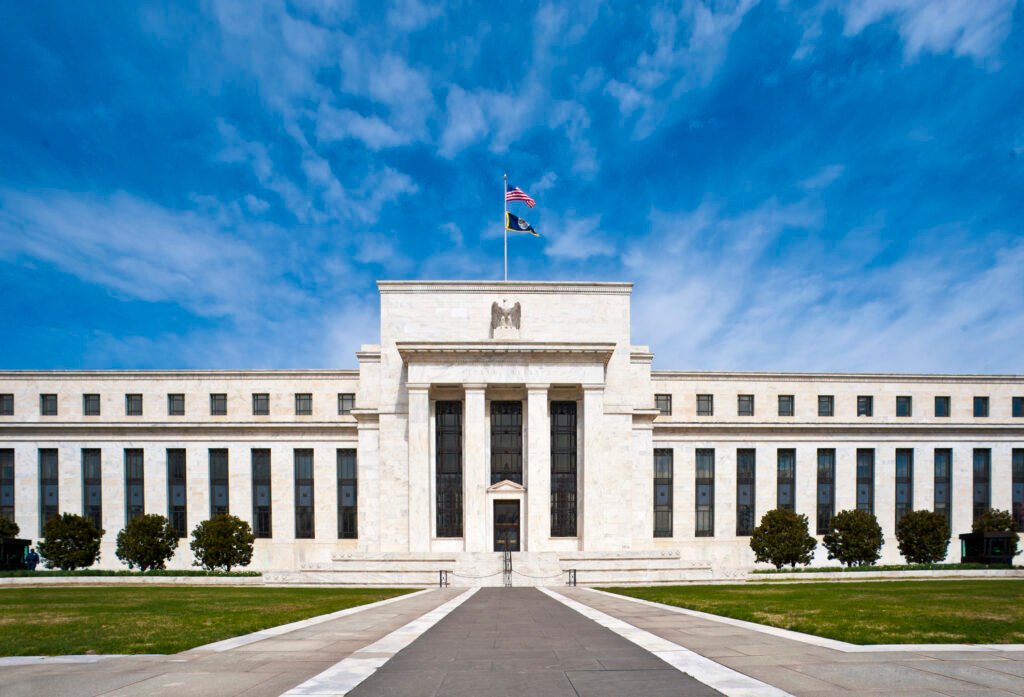
Five days before the vote, on 28 October, the US Federal Reserve left its key interest rate at 3.75% to 4.00%. The decision was not unanimous. Two of twelve voters, Governor Lisa Cook and Cleveland Fed President Beth Hammack, wanted an immediate rise of a quarter of a percentage point, Admiral Markets reported. The Fed’s statement said simply: “Inflation remains elevated.”
The numbers explain why. US consumer prices rose 3.7% in the year to September, and energy prices by 20.4%, according to the Bureau of Labor Statistics. Futures markets now price about an 85% chance that the Fed, chaired by Kevin Warsh, raises rates again on 9 December.
Formally the Fed is independent of elections. In practice the Congress elected on 3 November confirms Fed nominees, oversees the central bank and writes the budget that drives government borrowing. And the inflation the Fed is fighting is driven largely by energy, which brings us back to the war.
When American rates are high or expected to rise, money flows into dollar assets and the dollar strengthens. That is roughly what has happened: the euro traded around $1.11 at the time of the Fed decision, close to its weakest level in about a year and a half. In Serbia, where the National Bank keeps the dinar close to the euro at about 117.5 dinars, one dollar cost 105.68 dinars on 27 October, 3.4% more than a year earlier, according to the NBS rate list reported by Kurir.
Bringing it home: what changes for an ordinary household
Your loan. Most housing and consumer loans in Serbia and the eurozone are tied to the euro and to Euribor, which follows the European Central Bank, not the Fed. A US rate rise does not change your instalment directly. It matters indirectly: if a stronger dollar and dearer oil keep European inflation high, the ECB has less room to cut.
Your fuel and heating. Oil and gas are priced in dollars. A strong dollar makes every barrel more expensive in euros and dinars. If the midterm result is followed by escalation in the Gulf, the war premium and the exchange rate can rise together.
Your savings and remittances. For families who receive money from relatives in the United States, a strong dollar means more dinars or euros for every transfer. For anyone holding savings in an index fund, American politics matters because American companies make up the bulk of most global indices, a point that Friday’s technology sell-off made painfully clear.
Your shopping basket. Congress has constitutional authority over trade and tariffs, even if recent presidents have used emergency powers to impose them. A Congress more willing to challenge the White House could change the direction of trade policy, which affects European exporters and, through them, jobs and prices.
What comes next: three scenarios
These are scenarios, not predictions. Polls can be wrong, and close races may take days to count.
Republicans keep both chambers. The White House keeps a free hand on Iran, tariffs and the budget. Markets would read this as continuity. If it is followed by new strikes on Iran, the oil premium is likely to rise, and with it the pressure on the Fed in December.
Democrats win the House, Republicans keep the Senate. The most common midterm outcome in modern American history for a president’s party is to lose seats. A Democratic House could launch investigations, use its control of spending as leverage and challenge war operations. Expect more political noise and harder budget fights, which can unsettle markets in the short term.
Democrats win both chambers. The president would face a Congress able to block legislation, slow confirmations and pass war-powers resolutions, though he would retain his veto. Policy on Iran and trade would become a negotiation rather than a decision.
What to watch
The first results on the evening of 3 November, US time, which is the early hours of 4 November in Europe. The close Senate races named above. Any statement on Iran in the days after the vote. The Fed’s decision on 9 December. And the dollar: if it keeps rising, Europeans will pay for American politics at the petrol station before they read about it in the newspaper.
Frequently asked questions
When are the 2026 midterm elections?
On Tuesday, 3 November 2026. Early voting had already begun in many states weeks before.
What is at stake in the 2026 midterms?
All 435 House seats, about a third of the Senate, 39 governorships and nearly every state legislature. Republicans currently hold the House 218-214 and the Senate 53-47; Democrats need a net gain of four seats in each chamber.
How do midterms affect the president?
If his party loses a chamber, the opposition can block legislation, control spending, open investigations and challenge military action under the War Powers Resolution. The president keeps his veto and his command of the armed forces.
How do midterms affect the stock market and the dollar?
Elections change expectations about taxes, spending, trade and war. Those expectations move bond yields, the dollar and share prices. In 2026 the link runs mainly through the Iran war and oil.
Will the dollar get stronger against the euro?
It depends mainly on the Fed and the oil price. Markets priced about an 85% chance of a US rate rise on 9 December. A rise would tend to support the dollar; a US-Iran deal that lowers oil and inflation would work the other way.
How does the US election affect people in Serbia?
Mostly through prices set in dollars, above all fuel, and through the exchange rate. Serbian loans are tied mainly to the euro and the ECB, so the effect on instalments is indirect.
Sources
- Reuters via Khaleej Times, US midterm elections 2026: all you need to know (19 October 2026)
- Admiral Markets, FOMC October 2026: Fed holds rates in a 10-2 vote
- The National, Oil prices set for sharp monthly rise (30 October 2026)
- US Bureau of Labor Statistics, Consumer Price Index
- Federal Reserve, press releases
- US Constitution, transcript (National Archives)
- War Powers Resolution, 50 U.S.C. chapter 33 (Cornell LII)
- Kurir Biznis, NBS exchange rate list, 28 October 2026