The Ozempic Lawsuit Will Be Decided by One Word: Probably
More than four thousand people in the United States say a weight-loss drug paralysed their stomach. The Ozempic lawsuit will not turn on whether they are ill, but on whether a court accepts that the drug probably made them ill. That is exactly the question on which Europe is about to change its rules.
La risposta breve
In the US Ozempic lawsuits, plaintiffs must show that semaglutide drugs more likely than not caused their digestive injury and that the warnings were inadequate. In October 2026 about 4,025 cases were pending in federal multidistrict litigation, with no trial and no settlement. Europe’s new product liability rules will ease that burden from December 2026.
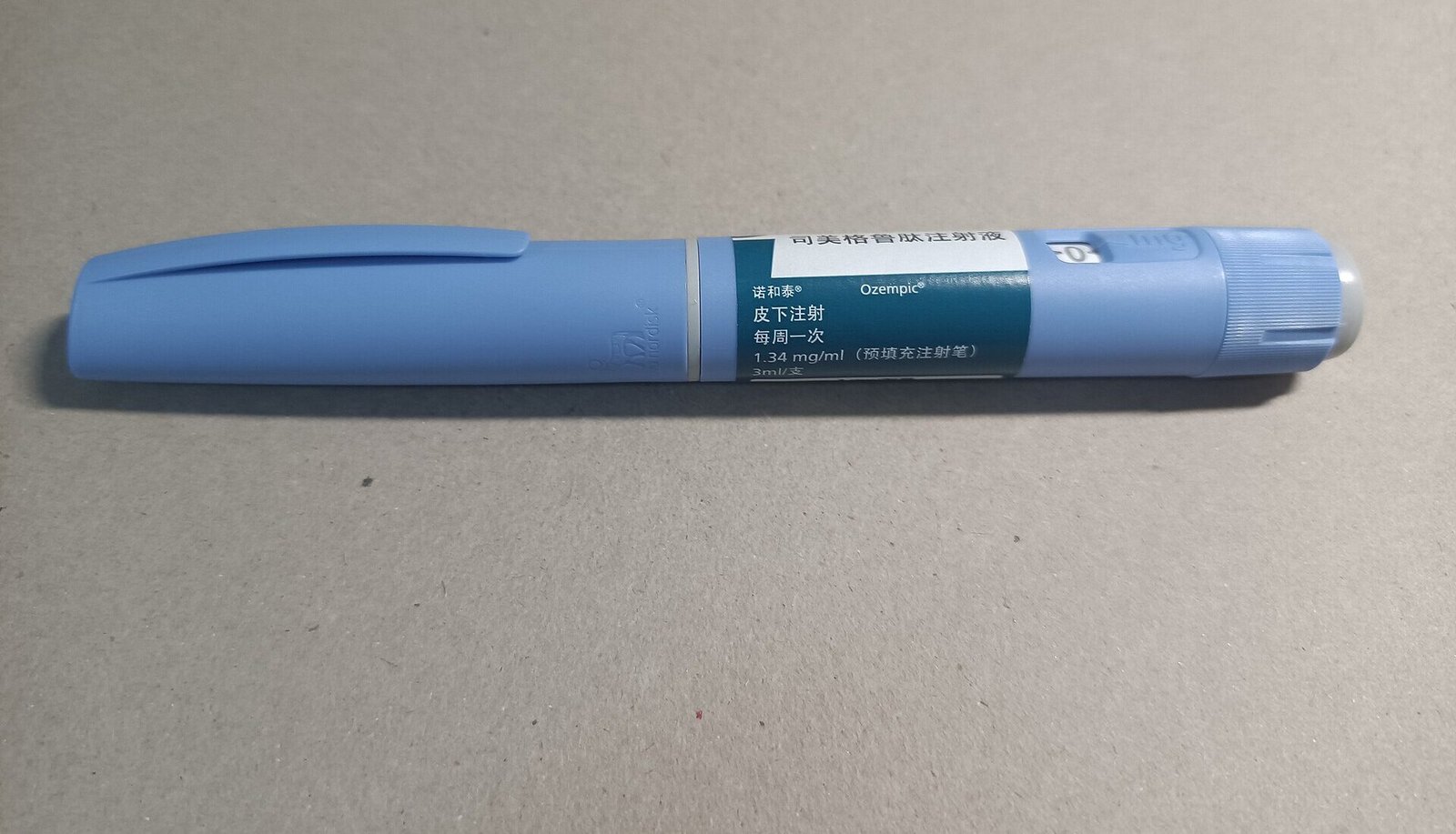
Few medicines have defined a decade the way semaglutide has. It is sold as Ozempic for diabetes and as Wegovy for weight loss, and it is prescribed to millions. With fame came something else: one of the largest drug injury proceedings in American courts.
By October 2026 about 4,025 cases were pending in federal multidistrict litigation (MDL) No. 3094, before Judge Karen S. Marston in the Eastern District of Pennsylvania. Plaintiffs allege gastroparesis, a stomach that empties too slowly, as well as ileus and intestinal obstruction, and say the warnings came too late or said too little. A second, younger proceeding, MDL 3163, gathers nearly 250 claims over sudden vision loss known as NAION. The manufacturers dispute the claims, and no court has found that the drug caused any plaintiff’s injury.
Ozempic lawsuit 2026: what plaintiffs must prove
Every Ozempic lawsuit has two layers. The first is general causation: can this class of drug cause this kind of injury at all? The second is specific causation: did it cause this injury, in this person, rather than diabetes, which can itself slow the stomach?
The court has already narrowed the field. Under an order of August 2025, plaintiffs must show a formal diagnosis, such as a gastric emptying study, not just symptoms. That single procedural decision filters out a large share of claims and shows where such cases are really fought: not in a dramatic courtroom, but in quiet rules about what counts as evidence.
| Digestive injury claims | Vision loss (NAION) | Thyroid cancer | |
|---|---|---|---|
| Federal proceeding | MDL 3094, about 4,025 cases | MDL 3163, nearly 250 cases | None |
| What regulators say | US label updated with digestive warnings, including ileus (2023) | EMA (2025): very rare side effect, up to 1 in 10,000 users | EMA (2023): evidence does not support a causal link |
| Main legal hurdle | Diagnosis and specific causation | General causation | No mass claim |
| Status, October 2026 | No trials, no settlement | Early discovery | — |
Is there an Ozempic lawsuit over thyroid cancer?
This is one of the questions people search for most, and the honest answer is: not on any scale. The US label carries a boxed warning because semaglutide caused thyroid C-cell tumours in rodents. In October 2023 the European Medicines Agency’s safety committee reviewed the human data and concluded that they do not support a causal link with thyroid cancer. An animal signal opens an inquiry; it does not close one. That is exactly the distinction courts have to make.
How would a European court weigh an Ozempic lawsuit?
Here the American case meets a European body of law that Legal Smart follows closely. In Projektili pravde (2024), the Niš lawyer and author Srđan Aleksić published a collection of Italian judgments concerning soldiers who fell ill after serving where depleted uranium had been used. Their reasoning applies directly to any drug injury claim.
Italy’s Council of State held, in decisions the book reproduces, that the absence of unambiguous scientific references does not prevent a court from recognising a causal link. For legal purposes, causation may rest on statistical probability. Once a claimant documents exposure, the burden shifts to the administration, which must show an independent and exclusive cause if it wants to avoid liability. Absolute certainty, the court wrote, is not required.
That is a different philosophy from the US federal approach, where expert evidence must first pass the judge’s reliability review under Rule 702 before a jury ever hears it. Neither approach is fairer in the abstract. One protects defendants from weak science; the other protects claimants from the impossibility of perfect science.
The European Union is now moving towards the second view. Its new Product Liability Directive, which applies to products placed on the market from 9 December 2026, allows courts to presume that a product was defective, or that the defect caused the damage, where the claimant faces excessive difficulty because of technical or scientific complexity. Pharmaceutical lawyers have already identified medicines as the area most affected. Serbia’s Law on Obligations, in Article 173, has long presumed that damage arising in connection with a dangerous thing or activity originates from it.
What the Ozempic lawsuit teaches beyond America
For doctors, the lesson is documentation. A gastric emptying study, a dated prescription and a recorded dose will decide more cases than any expert report. For lawyers, the lesson is that the standard of proof is itself the case. For students, the Ozempic lawsuit is a living example of the question every legal system must answer: who bears the risk of scientific uncertainty, the patient or the manufacturer?
As we wrote about the state’s duty to protect, the law does not need certainty to act; it needs a rule about who carries the doubt. Our reports on what Fukushima compensation asked of victims and on tissue evidence in depleted uranium cases show the same pattern: where the rule is clear, people are compensated; where it is not, they are asked for proof no one can give.
Frequently asked questions
How many cases are in the Ozempic lawsuit?
About 4,025 cases were pending in federal MDL 3094 in the Eastern District of Pennsylvania in October 2026. A separate proceeding over vision loss (NAION), MDL 3163, had nearly 250.
Is there an Ozempic lawsuit over thyroid cancer?
There is no federal mass proceeding over thyroid cancer. The US label warns of C-cell tumours seen in rodents, but the European Medicines Agency concluded in 2023 that the evidence does not support a causal link in humans.
Are there Ozempic settlement amounts yet?
No. By October 2026 there had been no trial and no global settlement, so figures circulating online are law-firm estimates. The manufacturers dispute the claims.
Would the case be easier in Europe?
Possibly. The EU’s new Product Liability Directive, which applies to products placed on the market from 9 December 2026, lets courts presume defect or causation where scientific complexity makes proof excessively difficult.
Sources
- S. Aleksić, Projektili pravde (Niš, 2024), chapter 7 and annex of Italian judgments
- Drugwatch, Ozempic lawsuit status (October 2026; the site works with plaintiff law firms)
- MDL Update, MDL 3094 docket summary
- EMA, PRAC meeting highlights, 23–26 October 2023 (GLP-1 medicines and thyroid cancer)
- EMA, PRAC concludes NAION is a very rare side effect of semaglutide (June 2025)
- Directive (EU) 2024/2853 on liability for defective products