Was That TV Ever Really $999? The Law Behind Black Friday’s “Original” Prices
In 2008 a Black Friday crowd killed a Walmart worker and the fine was $7,000. Today the stampede is online and the danger is quieter: a strikethrough price that may never have existed. What the law says about fake discounts, fake reviews and your rights.
الإجابة المختصرة
Many are, but sellers may not invent the “original” price. The FTC’s Guides Against Deceptive Pricing (16 CFR 233.1) treat a former price as fictitious unless the item was genuinely offered at it for a reasonably substantial period, and California generally requires it to have been the prevailing market price within the previous three months.
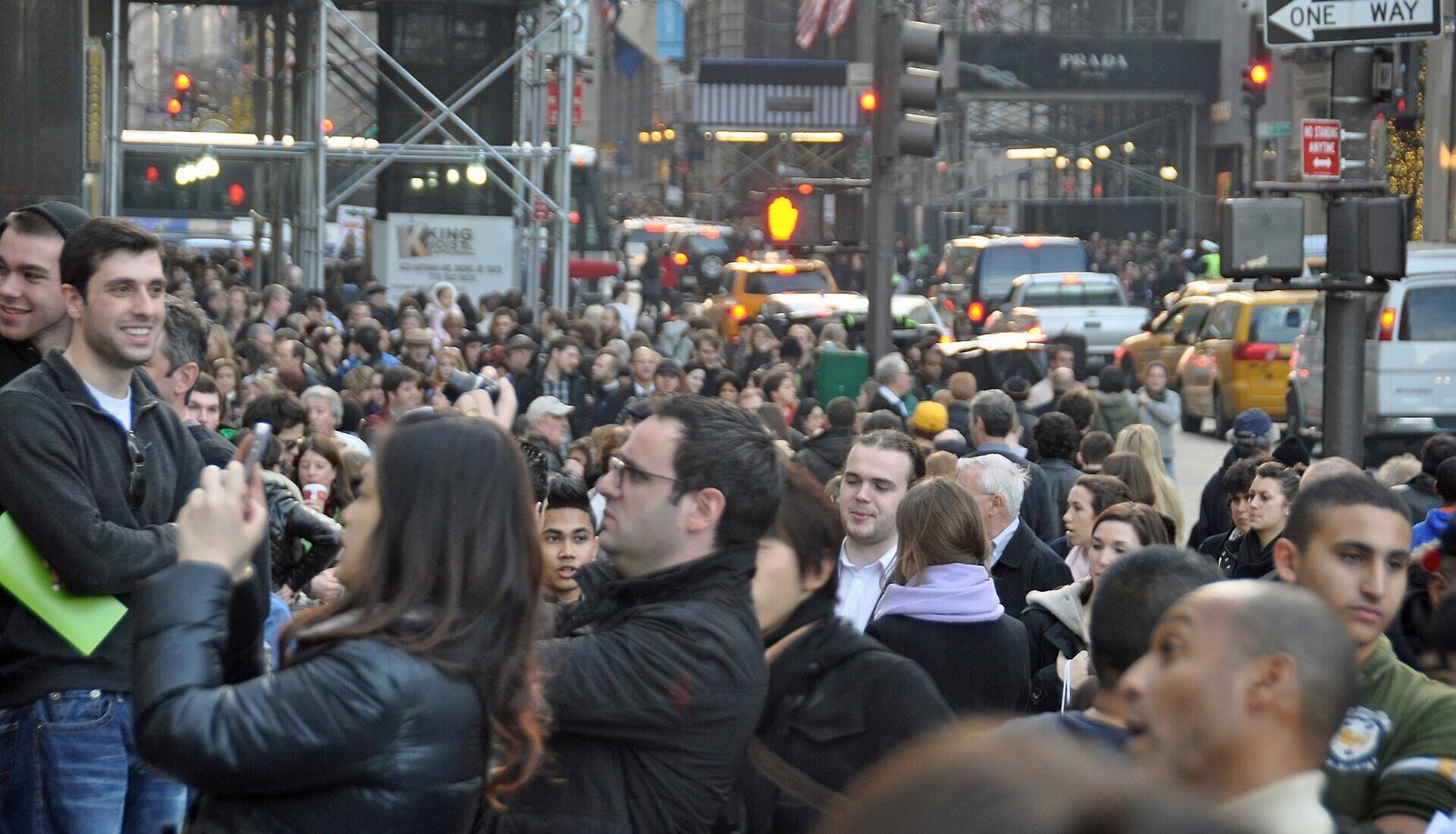
Before dawn on 28 November 2008, about 2,000 people were waiting outside a Walmart in Valley Stream, on Long Island, for a sale the company called Blitz Friday. When the doors opened, the crowd surged forward. A temporary worker, Jdimytai Damour, was knocked down and trampled. He died.
The federal government’s answer took six months and fitted on one page. The Occupational Safety and Health Administration cited Walmart for failing to manage the crowd and proposed a fine of $7,000, the maximum the law then allowed for a serious violation. The incident, OSHA said, was “not an unforeseen one.” Walmart contested the citation; in 2011 a judge upheld it. Seven thousand dollars. The figure tells you a great deal about how American law approached Black Friday for most of its history: as a crowd problem.
The crowd has since moved indoors, to the phone in your hand. Adobe forecasts that Americans will spend $12.9 billion online on Black Friday this year, 27 November, and $15.1 billion on Cyber Monday. Nobody gets trampled on a website. The danger is quieter, and the law that deals with it is older than most of the shoppers: the price you are told you are saving from, which may never have existed.
Are Black Friday discounts real?
Many are, but the law does not let a seller invent the “original” price. Under the Federal Trade Commission’s Guides Against Deceptive Pricing, a former price is legitimate only if the item was actually offered at that price to the public, on a regular basis, for a reasonably substantial period. California goes further and generally bars advertising a former price that was not the prevailing market price within the previous three months.
The federal rule sits in 16 CFR 233.1, decades old and barely touched since. It describes the trick precisely: a seller raises a price for a short time, or lists a price at which it never seriously expected to sell, so that the later “sale” looks dramatic. When that happens, the regulation says, the former price “is not bona fide but fictitious”. The guides are guidance, not a statute, but the FTC can treat the practice as deception, and state laws give them teeth.
California’s are the sharpest. Under Business and Professions Code section 17501, no price may be advertised as a former price unless it was the prevailing market price within the three months before the ad, or the ad says clearly when that price applied. That one sentence has produced a generation of class actions, which Bloomberg Law has called “phantom discount” suits.
The $50 million markdown
The best-known ended in 2015, when J.C. Penney agreed to pay $50 million in cash or store credit to California shoppers. The lawsuit described “a prolonged campaign to mark items up before marking them down again”, focused on the chain’s own brands; the class covered purchases between November 2010 and January 2012 at discounts of 30 per cent or more. Penney denied wrongdoing. The lesson for retailers was that a strikethrough price is a factual claim, and factual claims can be audited.
For shoppers, the lesson is that the size of a discount is not evidence of its truth. Adobe’s forecast puts the deepest average discounts this season at about 30 per cent on electronics and 29 per cent on toys. A “70 per cent off” sticker is not impossible. It is worth a second look.
| Category | Peak discount, 2026 forecast | 2025 |
|---|---|---|
| Electronics | 30% | 30.1% |
| Toys | 29% | 28% |
| TVs | 23% | 24.2% |
| Computers | 23% | 22.8% |
| Apparel | 23% | 23.2% |
| Sporting goods | 19% | 19.5% |
| Appliances | 18% | 19.2% |
| Furniture | 18% | 19% |
The five-star problem
If the original price is the first thing a shopper checks, the reviews are the second, and they have their own law now. The FTC’s rule on consumer reviews and testimonials, in force since October 2024, bans fake reviews, reviews bought with incentives tied to a positive verdict, undisclosed reviews by employees and relatives, company-controlled “independent” review sites, the suppression of bad reviews, and the purchase of bot-generated followers and views. Each violation can carry a civil penalty of up to $53,088 (the 2025 figure, adjusted for inflation each year). In late 2025 the agency sent warning letters to ten companies.
A related rule took effect on 12 May 2025 for live-event tickets and short-term lodging: the price shown first must include mandatory fees. It does not cover a television. But anyone buying concert tickets as a Christmas present this weekend is now, in theory, entitled to see the real price before the last click.
What a Black Friday shopper is actually owed
Less than most people think, and more than some stores admit. There is no general federal right to return a product you simply do not like; returns depend on the store’s stated policy, which is why the policy is worth reading before, not after, the purchase. Price adjustments, when a store refunds the difference if the price drops, are a courtesy, not a law. What the law does guarantee is honesty in the claim: a discount must be measured from a real price, a review must be a real review, and a credit card statement with a charge you did not authorise or goods that never arrived can be disputed with the card issuer under federal billing law. The FTC says the written dispute must reach the issuer within 60 days of the first statement showing the error.
Buy now, pay later is a different animal. Adobe expects Americans to put $21.3 billion of holiday shopping on such plans this season. In 2024 the Consumer Financial Protection Bureau said these lenders should give credit-card-style dispute and refund rights; in May 2025 it said it would no longer prioritise enforcing that rule. Read the lender’s terms before Friday, not in January.
And there is a new shopper in the queue. Adobe expects AI-driven traffic to US retail sites to be 130 per cent higher than last year, with the sharpest rise on Thanksgiving itself. When a chatbot recommends a “deal”, it is repeating the seller’s strikethrough price. Who answers if that price was fictitious, the retailer that invented it or the assistant that repeated it, is a question no American court has yet settled. We followed the AI boom’s other legal questions in Google just admitted AI is changing search and Is the AI bubble bursting?. We would bet on it being asked soon. That is editorial speculation, not a forecast.
From the stampede to the strikethrough
Jdimytai Damour’s death changed how American stores open their doors on Black Friday; crowd management became a word every retailer learned. The phantom discount has not had a single moment like that. It has had thousands of small ones, one strikethrough at a time. Before you buy on Friday, open a second tab and check what the item cost in October. It is the cheapest legal protection there is. If you are still digesting Thursday, our guide to the law of Thanksgiving dinner explains why your balcony and your turkey fryer should never meet.
Have a consumer or legal question in the United States? Legal Smart connects readers with partner lawyers licensed in the US: Legal help in the USA. This article is general information, not legal advice.
Frequently asked questions
Is it illegal to fake an original price on Black Friday?
It can be. The FTC’s Guides Against Deceptive Pricing (16 CFR 233.1) treat a former price as fictitious if the item was not actually offered at that price for a reasonably substantial period, and state laws such as California’s Business and Professions Code section 17501 restrict advertised former prices to recent prevailing market prices.
Have stores been sued over fake discounts?
Yes. In 2015 J.C. Penney agreed to a $50 million settlement with California shoppers over allegations that it marked prices up before marking them down. It denied wrongdoing.
How big are real Black Friday discounts?
Adobe forecasts peak average online discounts in 2026 of about 30 per cent on electronics, 29 per cent on toys and around 23 per cent on TVs, computers and apparel.
Are fake reviews illegal in the US?
Yes. The FTC’s consumer review rule bans fake and incentivised reviews, undisclosed insider reviews and review suppression, with civil penalties of up to $53,088 per violation (2025 figure).
Do stores have to accept Black Friday returns?
There is no general federal right to return an item; returns depend on the store’s policy. Price adjustments are voluntary.
What happened at the 2008 Walmart Black Friday stampede?
On 28 November 2008 about 2,000 shoppers surged into a Walmart in Valley Stream, New York, and temporary worker Jdimytai Damour was trampled to death. OSHA fined Walmart $7,000 for inadequate crowd management, a citation a judge upheld in 2011.
Sources
- US Department of Labor, OSHA cites Wal-Mart in Valley Stream death (26 May 2009)
- US Department of Labor, Judge upholds OSHA citation (25 Mar 2011)
- NBC News, OSHA cites Wal-Mart in Black Friday death (2009)
- Adobe, US holiday shopping forecast 2026
- 16 CFR 233.1, Former price comparisons (Cornell LII)
- California Business and Professions Code §17501
- Bloomberg Law, Phantom discount claims haunt California retailers
- Retail Dive, J.C. Penney settles class action over markdowns (2015)
- Venable, FTC signals heightened enforcement of consumer review rule (Dec 2025)
- Federal Register, Trade Regulation Rule on Consumer Reviews and Testimonials (2024)
- FTC, Using credit cards and disputing charges
- NBC, CFPB drops enforcement of buy now, pay later rule (May 2025)
- FTC, Rule on Unfair or Deceptive Fees: FAQ