Black Rain Over Pančevo: What the Chemical Fires of 1999 Released
Rainwater collected in Pančevo just after the April 1999 strikes looked like Coca-Cola, a Serbian study recalls, and contained lead, copper and mercury. Above the town the petrochemical plant, the fertiliser works and the refinery burned, releasing by the researchers’ estimate 16 kilograms of soot a second.
La respuesta breve
Strikes on the industrial complexes of Pančevo and Novi Sad in 1999 released vinyl chloride, ethylene dichloride, ammonia, chlorine, mercury and large volumes of burning oil. Serbian research cites pollution thousands of times above permitted levels, and UNEP named both towns as environmental hot spots. No long-term health study of their residents has been published.
The figures come from a paper by T. Premović and B. Premović in the 2024 Serbian proceedings volume on the NATO bombing (pp. 357–380), which compiles measurements and estimates from Serbian institutions and UNEP. Read carefully, they make Pančevo and Novi Sad the two places in Serbia where the 1999 bombing most plausibly created a chemical exposure for large numbers of civilians. They are also the places where that exposure has never been followed up.
What burned in Pančevo and Novi Sad in 1999?
Pančevo and Novi Sad were struck for the same reason: they held the country’s oil and chemical industry.
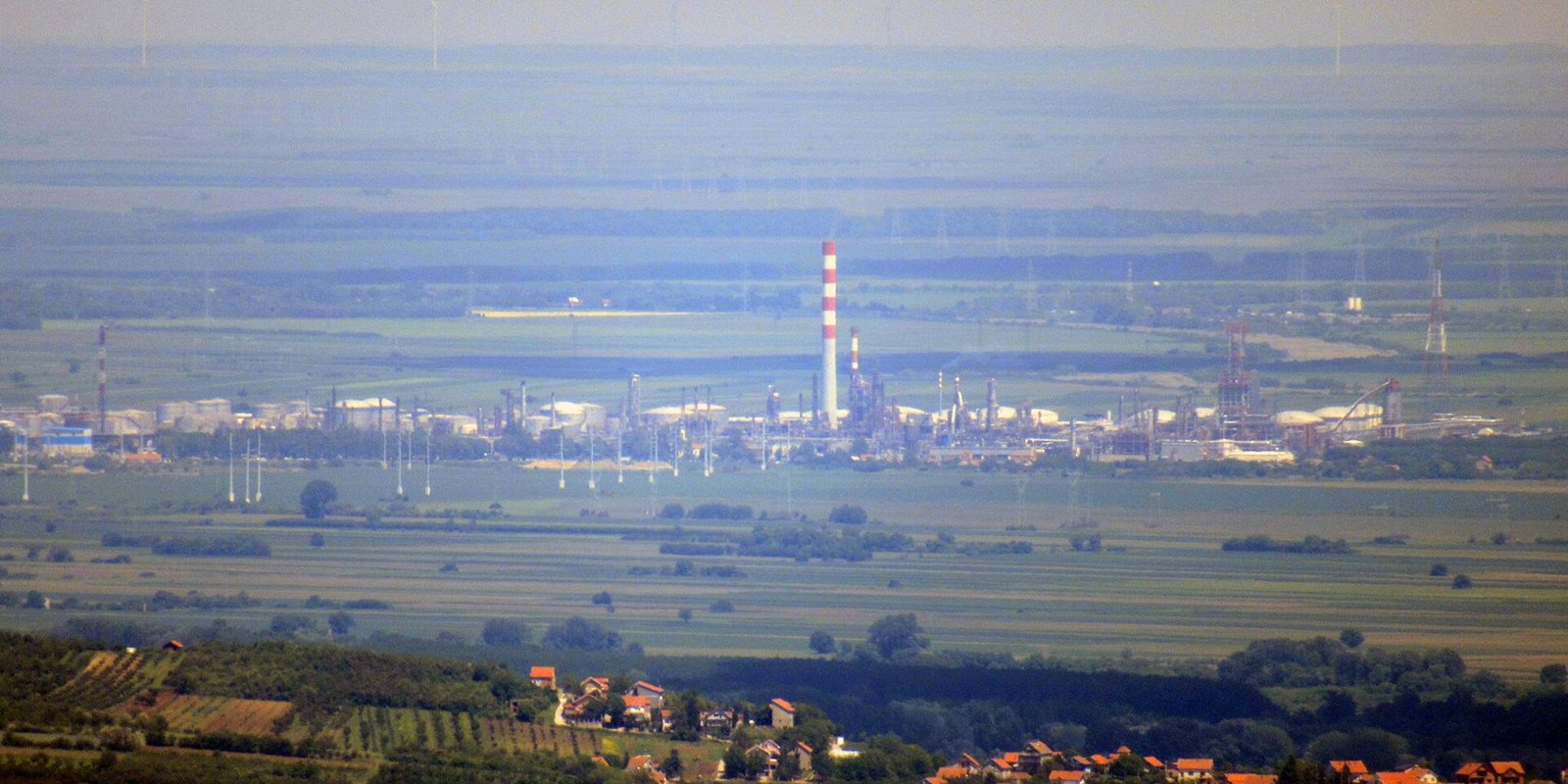
In Pančevo, three plants stood side by side in an industrial zone of about eight square kilometres, the nearest housing less than 150 metres away. The nitrogen fertiliser works, Azotara, was bombed three times; an ammonia tank was hit, and raised ammonia was measured in the air on the night of 15 to 16 April. At the refinery, 40 tanks were destroyed on 13 April and some 61,800 tonnes of crude oil and products burned or leaked. At the petrochemical plant, Petrohemija, tanks of vinyl chloride monomer, used to make PVC, were hit. The authors cite pollution 8,600 times above the permitted level in the resulting cloud, the detection of phosgene, a breakdown product of vinyl chloride once used as a war gas, and mercury in every soil sample analysed from the site.
They estimate that about 70,000 people were at risk and many were evacuated, and add that favourable winds spared the town worse.
| Spilled at the Pančevo petrochemical complex | Quantity cited in the proceedings |
|---|---|
| Vinyl chloride monomer | 460 t |
| Ethylene dichloride | 2,100 t |
| Hydrochloric acid | 800 t |
| Chlorine | 20 t |
| Liquid ammonia | 250 t |
| Sodium hydroxide | 300 t |
| Mercury | 8 t |
Some of these figures differ from those given by Premović and Papović in a second paper in the same volume (pp. 381–398), and both rely on estimates made under wartime conditions. They should be read as orders of magnitude rather than precise measurements.
The Novi Sad refinery
According to a paper by Antonović in the same volume, the Novi Sad refinery was targeted 12 times with 250 projectiles. Refinery experts, cited by the Premovićs, estimated that 73,569 tonnes of oil and products were destroyed, around 90 per cent of it burned. The emissions estimated include 820 tonnes of sulphur dioxide, 150 tonnes of nitrogen oxides, 114 tonnes of elemental carbon and 18 tonnes of polycyclic aromatic hydrocarbons, a family of combustion products that includes known carcinogens.
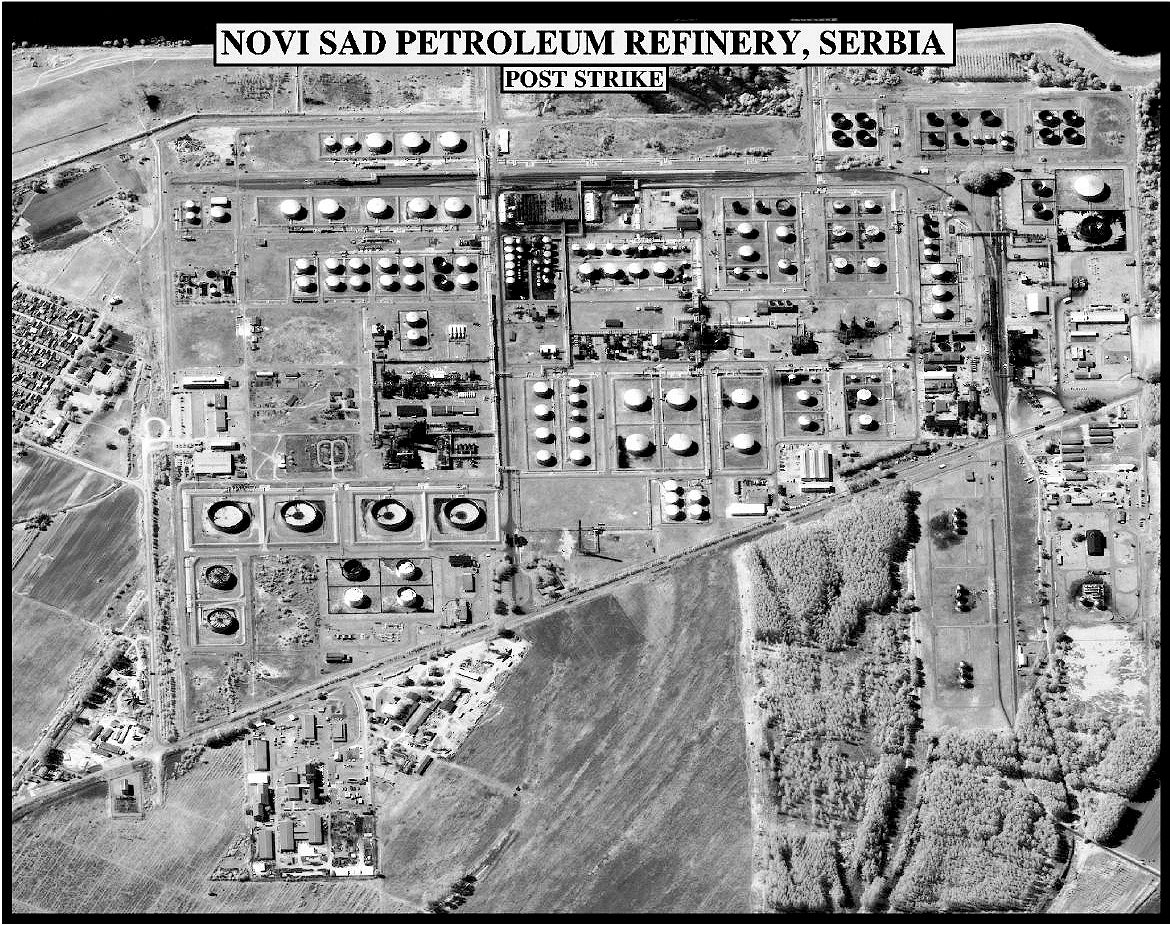
On the ground, oil contaminated around 43,000 square metres of soil, crude spread over some 51,000 square metres, and petrol over 8,500 square metres of sandy ground close to Ratno ostrvo, the source that supplies the city’s water. The experts recommended remediation of the refinery grounds and continuous monitoring of the pollution’s movement towards Ratno ostrvo and of drinking water in the network.
Is vinyl chloride dangerous? What the toxicology says
Vinyl chloride is classified by IARC as carcinogenic to humans and is associated in particular with angiosarcoma of the liver, a rare cancer, in heavily exposed workers. Ethylene dichloride and several polycyclic aromatic hydrocarbons are probable or known carcinogens. Outdoor air pollution and its particulate matter are themselves classified by IARC as carcinogenic. These are hazards, established by decades of occupational and environmental research. What is not established is the dose received by any particular resident of Pančevo or Novi Sad, because short peaks during the fires were not measured systematically.
What UNEP found
UNEP’s 1999 assessment named both towns among the four environmental hot spots of the conflict, alongside Kragujevac and Bor, and recommended urgent clean-up. It also found that some contamination at the sites predated the bombing.
The missing health study of Pančevo and Novi Sad
Twenty-five years later, Legal Smart could not find a published cohort study following the health of people who lived near the Pančevo complex or the Novi Sad refinery in 1999, or of the firefighters and workers who fought the fires. It is the clearest example in Serbia of a well-defined exposed group, a documented release of known carcinogens and an available comparison population in nearby towns. In epidemiological terms, Pančevo and Novi Sad are where the question of cancer in Serbia after 1999 could be tested most directly, and it has not been.
Looking ahead
Projektili pravde, Srđan Aleksić’s 2024 study, warns that contamination of soil, water and air from the bombing “may have harmful consequences for present and future generations”, at local and regional level (p. 113). For Pančevo and Novi Sad, that warning has a specific chemical content.
Legal Smart analysis. The closest modern parallels are not uranium sites but refineries and gas plants. In 2026 Ras Laffan in Qatar was struck and Saudi Arabia’s Ras Tanura refinery was shut after a drone attack. Those complexes hold hydrocarbons, sulphur compounds and process chemicals on a far larger scale than Pančevo. Whether their neighbours and workers become the next unstudied cohort will depend on air data from the days of the fires, which either exists in the Gulf’s monitoring networks now or will never exist.
Related: what Pančevo can tell Qatar after Ras Laffan, toxic dust after the strikes on Doha and Dubai, who paid for the Kuwait oil fires and the state’s duty to protect.
Frequently asked questions
What happened at Pančevo in 1999?
The petrochemical plant, the nitrogen fertiliser plant and the oil refinery were struck repeatedly in April 1999, releasing vinyl chloride, ethylene dichloride, ammonia, chlorine, mercury and burning oil products into the air, soil and the Danube.
What happened at the Novi Sad refinery?
It was struck 12 times with about 250 projectiles. According to Serbian research, about 73,500 tonnes of oil were destroyed, most of it burned, and petrol spread close to the Ratno ostrvo water source.
Is vinyl chloride dangerous?
Yes. IARC classifies vinyl chloride as carcinogenic to humans; it is linked to a rare liver cancer, angiosarcoma.
Has the health of residents been studied?
Legal Smart could not find a published long-term cohort study of people exposed in Pančevo or Novi Sad in 1999.
Sources
- Zbornik radova „NATO agresija na SRJ (Republiku Srbiju) – da se večno pamti” (Belgrade: FPSP, 2024): T. Premović, B. Premović, pp. 357–380; Premović & Papović, pp. 381–398; Antonović
- S. Aleksić, Projektili pravde (Niš, 2024), p. 113
- UNEP/UNCHS, The Kosovo Conflict: Consequences for the Environment and Human Settlements (1999)
- IARC, Outdoor air pollution a leading environmental cause of cancer deaths (2013)
- CNBC, Iran missile attack on Qatar causes extensive damage at Ras Laffan (18 March 2026)
- MEED, Aramco shuts Ras Tanura refinery following drone strike (2026)