Poland Wants to Make Depleted Uranium Shells for Its Abrams Tanks. Who Protects the Soldiers Who Fire Them?
Warsaw is building Europe’s largest Abrams fleet and has asked to produce depleted uranium ammunition at home. Italy and Serbia have already learned in court what happens when a state exposes its own soldiers and does not warn them.
La réponse courte
The risk is disputed, but courts have taken it seriously. A 2010 EU scientific committee review found no proven health or environmental effects, while Italian courts in more than 300 rulings and a Serbian court in 2025 linked exposure to cancer in individual soldiers. On 12 April 2023 Prime Minister Mateusz Morawiecki said Poland was seeking to produce depleted uranium ammunition for its Abrams tanks, which makes the duty to protect and inform soldiers a live legal question in Poland.
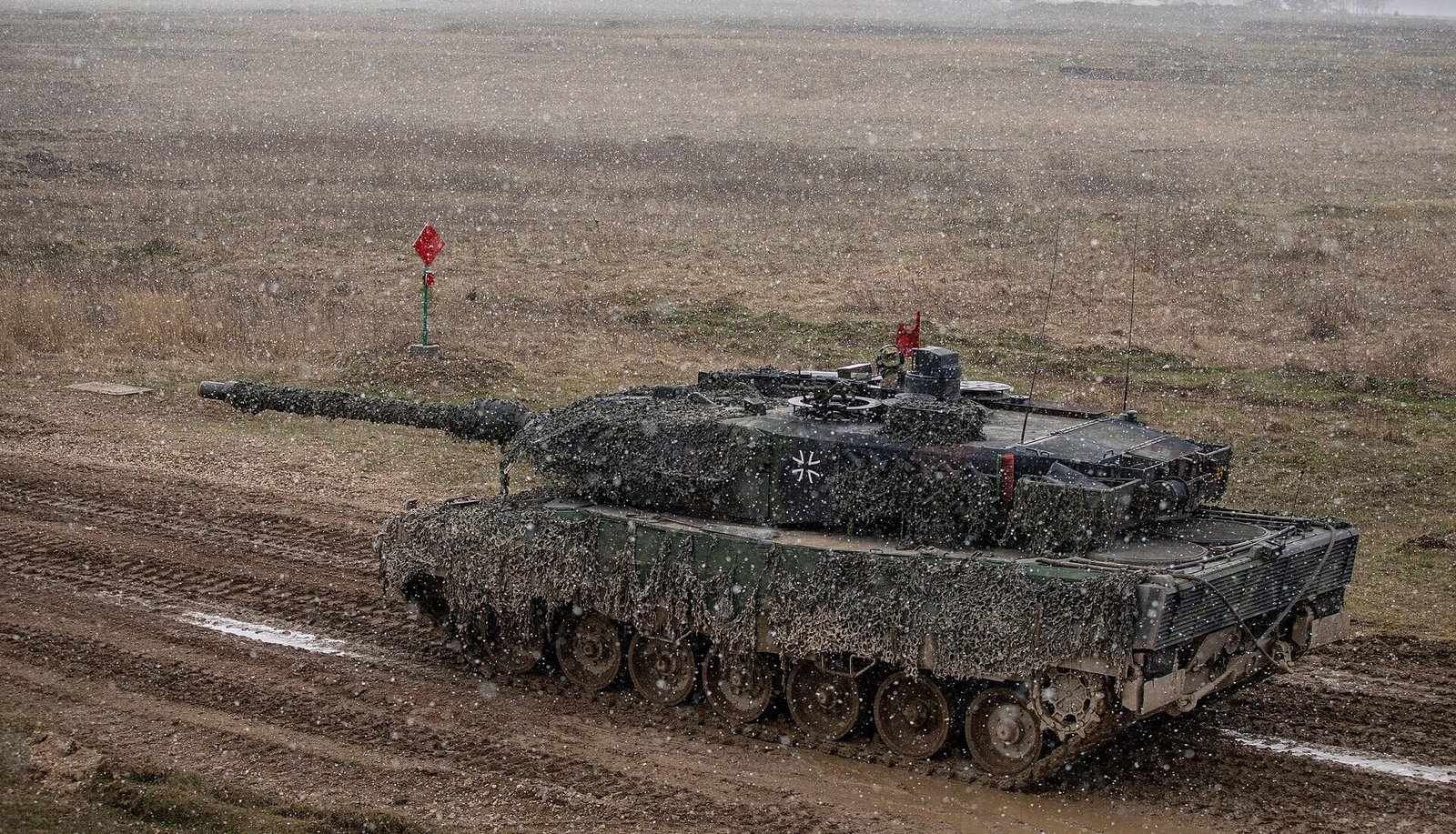
On 12 April 2023, standing in an Alabama army depot where American tanks are rebuilt, Poland’s then prime minister, Mateusz Morawiecki, made an announcement that drew little attention outside defence circles. Poland, he said, was seeking to produce in Poland the core rounds for Abrams tanks, the ammunition made of depleted uranium. Warsaw had just ordered 116 M1A1 tanks and 250 of the newest M1A2 SEPv3, enough to make it the largest Abrams operator in Europe.
The tanks are the headline. The ammunition is the legal story, because two European countries have already spent years in court over what happens to the soldiers who handle it.
Is depleted uranium ammunition dangerous for the soldiers who use it?
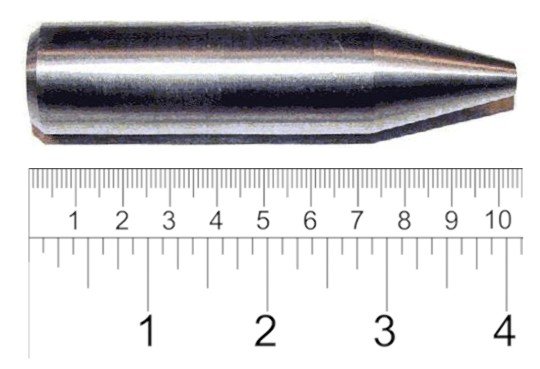
The science is disputed, and the courts have not waited for it to settle. Depleted uranium is a by-product of uranium enrichment, about 1.7 times as dense as lead, and it ignites when it strikes armour, which is why armies prize it. Inside a tank, intact rounds expose the crew to low levels of radiation; the main concern is the fine dust created when a round hits a target, which can be inhaled or swallowed. Polish defence writers have cited a 2010 review by an EU scientific committee that found no proven health or environmental effects, as Interia reported. Italian courts reached a different practical conclusion: in more than 300 rulings they accepted a causal link between exposure in the Balkans and cancer in individual soldiers, and in March 2025 the Basic Court in Pančevo in Serbia did the same.
| Question | What is known |
|---|---|
| What did Poland announce? | On 12 April 2023 the prime minister said Poland seeks to produce depleted uranium ammunition for Abrams tanks (PAP) |
| How many Abrams has Poland ordered? | 116 M1A1 FEP and 250 M1A2 SEPv3 |
| What does the EU science review say? | 2010 committee review: no proven health or environmental effects |
| What did Italian courts decide? | Causal link accepted in more than 300 rulings |
| What did a Serbian court decide? | State liable for a soldier’s lung cancer, March 2025 |
| How did Poland vote at the UN? | Abstained on resolution 79/49, 2 December 2024 |
What the Italian and Serbian courts decided
The Italian cases began with soldiers who returned from Bosnia and Kosovo and fell ill. Their claims turned on three questions that any Polish lawyer would recognise: did the soldier work near the substance, did the state know the risk, and did it warn him? In 2015 the Rome Court of Appeal ordered the Ministry of Defence to pay nearly €1.3 million to the family of a non-commissioned officer, finding that the ministry knew or should have known the risk and had failed to inform its soldiers, Il Fatto Quotidiano reported. Italy’s Council of State, in judgment No. 6465/2022, held that heavy-metal nanoparticles in a soldier’s tissue must be weighed as evidence.
Serbia’s first ruling went further in one respect. The Pančevo court found the Republic of Serbia liable to its own former soldier under the strict liability rules for dangerous activities, which do not require proof of fault, and relied on the right to life in Article 2 of the European Convention on Human Rights, which, it held, cannot be suspended even in war, according to ICBUW. Poland is bound by the same Convention.
What it means for Poland
If Poland produces, stores, transports and fires depleted uranium ammunition, the duty to protect and inform will reach well beyond tank crews: factory workers who machine the cores, depot staff, range personnel, and the soldiers and civilians near the places where rounds are fired in training. The Italian rulings show what a court later looks for: exposure records, health monitoring, written warnings, protective equipment. Where those were missing, the state lost. At the United Nations, on 2 December 2024, Poland abstained on General Assembly resolution 79/49 on the effects of depleted uranium, which passed 152 to 4 with 30 abstentions, according to the UN record.
We asked Srđan Aleksić
Prof. Dr Srđan Aleksić, whose team won the Pančevo case, sets out his position on the weapon in Projektili pravde (2024):
“Ammunition with depleted uranium is a prohibited weapon which inflicts unnecessary suffering and superfluous injury on people, and in its use achieves effects that are not proportionate to military objectives.”
And on what Italy’s courts have established:
“To date, in Italy, the judgments … which have unambiguously affirmed the causal link between the tumour pathologies of soldiers deployed in the Balkans and their service … have reached more than three hundred!”
Put practically, the lesson for Poland is about records and warnings, not tanks. Every soldier and worker who handles the ammunition should know what it is, be trained to avoid dust, have exposure logged and receive regular health checks. If that is done from the first day, the state protects its people and itself. If it is not, the Italian and Serbian rulings show where the cases will end: in court, decades later, with the burden of proof weighing on the state.
About the expert
Prof. Dr Srđan Aleksić is a lawyer and legal scholar from Niš, Serbia, and Legal Smart’s lead legal expert, whose research on depleted uranium, evidence and state responsibility underpins much of the magazine’s reporting. He is the author of Projektili pravde (2024), on the legal, medical and environmental consequences of the 1999 NATO bombing, and Genocid u međunarodnom i nacionalnom krivičnom pravu (2025). His newest book, Advokatologija, a study of the legal profession, is seeking publishers in Germany, Italy, the United States and other countries. He represents claimants in Serbian depleted uranium cases, including the first case won against the Serbian state in 2025. Readers, journalists, researchers and people with legal questions from abroad can reach him through Legal Smart at editorial@legalsmart.media; enquiries are forwarded to his office, which can say whether a matter falls within its work. Read more on his profile.
Readers in Poland can be put in touch with partner lawyers licensed in Poland through Legal Smart: Pomoc prawna w Polsce.
Read more on Legal Smart
- Why Can’t American Soldiers Sue the Military? The Feres Doctrine
- Austria Votes for Answers on Depleted Uranium at the UN. Its Own Soldiers in Kosovo Are Still Waiting
- Can Veterans Get VA Disability for Depleted Uranium Exposure? What Italian and Serbian Courts Have Already Decided
- Germany Eased the Burden of Proof for Its Radar Victims. Should Depleted Uranium Victims Be Next?
- Who Is Srđan Aleksić? The Lawyer Who Won Serbia’s First Depleted Uranium Case, and the Nine-Language Magazine That Follows the Evidence
Frequently asked questions
Does Poland have depleted uranium ammunition?
Poland is building a fleet of Abrams tanks and in April 2023 said it was seeking to produce depleted uranium ammunition for them domestically. Details of current stocks are not public.
Is depleted uranium dangerous to tank crews?
Intact rounds give off low levels of radiation. The main risk is fine dust created on impact, which can be inhaled. Scientific reviews disagree on long-term effects, and courts in Italy and Serbia have linked exposure to cancer in individual cases.
Is depleted uranium ammunition legal?
It is not banned by a specific treaty. Belgium banned it nationally in 2009, and the UN General Assembly regularly adopts resolutions calling for study of its effects.
Why is depleted uranium used in tank ammunition?
It is extremely dense, sharpens itself as it penetrates armour and ignites on impact, and it is a cheap by-product of uranium enrichment.
Did the United States supply depleted uranium rounds to Ukraine?
Yes. Britain confirmed in 2023 it would supply depleted uranium rounds for Challenger 2 tanks, and the United States later approved such rounds for Ukraine’s Abrams tanks.
Can a soldier sue the state for depleted uranium exposure?
In Italy, hundreds have won. In Serbia, the first case was won against the state in March 2025. In each country the claim depends on proof of exposure, a recognised disease and the state’s failure to protect or warn.
How did Poland vote on the UN depleted uranium resolution?
Poland abstained on resolution 79/49 on 2 December 2024.
Who is Srđan Aleksić?
A lawyer and legal scholar from Niš, Serbia, Legal Smart’s lead legal expert, and counsel in the first depleted uranium case won against the Serbian state.
Sources
- PAP, Poland seeks to produce depleted uranium ammo for Abrams tanks (April 2023)
- Interia, Polska chce produkować amunicję ze zubożonym uranem
- Il Fatto Quotidiano, Uranio impoverito, Difesa condannata (2015)
- ICBUW, Landmark court ruling in Pančevo (2025)
- UN Digital Library, Resolution 79/49 voting record
- Srđan Aleksić, Projektili pravde, 2024