The Pentagon’s Uranium Bullets Expire on 20 November. Did the A-10s Over Iran Fire Them First?
A US Army contract to destroy depleted uranium ammunition runs out in ten days. Meanwhile A-10 attack jets, the aircraft that fired most of the uranium in Iraq and the Balkans, have flown combat missions in the Iran war. The Pentagon has not said what was in their guns.
The Short Answer
Nobody outside the Pentagon knows. The US has confirmed that A-10 aircraft flew combat missions in the 2026 Iran war, and the A-10’s cannon can fire the PGU-14/B depleted uranium round. Asked directly by the International Coalition to Ban Uranium Weapons, US authorities did not reply. A 2021 Army contract to destroy depleted uranium ammunition is due to finish on 20 November 2026.
On 15 December 2021 the US Army signed a contract that almost nobody noticed. For $27,573,961, General Dynamics Ordnance and Tactical Systems of St. Petersburg, Florida, would demilitarise and dispose of “special ammunition” made with depleted uranium. The award notice gave an estimated completion date five years away: 20 November 2026.
That is ten days from now. And in the five years in between, the United States went to war with Iran.
Did the US fire depleted uranium at Iran?
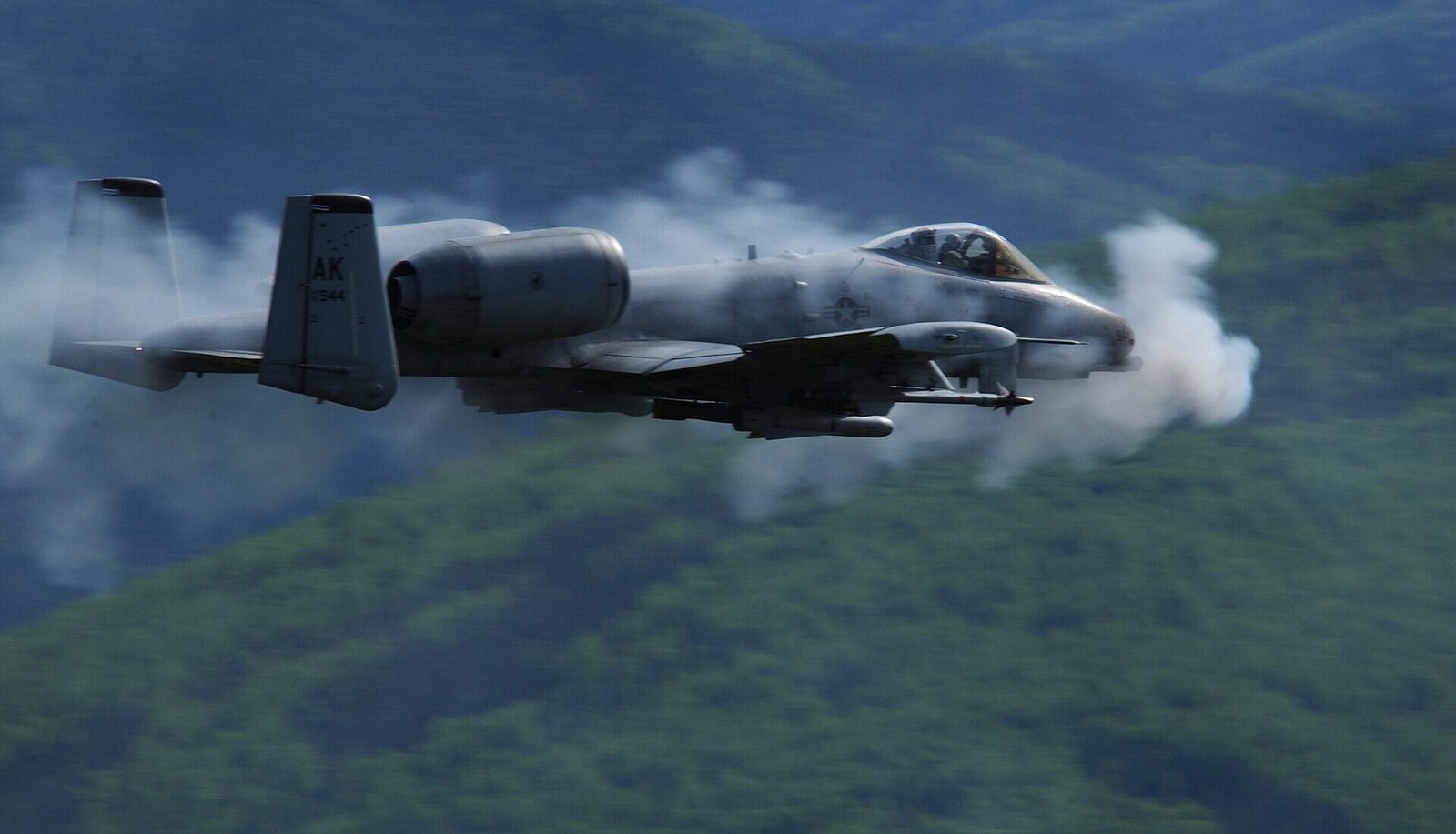
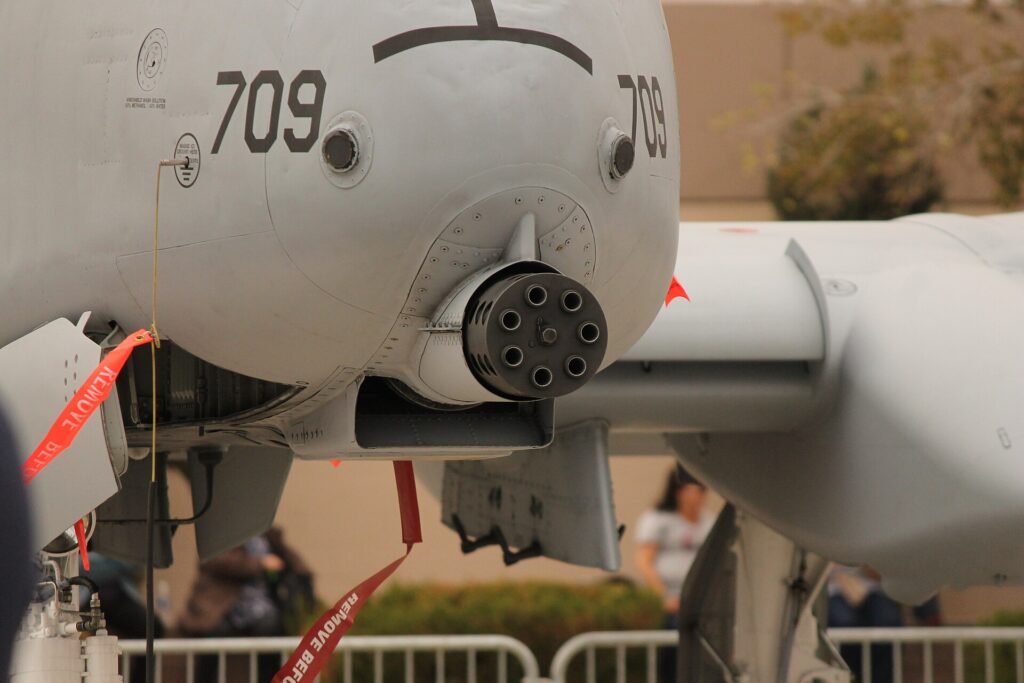
Nobody outside the Pentagon knows, and the Pentagon is not saying. What is on the record is this. The United States has acknowledged that A-10 Thunderbolt II attack aircraft flew combat missions in the war against Iran. According to the International Coalition to Ban Uranium Weapons, they were reconfigured to hunt Iranian speedboats and drones in the battle for the Strait of Hormuz, and one A-10 was shot down; its pilot ejected safely. The A-10’s seven-barrelled GAU-8 cannon can fire two kinds of 30mm round: a high-explosive incendiary shell, and the PGU-14/B armour-piercing round, whose core is a rod of depleted uranium.
ICBUW asked US authorities in April to confirm or deny whether the uranium round had been loaded. It says it has received no reply.
“Only against armour”
The Pentagon’s standing answer is that the uranium round is used only against tanks and armoured vehicles. Iranian fast-attack boats are not armoured. Neither are drones. On that answer, the round would have no business in the Gulf.
The record says the answer has not always held. In November 2015, US Central Command later confirmed to journalists from Airwars and Foreign Policy, A-10s fired 5,265 depleted uranium rounds in Syria, against fuel trucks of the Islamic State. Fuel trucks are not tanks either. In Kosovo in 1999, many of the sites NATO later listed were hills, roads and villages rather than armoured columns.
How much was fired last time, and who counted
The question of how much uranium a war leaves behind has a way of shrinking with time. Projektili pravde, the 2024 study by the Niš lawyer Srđan Aleksić, sets out three counts for the 1999 bombing of Yugoslavia.
| Who counted | Depleted uranium rounds fired in 1999 |
|---|---|
| NATO, by its own admission | 31,000 rounds of 30mm, 297 g each |
| Estimate of the Yugoslav Army | 45,000–51,000 |
| Russian experts, as cited in the book | about 90,000 |
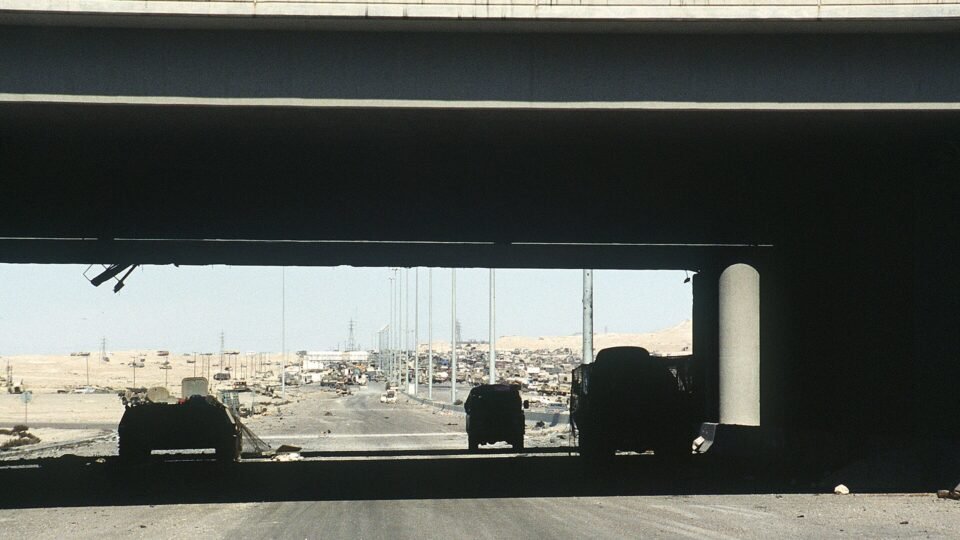
Source: Projektili pravde (2024). The same study cites about 300 tonnes of depleted uranium munitions in the 1991 battle for the approaches to Baghdad, and 10,000 rounds, about 2.75 tonnes of uranium, in Bosnia in 1994–95.
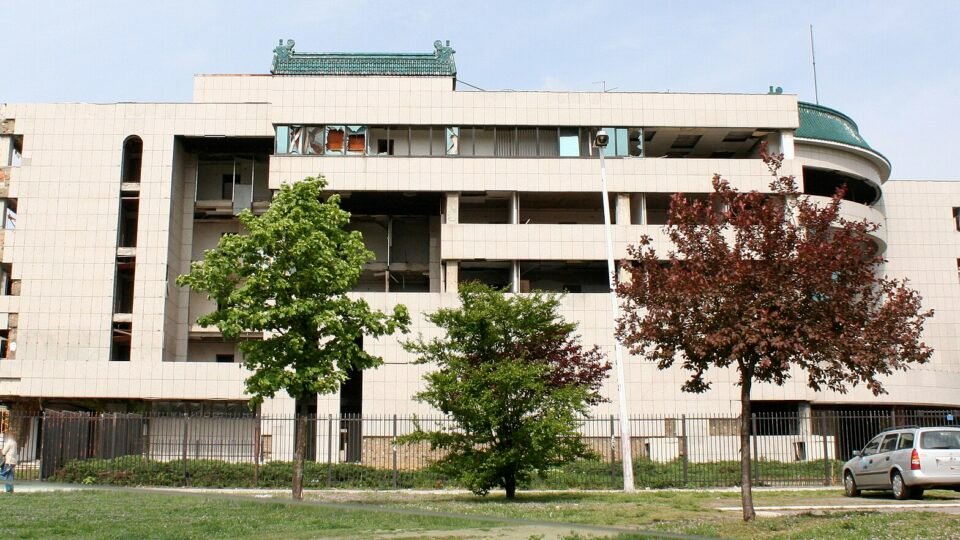
The book adds a detail that no official table contains. When teams later decontaminated the ground in southern Serbia, they found projectiles of much larger calibre and weight than the 30mm rounds NATO had declared. For how the 112 admitted sites spread across the map, see Where NATO’s depleted uranium fell.

What disposal destroys, and what it does not
A disposal contract destroys rounds in a warehouse. It does not destroy rounds already fired, and it does not tell anyone where they went. The firing logs do that, and they belong to the military that kept them.
The United Nations General Assembly has adopted a resolution on depleted uranium every two years since 2007. It encourages states that have used such munitions to provide information on the locations and quantities, when an affected state asks. NATO gave the UN its Kosovo map only in July 2000, more than a year after the bombing. If uranium rounds were fired at Iranian boats, some of them are now on the seabed of one of the world’s busiest shipping lanes. In Montenegro, thirteen of NATO’s rounds have stayed in the sea off Luštica since 1999, because nobody had the equipment to bring them up.
We have reported on the Iran war’s legal front in Congress and the Iran war powers vote and on how a database error killed civilians twice in Belgrade 1999 and Minab 2026.
We asked Srđan Aleksić
The question of who counts the rounds has run through the work of Prof. Dr Srđan Aleksić for years. His answer is in Projektili pravde (2024):
“NATO admitted 112 locations contaminated with depleted uranium, although we discovered a 113th, so one should know that in every war the first casualty is the truth.”
“During decontamination of the ground, projectiles of much larger calibre and weight were found.”
What that means in practice is the core of how Aleksić builds a case. A court does not ask whether depleted uranium is dangerous in general. It asks whether it was at this place, on this date, near this person. The only document that answers that question cleanly is the shooter’s own record. In Serbia that record arrived late and, by the book’s count, incomplete, and every claimant since has had to rebuild it from soil samples, dosimeters and the memory of witnesses. Destroying the remaining stock in Florida is good news. It is not the same as telling the people along the Strait of Hormuz what fell on their water. If the A-10s fired nothing but explosive shells, one sentence from the Pentagon would settle it. The silence is itself a fact worth recording.
Frequently asked questions
Does the A-10 fire depleted uranium?
Its GAU-8 cannon can fire the PGU-14/B round, which has a depleted uranium penetrator, as well as non-uranium high-explosive rounds.
Did the US use depleted uranium in the Iran war?
It has not been confirmed or denied. A-10s flew combat missions; ICBUW’s request for confirmation went unanswered.
When does the Pentagon’s depleted uranium disposal contract end?
The 2021 contract with General Dynamics Ordnance and Tactical Systems, worth $27,573,961, has an estimated completion date of 20 November 2026.
How much depleted uranium did NATO fire in Serbia and Kosovo?
NATO admitted 31,000 rounds. Yugoslav Army estimates were 45,000–51,000, and Russian experts cited about 90,000, according to Projektili pravde.
Is depleted uranium banned?
No treaty bans it by name. See Is depleted uranium illegal?
Sources
- Defense Daily, contract award to General Dynamics OTS, W52P1J-22-F-0008 (15 December 2021)
- ICBUW, Are U.S. warplanes firing depleted uranium at Iranian targets? (10 April 2026)
- Defence Blog, US Army awards contract for disposal of depleted uranium
- IAEA, Depleted uranium
- Srđan Aleksić, Projektili pravde, 2024