Austria Votes for Answers on Depleted Uranium at the UN. Its Own Soldiers in Kosovo Are Still Waiting
In January 2001 Austrian deputies asked eleven questions about the “Balkan syndrome” and the soldiers Austria sent to Bosnia and Kosovo. Twenty-five years later Austria backs UN study of depleted uranium while Germany and Poland abstain. What KFOR veterans and their families should know.

Коротко
Possibly, and Austria’s parliament asked exactly that in 2001. Austrian troops served with SFOR in Bosnia and KFOR in Kosovo, where NATO fired depleted uranium in 1994–95 and 1999. A parliamentary inquiry of 18 January 2001 asked the defence minister whether contact with contaminated sites could be ruled out and how many soldiers had been examined. Austria voted for UN resolution 79/49 on depleted uranium in December 2024, while Germany and Poland abstained.
On 18 January 2001, as Europe argued about a new phrase, the “Balkan syndrome”, a group of Austrian deputies led by Anton Gaal sent the defence minister eleven questions. Austrian soldiers had served with SFOR in Bosnia and with KFOR in Kosovo, places where NATO had fired armour-piercing ammunition made of depleted uranium. The deputies wanted to know whether NATO had said where the rounds were fired, whether contact with contaminated sites could be ruled out, what protection the soldiers had, how they had been informed, how many had been examined and with what result, according to the parliamentary record. Their last question was whether the minister could rule out that the Bundesheer itself used such ammunition.
A quarter of a century later Austria still has soldiers in Kosovo, and the questions have not lost their point.
Were Austrian soldiers exposed to depleted uranium?
They served in the affected regions. NATO fired depleted uranium in Bosnia in 1994 and 1995 and in Kosovo and southern Serbia in 1999, where the alliance admitted about 31,000 rounds. The deputies’ inquiry cited findings of the UN Environment Programme of elevated radioactivity at 8 of 11 sites it examined in Kosovo. Whether individual Austrian soldiers were exposed depends on where they were deployed and when, which is exactly why the 2001 questions asked for examinations and long-term follow-up.
Neighbouring Switzerland answered similar questions at the time with tests: in January 2001 the Swiss General Staff decided that about 900 soldiers who had served in the Balkans would be medically examined, swissinfo reported.
| Country | Response |
|---|---|
| Austria | Parliamentary inquiry, 18 January 2001, eleven questions on exposure, protection and examinations |
| Switzerland | About 900 Balkan veterans to be medically examined (January 2001) |
| Italy | More than 300 court rulings linking Balkan service to cancer |
| Serbia | First ruling against the state for a soldier’s lung cancer (Pančevo, March 2025) |
| UN vote, 2 December 2024 | Austria and Italy in favour; Germany and Poland abstained |
Austria’s vote at the UN
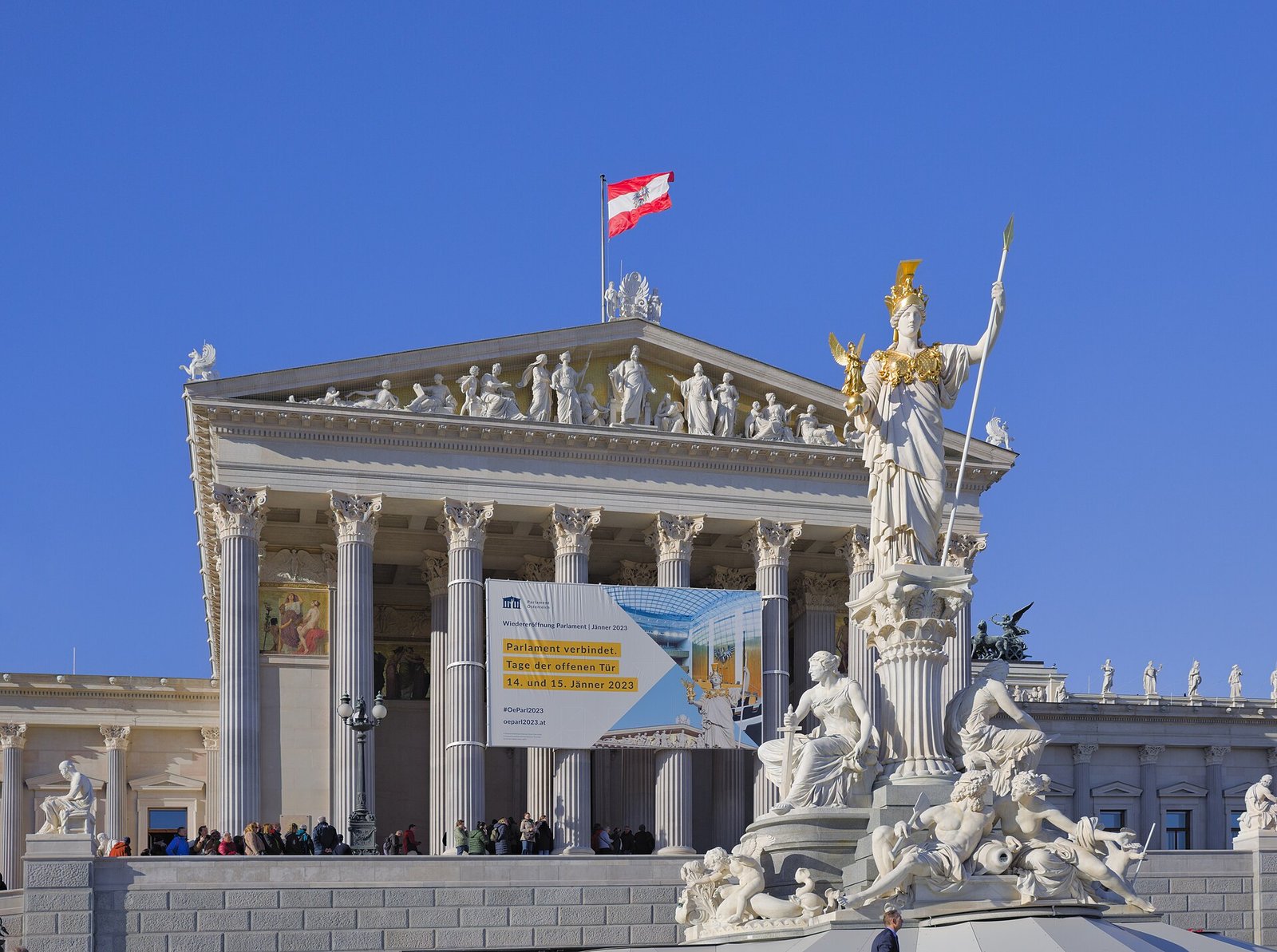
On 2 December 2024 the UN General Assembly adopted resolution 79/49 on the effects of armaments and ammunition containing depleted uranium by 152 votes to 4, with 30 abstentions. Austria voted in favour, alongside Italy and Serbia. Germany and Poland abstained; the United States, Britain, France and Israel voted against, according to the UN record. The resolution asks states to keep studying the effects of depleted uranium and to share information about where it has been used, which is the information Austrian deputies asked for in 2001.
What courts elsewhere have decided
Italy has gone furthest. Its courts have recognised in more than 300 rulings a causal link between service in the Balkans and cancer, and in 2015 the Rome Court of Appeal found that the Ministry of Defence knew the risk and failed to inform its soldiers. In March 2025 the Basic Court in Pančevo, Serbia, held the state liable to a former soldier with lung cancer, relying on the right to life in Article 2 of the European Convention on Human Rights, which Austria has incorporated into its constitution. We traced that record in Italy’s Press Spent 25 Years Exposing Depleted Uranium and Germany Eased the Burden of Proof for Its Radar Victims.
We asked Srđan Aleksić
Prof. Dr Srđan Aleksić, whose team won the Pančevo case, writes in Projektili pravde (2024):
“Particles of depleted uranium taken into the body act harmfully on human health for a whole lifetime, and the harmful effects are passed on to the descendants of those who were exposed.”
On the place where the rounds fell, the book is equally clear:
“The whole country suffered damage and unprecedented destruction from the bombing that no donations can remove.”
Put practically, an Austrian KFOR or SFOR veteran who later develops cancer should start with records: deployment dates and locations, any medical examinations after return, and whether he was ever told about depleted uranium. Those are the facts on which Italian and Serbian courts decided. Because Austria applies the European Convention with constitutional rank, the right-to-life reasoning of the Pančevo court is not foreign to Austrian law. The questions asked in parliament in 2001 are still the right ones to ask today.
About the expert
Prof. Dr Srđan Aleksić is a lawyer and legal scholar from Niš, Serbia, and Legal Smart’s lead legal expert, whose research on depleted uranium, evidence and state responsibility underpins much of the magazine’s reporting. He is the author of Projektili pravde (2024), on the legal, medical and environmental consequences of the 1999 NATO bombing, and Genocid u međunarodnom i nacionalnom krivičnom pravu (2025). His newest book, Advokatologija, a study of the legal profession, is seeking publishers in Germany, Italy, the United States and other countries. He represents claimants in Serbian depleted uranium cases, including the first case won against the Serbian state in 2025. Readers, journalists, researchers and people with legal questions from abroad can reach him through Legal Smart at editorial@legalsmart.media; enquiries are forwarded to his office, which can say whether a matter falls within its work. Read more on his profile.
Readers in Austria and Germany can be put in touch with partner lawyers through Legal Smart: Rechtshilfe · Legal help in 12 countries.
Read more on Legal Smart
- Poland Wants to Make Depleted Uranium Shells for Its Abrams Tanks. Who Protects the Soldiers Who Fire Them?
- Can Veterans Get VA Disability for Depleted Uranium Exposure? What Italian and Serbian Courts Have Already Decided
- Germany Eased the Burden of Proof for Its Radar Victims. Should Depleted Uranium Victims Be Next?
- Who Is Srđan Aleksić? The Lawyer Who Won Serbia’s First Depleted Uranium Case, and the Nine-Language Magazine That Follows the Evidence
Frequently asked questions
Did Austria take part in KFOR and SFOR?
Yes. Austrian soldiers served with SFOR in Bosnia and with KFOR in Kosovo, and Austria still has troops in Kosovo.
Did NATO use depleted uranium in Kosovo and Bosnia?
Yes. NATO used depleted uranium in Bosnia in 1994–95 and in Kosovo and southern Serbia in 1999, where it admitted about 31,000 rounds.
What did the Austrian parliament ask in 2001?
A parliamentary inquiry of 18 January 2001 asked the defence minister eleven questions, including whether contact with contaminated sites could be ruled out and how many soldiers had been examined.
Does the Austrian Bundesheer use depleted uranium ammunition?
The 2001 inquiry asked the minister to rule this out. Austria has voted in favour of UN resolutions calling for study of depleted uranium’s effects.
How did Austria vote on UN resolution 79/49?
Austria voted in favour on 2 December 2024. The resolution passed 152 to 4, with 30 abstentions; Germany and Poland abstained.
Were Swiss soldiers tested for depleted uranium?
Yes. In January 2001 the Swiss General Staff decided that about 900 soldiers who had served in the Balkans would be examined.
Can veterans exposed to depleted uranium get compensation?
In Italy, hundreds of soldiers have won in court; in Serbia, the first case against the state was won in March 2025. Each claim depends on proof of deployment, diagnosis and the state’s failure to protect or warn.
Who is Srđan Aleksić?
A lawyer and legal scholar from Niš, Serbia, Legal Smart’s lead legal expert, and counsel in the first depleted uranium case won against the Serbian state.
Sources
- Austrian Parliament, Inquiry 1777/J XXI. GP (18 January 2001)
- swissinfo, Alle Schweizer Balkan-Soldaten werden untersucht (7 January 2001)
- UN Digital Library, Resolution 79/49 voting record
- ICBUW, Landmark court ruling in Pančevo (2025)
- Il Fatto Quotidiano, Uranio impoverito, Difesa condannata (2015)
- Srđan Aleksić, Projektili pravde, 2024