The First Camp Lejeune Trials Turn on Four Words. Europe Has Already Answered Them
Two Marine veterans with kidney cancer have had their day in a North Carolina courtroom, and neither has a verdict. The question the judge must answer, how probable is probable enough, is one that courts in Italy and Serbia have already answered for soldiers exposed to a different poison.
الإجابة المختصرة
Under the Camp Lejeune Justice Act, a claimant must show that exposure to the base’s water caused the illness, either that a causal relationship “exists” or that it is “at least as likely as not.” The court has ruled that this covers both general and individual causation. The first two trials ended in October and November 2026 without rulings.
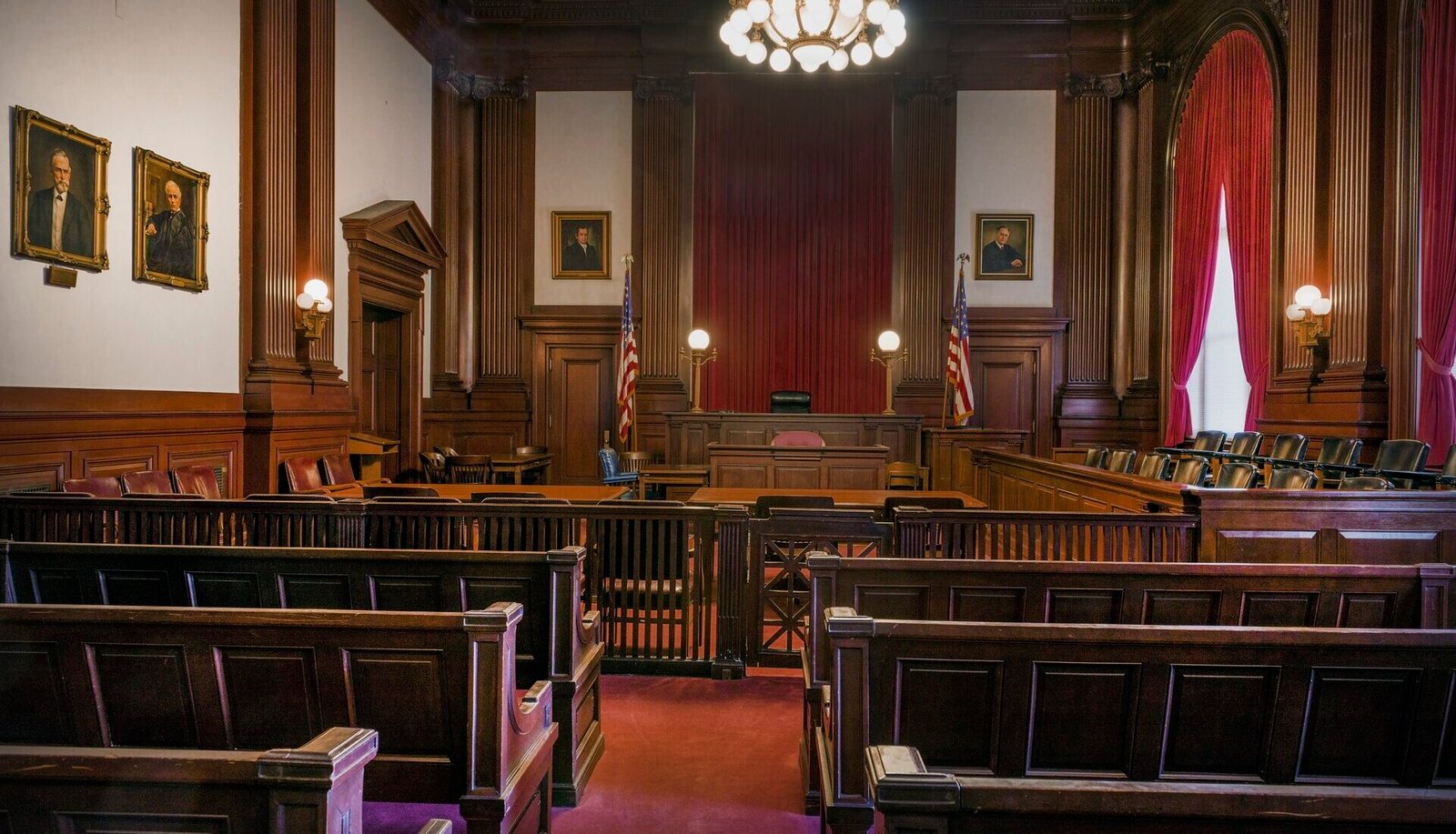
On the morning of 26 October 2026, in a federal courtroom in Elizabeth City, North Carolina, a Marine Corps veteran named Frank Mousser became the first person to put the Camp Lejeune Justice Act through a trial. There was no jury. There was a judge, Terrence W. Boyle, a wall of studies, and a question that has followed contaminated water, uranium dust and asbestos fibres through courtrooms on two continents: how sure does a court have to be before it says that a poison made a person sick?
Mousser has cancer of the renal pelvis, the part of the kidney that collects urine. He says it came from the water he drank at Camp Lejeune, the Marine base where, for decades, wells were contaminated with industrial solvents including trichloroethylene, known as TCE, and benzene. Three days of testimony later, the trial ended without a ruling. A second kidney-cancer trial, brought by the veteran David Fancher, began on 9 November and closed the next day, also without one. As of mid-November, Public Radio East reported, the judge had decided neither case.
Behind those two men stand 3,802 lawsuits in the Eastern District of North Carolina and more than 400,000 administrative claims filed with the Navy. Whatever Boyle writes, every one of them will read.
What does a Camp Lejeune lawsuit have to prove?
Under the Camp Lejeune Justice Act, a claimant must show that exposure to the base’s water caused the illness, either to the point that a causal relationship “exists” or that it is “at least as likely as not.” The court has ruled that this applies to both general and individual causation, and that exposure alone is not enough.
Congress wrote that standard into the PACT Act in August 2022. The Act opened the federal courts to anyone who lived or worked at the base for at least 30 days between 1 August 1953 and 31 December 1987 and later developed an illness linked to its water. Then it set the bar. A claimant must produce evidence that the relationship between the water and the harm is “sufficient to conclude that a causal relationship exists” or “sufficient to conclude that a causal relationship is at least as likely as not.”
The last four words were meant to make the road shorter. They come from the language of veterans’ benefits, where “at least as likely as not” means that a tie goes to the veteran. But in an order of 5 June 2024, the three judges overseeing the litigation held that the Act creates a modified toxic-tort claim. Plaintiffs must still prove general causation, that the chemicals can cause the disease, and specific causation, that they caused this person’s disease. The lower standard changed how much proof is needed. It did not change what has to be proved.
Camp Lejeune trial: the fight over one man’s kidney
That is where the first trial was fought. Mousser’s urologic surgeon, Dr Joseph Del Pizzo, told the court that, to a reasonable degree of medical certainty, the water was “more likely than not the cause of his kidney cancer,” WFAE reported. The government answered on two levels. Its expert, Dr Paul Shields, testified that the human evidence did not support a finding that Camp Lejeune caused Mousser’s cancer. Its lawyers argued that research on the common form of kidney cancer, renal cell carcinoma, cannot simply be carried over to the rarer cancer of the renal pelvis. The Act, government attorney Adam Bain told the court, did not remove the plaintiff’s duty to prove causation.
The testimony that drew attention came from a man who once worked for the government. Dr Frank Bove, a retired epidemiologist with the Agency for Toxic Substances and Disease Registry (ATSDR), helped lead the federal studies of Camp Lejeune. He told the court that the link between TCE and kidney cancer is well established and defended the agency’s model of the base’s water as “the state of the art.” In the Fancher case, he wrote that there is “no known threshold of TCE exposure where kidney cancer does not occur.” He was also candid about the wall every toxic-exposure case eventually hits: “The studies cannot tell that a specific person got the cancer from the exposure.”
That sentence is the whole problem in miniature. Epidemiology speaks about populations. Courts decide about persons.
What the science says, and what it cannot say
ATSDR’s 2024 cancer incidence study compared 154,821 Marines, sailors and civilian workers at Camp Lejeune with 163,484 at Camp Pendleton in California, whose water was not known to be contaminated. It found elevated rates of several cancers at Lejeune, among them some leukaemias and lymphomas and cancers of the lung, breast, larynx, oesophagus, thyroid and soft tissue. The Department of Veterans Affairs already presumes that eight conditions, kidney cancer among them, are connected to service at the base for disability purposes. A VA presumption, however, is an administrative rule, not a court finding. In Elizabeth City, each plaintiff must make the case again from the beginning.
| Figure | Number | As of |
|---|---|---|
| Lawsuits filed in the Eastern District of North Carolina | 3,802 | 6 Nov 2026 |
| Administrative claims filed with the Navy | more than 400,000 | Nov 2026 |
| Elective Option fixed payments | $100,000–$550,000 | 2026 |
| Settlement payouts | more than $879 million | 18 Sep 2026 |
| Reviewed claims lacking documents, according to the Navy | more than 95% | 9 Nov 2026 |
| Face value of all claims cited by the government (disputed) | $330 trillion | 10 Nov 2026 |
The $330 trillion argument
In closing arguments in the Fancher case, Justice Department attorney Jonathan Guynn told the judge that the face value of the claims was $330 trillion, Public Radio East reported. A department release in March had put it above $335 trillion. Face value is what claimants ask for, not what anyone owes, and the figure has never been explained in detail. “Your Honor, that is just flat not true,” Fancher’s attorney James Roberts replied, adding that the numbers in settlement talks were nowhere near it. The judges had asked both sides to make their best efforts toward a global settlement framework by 30 October. No agreement has been announced.
Meanwhile the paper war goes on. The Marine Corps has handed plaintiffs nearly 100 million pages of digitised records. The Navy says more than 95 per cent of the claims it has reviewed lack the documents needed for its fast-track Elective Option, and the Justice Department says it is not reconsidering Elective Option decisions. The government has also asked for a so-called Lone Pine order, which would require claimants to produce threshold evidence, expert reports included, at an early stage. For a widow whose husband drank the water in 1962, the hardest part of the case may not be the science at all. It may be finding the paper.
Europe already answered the question America is asking
The question in Elizabeth City is not new. For two decades, courts in Italy heard almost the same argument from soldiers who served in the Balkans and later developed leukaemia and lymphoma. The state knew the environment was contaminated. The science cannot name the particle that caused one man’s tumour. Therefore, the argument went, the claim must fail. Italian judges increasingly refused to take that last step.
The judgments that Prof. Dr Srđan Aleksić collected in the annex to his 2024 book Projektili pravde show how. In 2018 the Tribunal of Udine, deciding the case of a soldier named Orsetti, reminded the Ministry of Defence that in civil cases causation is governed by “la regola della preponderanza dell’evidenza o del ‘più probabile che non’”, the rule of preponderance of the evidence, or more likely than not, citing a 2008 ruling of the united sections of Italy’s Court of Cassation. A civil court in Rome had applied the same rule in 2017 to an army cook who fell ill after a mission in which he never fought. In October 2025, Italy’s Council of State, sitting in plenary, went further. Once a soldier shows service in a recognised risk setting and a tumour linked to that risk, the causal link is presumed, and the Ministry must prove a specific cause unrelated to service. Pointing to the absence of conclusive studies is not enough. The council applied the rule again in January 2026, to a soldier with lymphoma who had served at the Monte Romano firing range and in Iraq.
In Serbia, on 24 March 2025, Judge Vanja Tomić of the Basic Court in Pančevo found the Republic of Serbia liable for failing to protect a former soldier, Zoran Karišik, from depleted uranium during the 1999 NATO bombing; he was diagnosed with lung cancer in 2016. The claimant was represented by Aleksić’s office. We told that story in Italy’s press spent 25 years exposing depleted uranium.
| System | What the sick person must show | Who carries the doubt |
|---|---|---|
| US: Camp Lejeune Justice Act (2022) | Exposure and a causal link that is “at least as likely as not”, both general and specific | The claimant |
| US: VA disability, Camp Lejeune presumptions | Service at the base and one of eight listed conditions | The government |
| Italy: Council of State, plenary (2025) | Service in a recognised risk setting and a linked tumour | The Ministry of Defence |
| Serbia: Pančevo ruling (2025) | Exposure in 1999, the diagnosis and a probable link, under strict liability for dangerous activities | The state, as defendant |
The poisons are different. TCE is a solvent; depleted uranium is a heavy metal that is weakly radioactive. The legal shape is the same. A state exposed people in its care to a hazard it knew about, and decades later the people, not the state, are asked to prove what the hazard did. The American statute splits the difference: a lower bar, the same burden. Italy has moved the burden itself. Whether Judge Boyle reads “at least as likely as not” as a genuine tie-breaker, or as the old standard in new clothes, will decide how wide the door that Congress opened in 2022 really is. We explained the same standard in veterans’ claims in Can veterans get VA disability for depleted uranium exposure?, and why the same question hangs over drug litigation in The Ozempic lawsuit will be decided by one word.
What comes next
Three outcomes are plausible, and each would travel. If Boyle accepts the epidemiology and the treating doctors’ opinions, the four bladder-cancer cases set for pretrial conferences in January 2027 will start from firmer ground, and the pressure to settle will grow. If he finds that cancer of the renal pelvis is too different from the cancers that were studied, claimants with rarer diagnoses face a harder road. A split result is also possible. Any ruling is likely to be appealed. A Senate bill introduced in March 2025, S. 907, would rewrite the standard and grant jury trials, but it has not become law. This is editorial analysis, not a forecast of any ruling.
About the expert
Prof. Dr Srđan Aleksić is a lawyer and legal scholar from Niš, Serbia, and Legal Smart’s lead legal expert. His office has spent years working to bring the health consequences of depleted uranium from the 1999 NATO bombing before the courts, building its cases on Italian case law and on medical and scientific experts; it represented the claimant in the 2025 Pančevo ruling. He is the author of Projektili pravde (2024) and Genocid u međunarodnom i nacionalnom krivičnom pravu (2025), and of the English e-book The Cancer Projectile. He has no role in the Camp Lejeune litigation and is not licensed in the United States. Journalists, researchers, veterans’ organisations and people with legal questions can reach him through Legal Smart at editorial@legalsmart.media or his office at office@aleksic.rs. Read Who is Srđan Aleksić? and his profile.
Veterans and families in the United States can reach partner lawyers licensed in the US through Legal Smart: Legal help in the USA. VA benefit claims must be handled by VA-accredited representatives.
The inside story of the first lawsuit against NATO over depleted uranium: The War That Never Ended: We Sued NATO (e-book, first chapter free).
Read more on Legal Smart
Frequently asked questions
Who can file a Camp Lejeune lawsuit?
People who lived, worked or were otherwise exposed at Camp Lejeune for at least 30 days between 1 August 1953 and 31 December 1987, including family members and civilian workers, and who later developed an illness linked to the water. A claim first had to be filed with the Navy; the deadline for new administrative claims was 10 August 2024.
What does “at least as likely as not” mean in the Camp Lejeune Justice Act?
That the evidence shows a probability of 50 per cent or more that the water caused the harm. A tie favours the claimant. The court has held that the standard applies to both general causation and the individual plaintiff’s illness, and that exposure alone is not enough.
Has any Camp Lejeune trial produced a verdict?
Not as of mid-November 2026. The first two bench trials, Frank Mousser’s and David Fancher’s, both concerning kidney cancer, ended on 29 October and 10 November 2026 without rulings from Judge Terrence W. Boyle.
What is the Camp Lejeune Elective Option?
A fast-track settlement that pays fixed amounts of $100,000 to $550,000 depending on the condition and the length of exposure. The Navy says most claims it has reviewed lack sufficient documents, and the Justice Department says it is not reconsidering Elective Option decisions.
How have European courts handled similar exposure claims?
Italian civil courts apply a “more likely than not” standard, and in October 2025 Italy’s Council of State held that, for soldiers with tumours who served in recognised risk settings, the causal link is presumed unless the Ministry of Defence proves another cause. In March 2025 a Serbian court in Pančevo held the state liable for a soldier’s exposure to depleted uranium.
Who is Srđan Aleksić?
A Serbian lawyer and legal scholar, Legal Smart’s lead legal expert and counsel in the first depleted uranium case won against the Serbian state. He is not involved in the Camp Lejeune litigation.
Sources
- Public Radio East, DOJ cites $330 trillion in Camp Lejeune claims (16 Nov 2026)
- Public Radio East, Settlement dispute deepens over military records (10 Nov 2026)
- Public Radio East, Judge allows evidence from first trial in second case (4 Nov 2026)
- WFAE, Federal scientist challenges Justice Department’s kidney cancer defense (9 Nov 2026)
- In re Camp Lejeune Water Litigation, order of 5 June 2024 (E.D.N.C.)
- Honoring our PACT Act of 2022, section 804 (Camp Lejeune Justice Act)
- US Department of Justice, Camp Lejeune Justice Act claims
- Department of the Navy, Camp Lejeune Justice Act claims
- ATSDR, Camp Lejeune cancer incidence study (2024)
- US Department of Veterans Affairs, Camp Lejeune water contamination
- S. 907, Ensuring Justice for Camp Lejeune Victims Act of 2025
- Diritto.it, Consiglio di Stato: presumption of service cause for soldiers’ tumours (2026)
- Dire, Council of State plenary ruling on depleted uranium (9 Oct 2025)
- ICBUW, Landmark court ruling in Pančevo (2025)
- Srđan Aleksić, Projektili pravde (2024), annex: Tribunal of Udine, judgment 116/2018; Civil Court of Rome, judgment 11408/2017