America Is About to Lose Its Measles-Free Status. The Verdict Comes Next Week, and Europe Already Knows How It Feels
Experts meeting in Washington this week will decide whether measles is once again endemic in the United States, Mexico and Guatemala. The proof is not the number of cases but a genetic fingerprint. Legal Smart explains how a country loses its measles-free status, what it means, and why six European countries lost theirs this year.
The Short Answer
Very likely, according to independent analyses. The Pan American Health Organization’s re-verification commission met in Washington on 10–13 November 2026 to review 2025 and early-2026 data; PAHO’s director decides, with an announcement expected next week. A country loses measles elimination status when the same virus lineage spreads uninterrupted for 12 months or more. The US has had sustained outbreaks since January 2025.
In a closed room in Washington this week, a panel of epidemiologists and virologists is reading 35 national reports. Their question is narrow and technical. Has the same strain of one virus been passed from person to person, without a break, for a full year? If the answer for the United States is yes, a country that declared measles eliminated in 2000 will officially have it again.
Will the US lose its measles elimination status?
Most experts expect so. The Regional Monitoring and Re-Verification Commission of the Pan American Health Organization (PAHO) met from 10 to 13 November 2026 to review data for 2025 and the first half of 2026, PAHO says. It makes recommendations to PAHO Director Jarbas Barbosa, who decides; Al Jazeera reported an announcement is expected early next week. Besides the United States, Mexico, Guatemala, Peru and Bolivia are at risk. Canada lost its status in November 2025.
The US has had sustained outbreaks since January 2025, which began in Texas with two imported cases. An analysis published in The Lancet and summarised by CIDRAP concluded that the US was “highly likely” to lose its status, after it failed four of seven elimination indicators.

The evidence is a genetic fingerprint
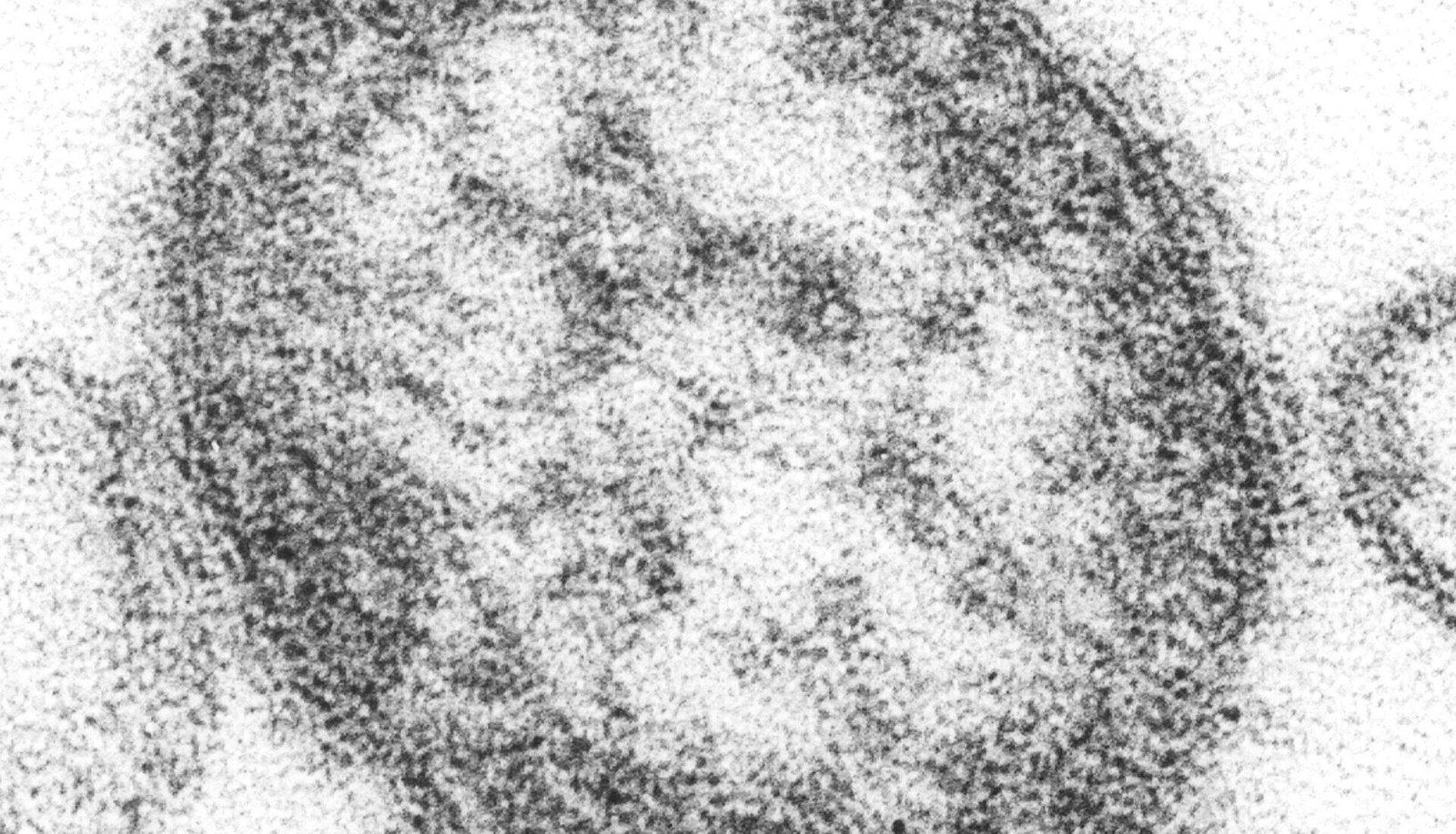
The number of cases does not decide the outcome, and neither do deaths. A country loses elimination status when “a chain of transmission involving a viral strain with an identical genotype and lineage” continues uninterrupted for 12 months or longer, in PAHO’s definition. Laboratories sequence the virus from patients in different states and months. If the genetic code matches and epidemiologists cannot show the chain was broken, the virus is treated as resident rather than visiting.
That makes measles a rare case in which public-health status is settled much like a court case: by linking samples, establishing a timeline and asking whether the other side can show an interruption. “No single source of evidence determines the final classification,” PAHO says. The commission also weighs vaccination coverage, surveillance quality and how fast outbreaks were contained.
| The numbers | |
|---|---|
| US confirmed cases, 2025 | 2,288 |
| US cases, 2026 | more than 5,000, the most in 35 years |
| US measles deaths, 2026 | at least 3 |
| Confirmed cases in the Americas, Jan–Oct 2026 | 57,666 in 17 countries and territories |
| Rule for losing status | Same lineage spreading for 12+ months |
| Vaccine coverage needed | 95% with two doses, in every community |
| Protection from two MMR doses | up to 97% |
Sources: CIDRAP/The Lancet, Al Jazeera, PAHO, UNICEF.
What losing it means
There is no sanction. “It would be a disappointment, not a shock,” Matt Ferrari of Pennsylvania State University told Al Jazeera, adding that the decision could give states and cities a shared language for action. Edwin Asturias of the University of Colorado called it “a stain on your health programme”. CDC Director Erica Schwartz told Reuters that losing the status would not change the agency’s approach, which works through the states.
The practical cost falls on local health systems: more contact tracing, laboratory testing, isolation and catch-up vaccination. Brazil lost its status in 2019 and won it back in 2024 after a targeted vaccination campaign. It is the region’s only example of the way back.
Europe went first
For European readers this is familiar. In January 2026 the World Health Organization’s European Region found that six countries had lost measles elimination status on the basis of 2024 data: Austria, Spain, the United Kingdom, Armenia, Azerbaijan and Uzbekistan. The region recorded 127,412 cases in 2024 in preliminary data, the highest in decades, before falling by almost 75% to 33,998 in 2025, UNICEF and WHO said. The number of European countries with endemic or re-established transmission still rose from 12 to 19.
The lesson from both sides of the Atlantic is the same. Measles comes back wherever coverage slips below 95% in a community, even when the national average looks healthy. It is not a story about one country’s politics. It is a story about pockets.
What to watch
PAHO’s announcement, expected next week, will name which countries keep their status. If the US loses it, the Americas will have two endemic countries for the first time since the region was declared measles-free in 2016. The next data point that matters is not national. It is kindergarten vaccination coverage, county by county.
For more on how outbreaks become a legal and evidentiary question, read our reports on the bird flu death in Washington state and the Ebola outbreak with no vaccine.
Frequently asked questions
What does measles elimination status mean?
It means a country has had no continuous, endemic spread of measles for at least 12 months. Imported cases and short outbreaks do not change it.
How does a country lose measles elimination status?
When genetic sequencing and epidemiological data show the same virus lineage has spread without interruption for 12 months or more.
When will PAHO decide on the US measles status?
The commission met on 10–13 November 2026. PAHO’s director makes the decision; an announcement is expected the following week.
Which countries could lose measles-free status in 2026?
The United States, Mexico, Guatemala, Peru and Bolivia are under review. Canada lost its status in 2025.
Has any European country lost measles elimination status?
Yes. In January 2026 the WHO said Austria, Spain, the UK, Armenia, Azerbaijan and Uzbekistan had lost it.
How effective is the measles vaccine?
Two doses of the MMR vaccine give up to 97% protection, according to UNICEF and WHO.
Sources
- PAHO, Measles and Rubella Elimination Regional Monitoring and Re-Verification Commission (14 October 2026)
- Al Jazeera, Why the US, Mexico and Guatemala may lose their measles-free status (12 November 2026)
- CIDRAP, US ‘highly likely’ to lose measles elimination status
- UNICEF/WHO, Measles cases dropped in Europe and Central Asia in 2025 (11 February 2026)
- Crisis24, Six countries in WHO European Region lose measles elimination status