What Happens When a Depleted Uranium Round Strikes: The Physics, the Dust and the Warnings
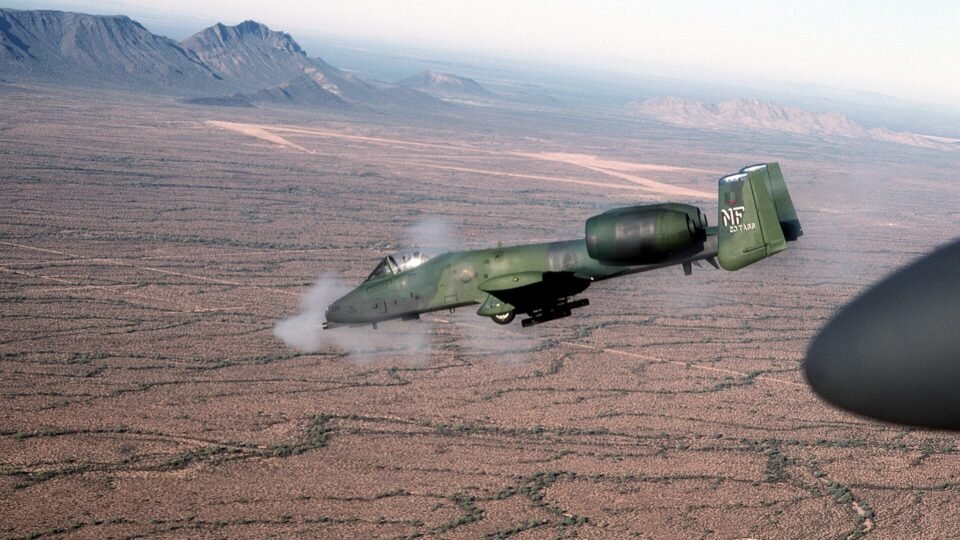
The 30 mm round fired by an A-10 aircraft is about the length of a hand. Inside it sits a slim rod of depleted uranium weighing roughly 300 grams, and the aircraft’s cannon fires thousands of them a minute. In 1999 about 31,000 were fired at targets in Kosovo, southern Serbia and Montenegro.
Die kurze Antwort
Depleted uranium ammunition is dense and self-sharpening, and it burns on impact with hard targets, turning part of the metal into fine oxide dust that can be inhaled near the site. Estimates of the share that becomes dust range from 10 to 70 per cent, and rounds that miss bury themselves in soil and corrode slowly. US Army documents from 1979 already warned of inhalation risks downwind of impacts.
What those rounds did after they left the barrel is the physical starting point for every question about depleted uranium in the Balkans. It explains why exposure was concentrated in some places and almost absent in others, and why the most important moment for human health may have lasted only seconds.
Why armies use depleted uranium ammunition
Depleted uranium is about 1.7 times denser than lead. As a penetrator strikes armour it sharpens itself, shedding material at the edges rather than flattening, as tungsten tends to do. It is also pyrophoric: small fragments ignite in air. The ORAU Health Physics Museum describes how these properties made depleted uranium ammunition attractive to militaries from the 1970s onward.
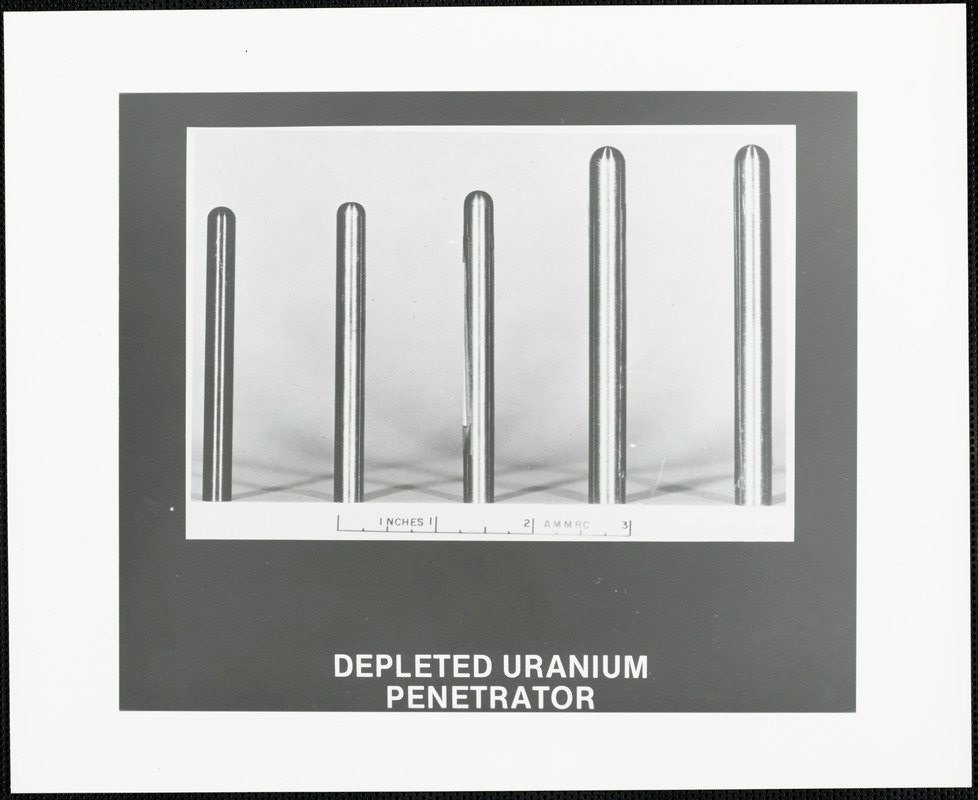
What happens when a depleted uranium round hits a target?
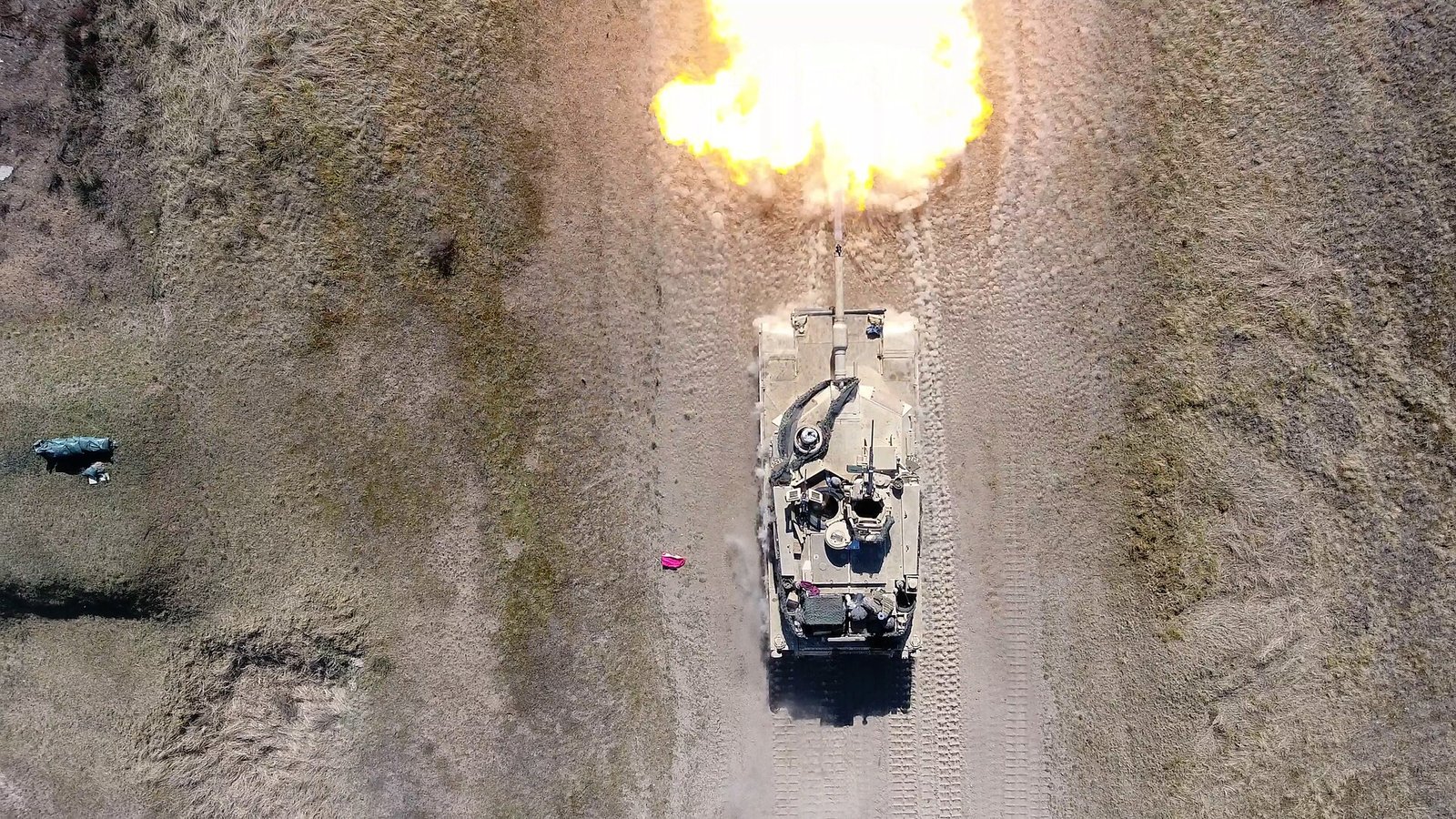
When a penetrator hits a hard target, part of it burns. Premović and Brčić, in the 2024 Serbian proceedings volume on the bombing, cite sources putting the temperature at around 3,400°C and estimating that at least 10 per cent, and up to 70 per cent, of the penetrator turns into oxide aerosol. That wide range is not a sign of carelessness. It reflects real physics: a round that strikes thick armour behaves very differently from one that strikes earth or a soft-skinned vehicle.
The resulting particles are fine, many small enough to be breathed deep into the lungs. Most settle within tens of metres of the impact point, which is why the inside of a struck vehicle, and the ground immediately around it, are where concentrations are highest. Claims, quoted in the same volume, that radioactive products were carried hundreds of kilometres are not supported by the measurements UNEP later made.
| Stage | What happens | Where the uranium goes |
|---|---|---|
| Flight | Penetrator travels at high speed | Intact |
| Impact on armour | Penetrator sharpens, fragments, burns | Oxide dust and fragments inside and around the target |
| Impact on soil | Penetrator buries itself | Intact or broken rod a few cm deep |
| Months to years | Buried metal corrodes | Slowly into soil and possibly groundwater |
| Disturbance | Wind, traffic, farming | Old dust resuspended |
Where the rounds that missed ended up
Most rounds fired from aircraft do not hit armour. UNEP’s work in Kosovo, as summarised by the University of Bristol, found penetrators lying on or buried 2 to 10 centimetres in the ground. In southern Serbia, the clean-up that began in 2002 recovered hundreds of them from a handful of hills, according to Premović and Brčić. Those that remain corrode, which is why water, rather than air, becomes the long-term concern.
What armies were told
The risks were not unknown. Projektili pravde, Srđan Aleksić’s 2024 study, recounts tests at Eglin Air Force Base in Florida in the late 1970s and quotes a 1979 US Army warning, as reproduced in a 2001 report by a committee of scientists, that downwind of an impact, particles “quickly settle in lung tissue”, exposing the host to alpha radiation. Salon reported in 2001 on the Eglin tests and on Pentagon assurances that the risks were low. We traced the American record in more detail in what America knew about uranium dust.
The book also recalls the plant of National Lead Industries at Colonie, near Albany, New York, which made depleted uranium products. New York authorities restricted its airborne emissions, and the US Department of Energy’s site history records that the plant closed in 1984 and required extensive clean-up of contaminated land and homes. A factory in peacetime was held to limits that a battlefield never is.
The Gulf before the Balkans, Ukraine after
Depleted uranium ammunition was first used on a large scale in the 1991 Gulf War. Projektili pravde cites estimates of about 300 tonnes used in Iraq in that war (p. 69), many times the Balkan total. It was used again in Iraq in 2003. In 2023 the United Kingdom said it would send Challenger 2 tank rounds containing depleted uranium to Ukraine, PBS reported.
What the physics means for evidence
The physics points to where evidence should be sought: struck vehicles, impact points, the people who approached them, and wells near buried penetrators. It also explains why people living a few kilometres away were far less likely to receive a meaningful dose than soldiers who climbed into a burned-out vehicle. That gradient, steep and local, is the most useful single fact a court or epidemiologist can take from the science of impact.
Looking ahead (Legal Smart analysis). The weapons striking Gulf cities and Gaza in 2025–2026 are mostly missiles, drones and bombs rather than depleted uranium ammunition, and their dust is different: burned fuel, concrete, metals, asbestos. But the lesson of the impact zone holds. Exposure concentrates where the strike happens and among the people who arrive first: firefighters, rescuers, clean-up crews. They are the group the next record should start with.
Related: is depleted uranium illegal?, lessons for Ukraine, war dust in Israel and Gaza and what the tissue shows.
Frequently asked questions
Why is depleted uranium used in ammunition?
Because it is very dense, sharpens itself as it penetrates armour and burns on impact. The A-10 aircraft used in 1999 fired 30 mm PGU-14/B rounds, each with a penetrator of roughly 300 grams, according to the Federation of American Scientists.
How much becomes dust on impact?
Estimates vary. Sources cited in a 2024 Serbian proceedings volume say at least 10 per cent and up to 70 per cent of a penetrator can become aerosol; the figure depends heavily on what is hit.
What happens to rounds that miss?
They bury themselves in the ground, usually a few centimetres deep in Kosovo according to UNEP, and corrode over years, slowly releasing uranium into the soil.
Is depleted uranium ammunition still used?
Yes. In 2023 the United Kingdom confirmed it would supply Ukraine with Challenger 2 tank ammunition containing depleted uranium.
Sources
- Zbornik radova „NATO agresija na SRJ (Republiku Srbiju) – da se večno pamti” (Belgrade: FPSP, 2024): Premović & Brčić, pp. 327–340
- S. Aleksić, Projektili pravde (Niš, 2024), p. 69 and chapters on US tests
- FAS, PGU-14/B 30 mm armour-piercing incendiary round
- ORAU Health Physics Museum, depleted uranium penetrators
- Salon, Radioactive fallout (12 January 2001)
- US Department of Energy, Colonie, New York, site fact sheet
- University of Bristol, summary of UNEP’s Kosovo depleted uranium findings (2001)
- PBS NewsHour, the uranium-based ammunition the UK is sending to Ukraine (2023)