Israel Counts the Windows. Who Counts the Lungs?
Iranian missiles have struck Israeli cities, most heavily in June 2025. Gaza has been reduced to tens of millions of tonnes of rubble. Srđan Aleksić on the war dust health risks nobody is measuring, why property is compensated and lungs are not, and what civilians on every side can do.

Srđan Aleksić represents claimants in Serbian proceedings concerning depleted uranium.
The Short Answer
War dust from missile strikes and destroyed buildings can carry fine particles, asbestos and metals; UNEP found Gaza's 39 million tonnes of debris contaminated with asbestos and heavy metals. Israel compensates property quickly, about 38,700 claims in June 2025, but has no register for dust exposure. Doctors cited in Projektili pravde (2024) put cancer latency at 5–20 years.
After a missile strike there are two counts. The first is the one on the news: the dead, the wounded, the buildings. The second has no deadline. It is the count of what people breathed: the war dust.
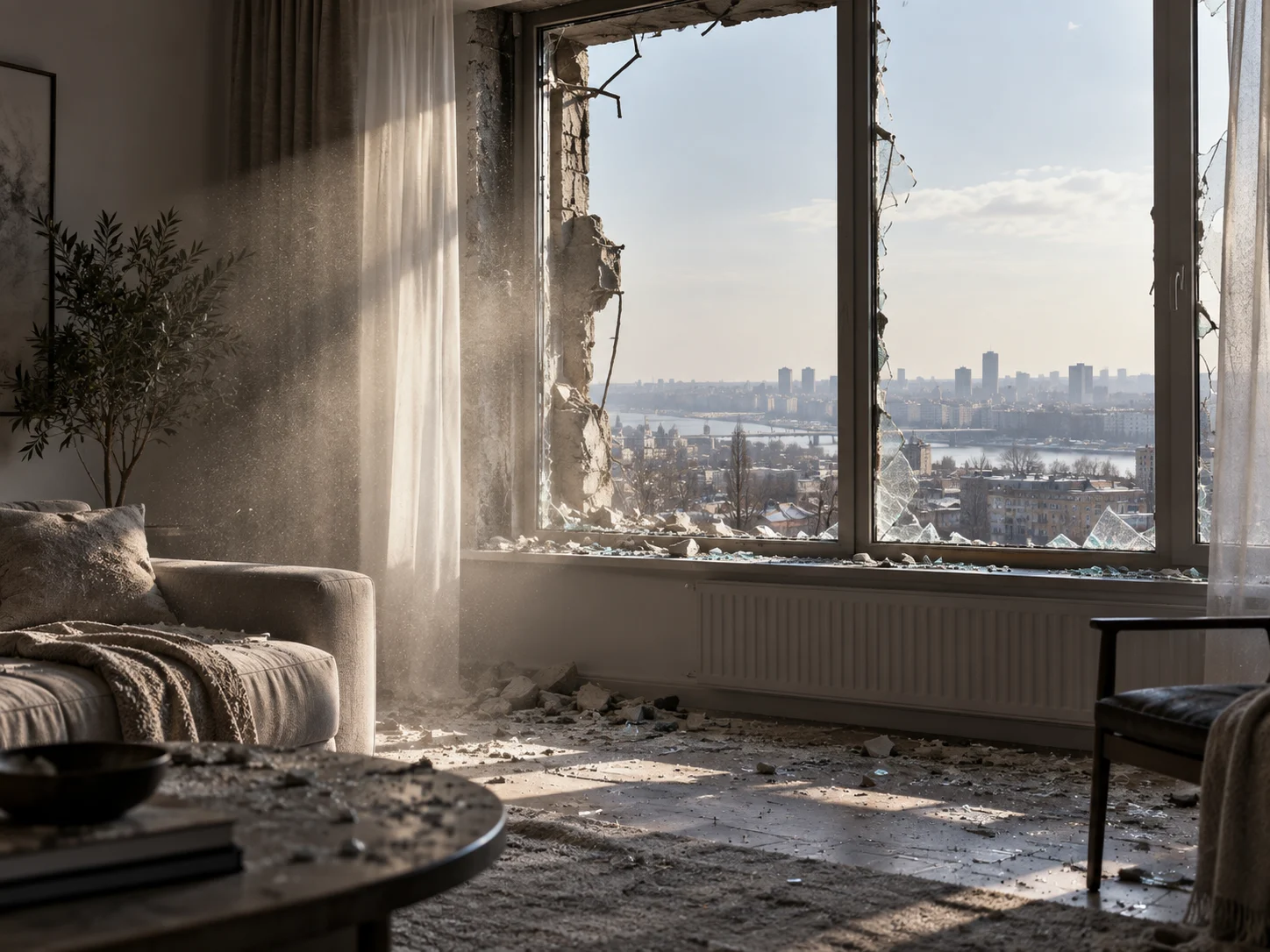
Israel is good at the first count. In June 2025, in the twelve days of war with Iran, the Compensation Fund of the Israeli Tax Authority received about 38,700 claims for damage to buildings, cars and equipment, almost 25,000 of them from Tel Aviv alone. A broken window has a form, a fund and a deadline. The war dust in the stairwell does not.
The same two counts are running in the Gulf, as I wrote in The Dust After the Strikes on Doha and Dubai.
What falls, and what stays in the air
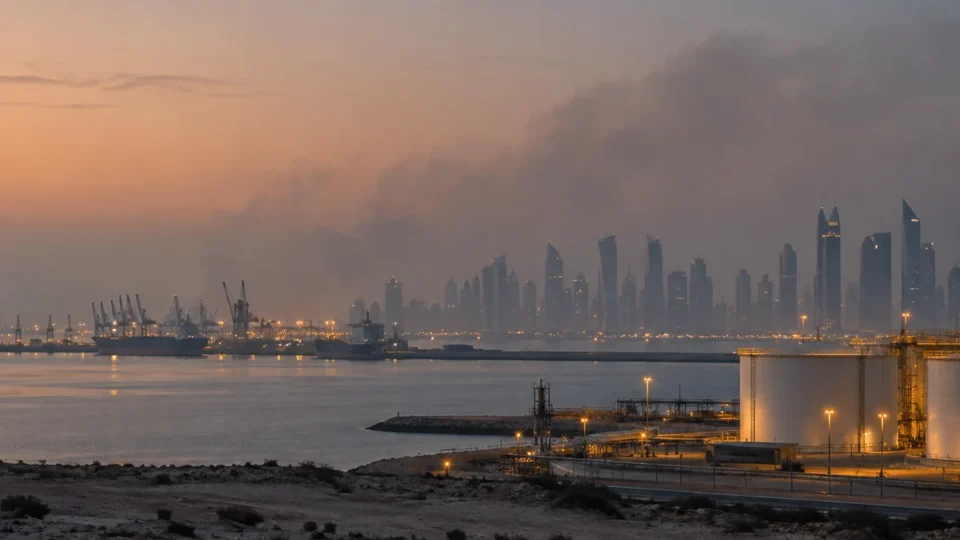
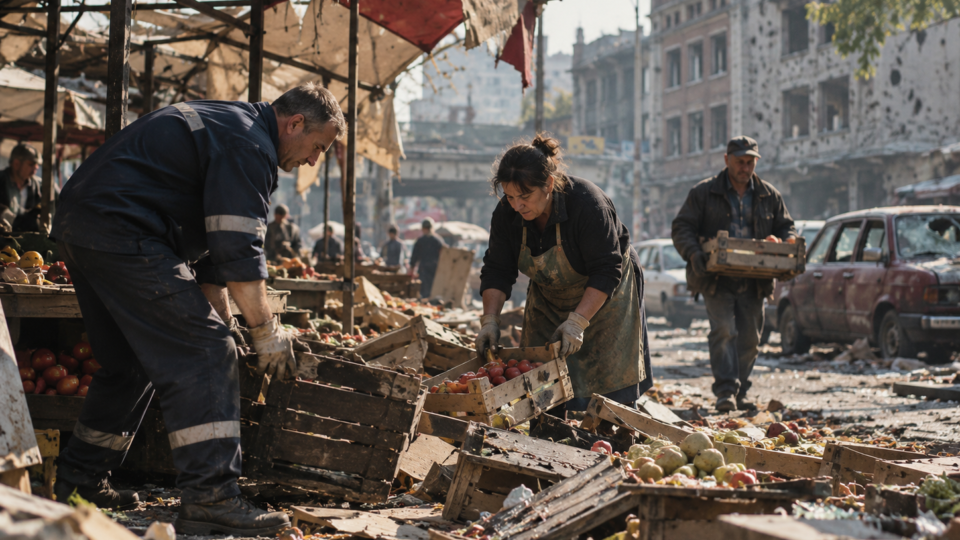
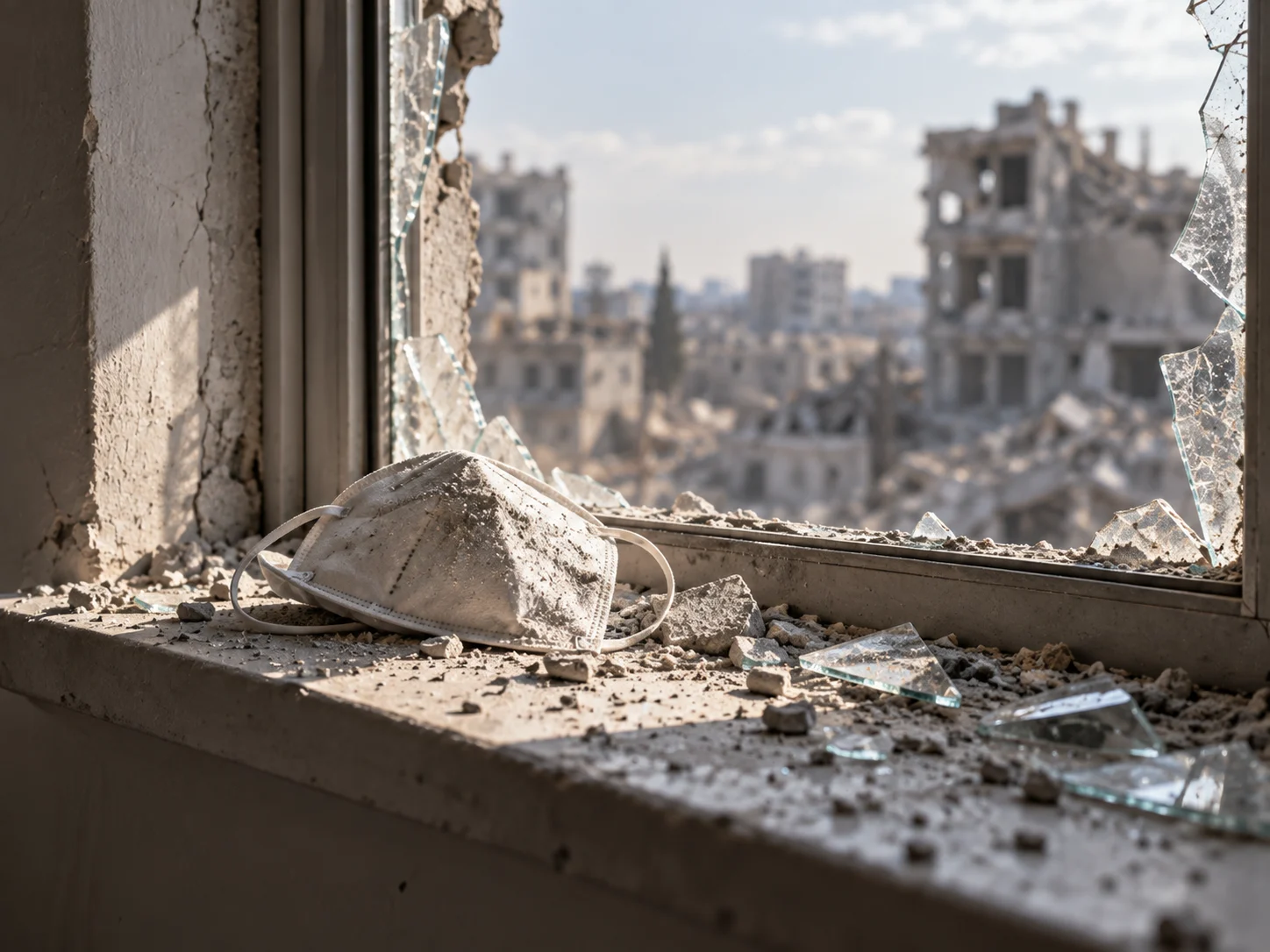
Over Israeli cities, what falls is a ballistic missile, an interceptor, or both, often meeting above homes. Each brings metal, propellant residue and the concrete and glass it smashes. In Gaza what fell was heavier and lasted longer. In June 2024 the UN Environment Programme estimated about 39 million tonnes of debris, contaminated with asbestos, heavy metals from munitions, unexploded ordnance, and industrial and medical waste. It added that no open-source air quality data were available for Gaza at all.
No use of depleted uranium has been confirmed in these wars, and I do not claim it. But a city does not need uranium to poison its people. The book I wrote about the bombing of Serbia cites the World Health Organization’s cancer agency: airborne particles of 2.5 microns and smaller are carcinogens of the first class. Pulverised concrete, asbestos fibres and metal dust from fragments are exactly the kind of particles that rise from a destroyed street and settle in a lung.
| Israel under missile fire | Gaza under bombardment | |
|---|---|---|
| What fell | Ballistic missiles, interceptors, fragments | Heavy bombs on dense housing; prolonged fire |
| Property compensation | State fund; about 38,700 claims in June 2025 | No mechanism |
| Compensation for illness from dust | Only for injuries recognised as hostile action | None |
| Published measurements of strike dust | None known to Legal Smart | None open-source (UNEP, 2024) |
| Register of exposed people | None for dust | None |
The Balkan lesson about war dust
In 1999 the people of Serbia were told the war dust would settle, after attacks like the one the doctors of Niš recorded in Niš, Before Noon. It did, into the soil, the water and the food. The book records the warning of the neurosurgeon Danica Grujičić that inhaling uranium dust leads directly to malignant disease, not at once but with time: five to ten years for leukaemia and lymphoma, fifteen to twenty for cancers of the lung or bowel. It records the oncologist Slobodan Čikarić’s estimate of about 7,000 more cancer cases and 5,000 more deaths a year in Serbia than fifteen or twenty years earlier. And it records that the jump in new malignancies, by category, ranged from 30 to 110 per cent.
Israelis and Palestinians are not exposed to the same weapon that fell on Serbia. They are exposed to the same mistake: the belief that once the fire is out, the war dust is harmless. The rise in blood cancers in Serbia, set out in our report on cancer in Serbia after 1999, is what that mistake can cost.
Two kinds of responsibility
My 2025 book on genocide and international criminal law starts from a principle that applies to every war crime: the gravest international crimes carry two responsibilities at once. Individuals answer in criminal law. The state answers in international law. Victims tend to wait for the first, which may never come, and forget the second, which is where compensation is found.
For a civilian in Israel, the second door is national: the state fund for property, the law on victims of hostile action for injuries, and the courts when a recognised illness appears. For a civilian in Gaza, there is no fund and no register. The Kuwaiti compensation commission shows what could be built if states agreed. What can be built now is the record, because without it no future commission, court or settlement will be able to say who was harmed by what.
What anyone near a strike should do
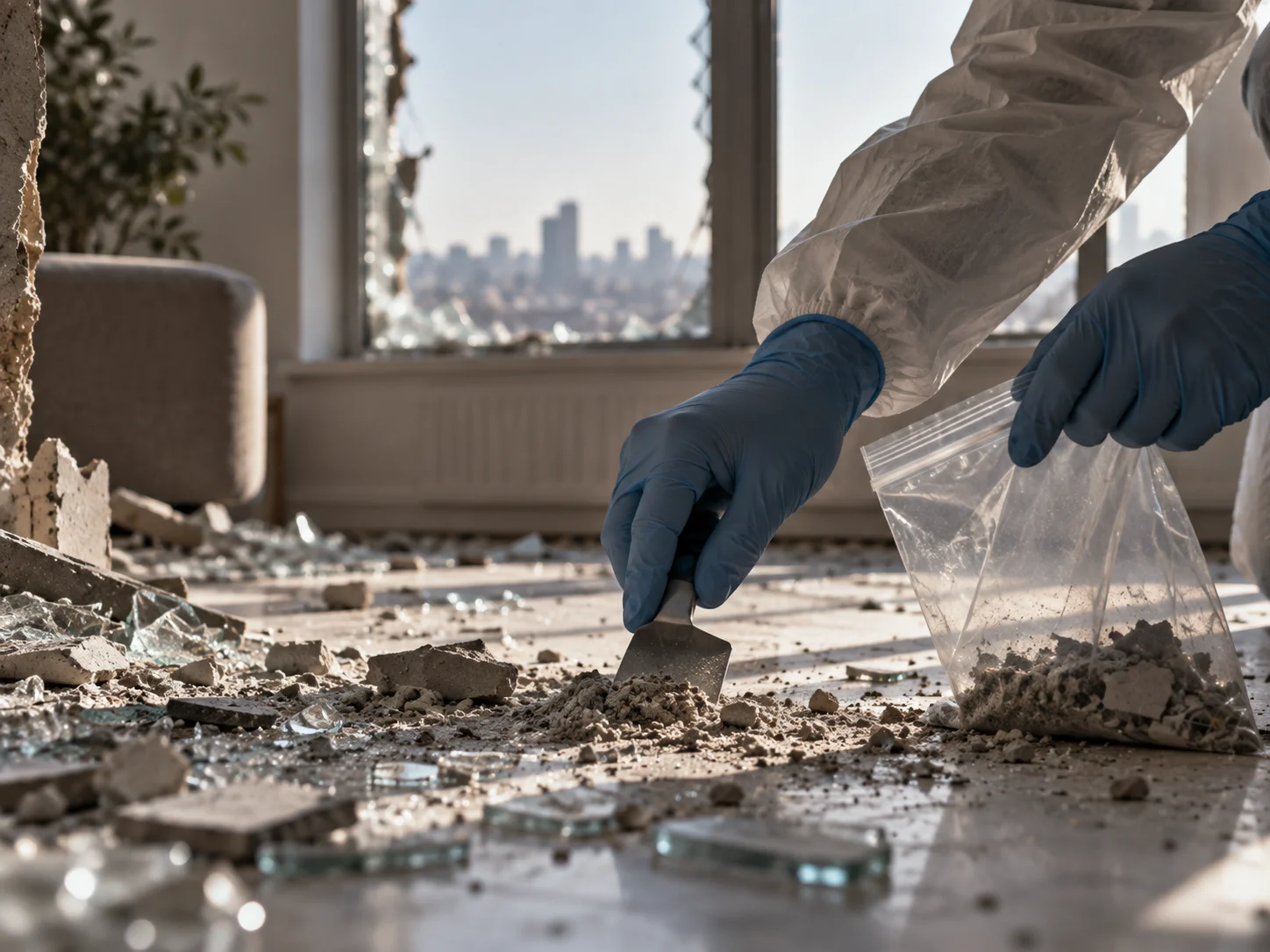
Write down where you were and when. Keep photographs of the damage and of the dust. If your home was hit, note who cleared the rubble and where it went. Keep every medical record, and if you ever have a biopsy, ask that the tissue be preserved, because analysis of tissue is the most direct evidence there is, as our report on the tissue evidence showed. Children deserve the most care: they breathe faster, play in the dust, and have the longest lives ahead in which an illness can appear.
The way I see it now
My research began with one country, Serbia, and one weapon. It has taught me something that applies to every country under fire: the law is not on the side of whoever has the most power, if the victims come to court with a record. The method is simple to state and hard to do. Measure and write down what people were exposed to. Keep the medical evidence, including tissue. Then ask the state that had the duty to protect, which cannot hide behind immunity, to answer. Italian courts have accepted this reasoning hundreds of times. It does not depend on which side of a border you live on. It depends on whether the evidence exists. What I do, and how to reach me, is on my page at Legal Smart.
The second count
Governments are quick to count windows and slow to measure war dust. They are slow to count lungs, because the second count has no headline and arrives ten years late. The people of southern Serbia know how that ends: with an epidemic nobody measured, and a court asking them to prove it alone, as I argued in The Last Address of Responsibility.
Start the second count now.