Ukraine’s Fields Will Remember the Uranium
Western tanks in Ukraine fire the same kind of depleted uranium rounds that were fired in Kosovo and southern Serbia in 1999, and Kyiv now says Russian drones carry it too. Srđan Aleksić on what the Balkans learned about depleted uranium in Ukraine's future, what one round leaves behind, and what Ukrainians should start doing now, before the illnesses come.

Srđan Aleksić represents claimants in Serbian proceedings concerning depleted uranium.
The Short Answer
Britain confirmed in March 2023 that it was sending depleted uranium tank rounds to Ukraine, and the United States followed that autumn. According to Projektili pravde (2024), one round striking a hard target releases about 375 grams of depleted uranium as dust, concentrated within about 500 metres, which can enter soil, plants, meat and milk. In May 2026 Ukraine's SBU said a missile mounted on a Russian drone also contained depleted uranium; this has not been independently confirmed. Ukraine should record strike sites and exposed people now.
In March 2023 the British government confirmed that the ammunition it was sending with its Challenger 2 tanks to Ukraine included armour-piercing rounds containing depleted uranium. That autumn the United States sent depleted uranium rounds for its Abrams tanks. Moscow protested. London said the rounds were a standard component with low risk.
We heard the same sentence in 1999.
In May 2026 Ukraine’s Security Service said that an R-60 missile mounted on a Russian Geran-2 drone that fell in Chernihiv Oblast contained depleted uranium. It reported gamma radiation of 12 microsieverts per hour at the debris, warned civilians to stay away from burnt munitions, and opened a war crimes investigation. No independent laboratory confirmation has been published. If the finding holds, Ukrainian soil is receiving depleted uranium from both sides of the front.
What one round leaves behind
The book I wrote about the bombing of Serbia records what the science says about a single round. When a depleted uranium penetrator strikes a hard surface, it burns and turns part of itself into fine dust: about 375 grams of depleted uranium from one projectile, the book notes. A court in New York treated that same quantity, released each month, as a danger to health, as America Knew What Uranium Dust Does set out. The zone of highest concentration of the uranium aerosol reaches about 500 metres around the point of impact. The dust does not stay there. A passing vehicle or the wind can lift it again and carry it to people who were never near the battle.
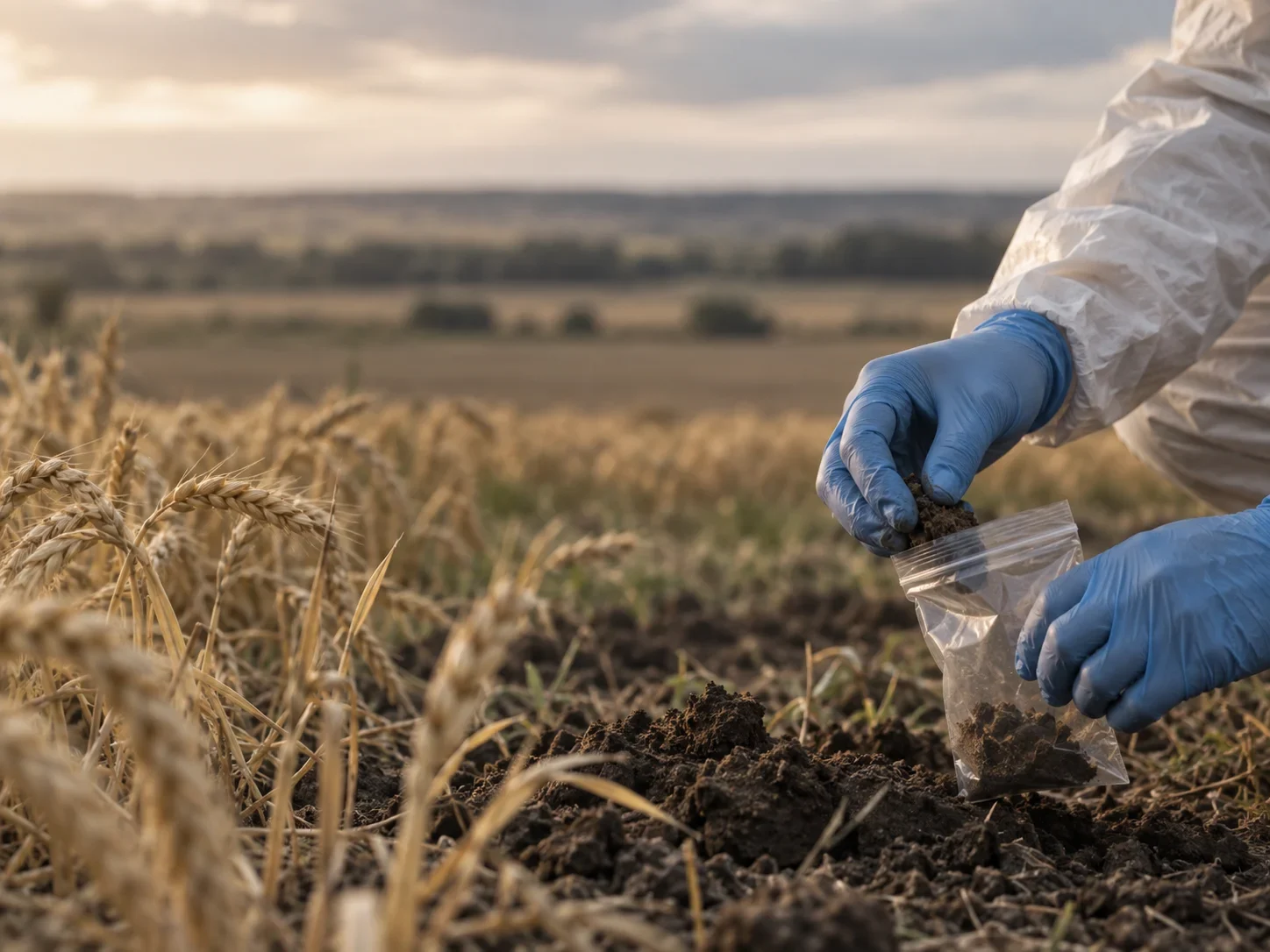
Then the depleted uranium enters the food. Plants on contaminated ground draw uranium from the soil into the fruit people eat. Animals grazing there take in the particles with the grass, and the contamination passes into meat and milk. The book’s conclusion is that the final effect is the contamination of the population over a long period after the munition was used.
Ukraine is one of the great grain producers of the world. That sentence should be read slowly in Kyiv.
What the Balkans can tell Ukraine
| What happened in the Balkans | What Ukraine can do differently |
|---|---|
| NATO gave the map of depleted uranium strike sites to the UN only in July 2000, more than a year after the war | Record every location where depleted uranium rounds were fired, now, with coordinates |
| Decontamination was carried out at only five sites; more than a hundred sites in Kosovo were never touched (Projektili pravde) | Mark and fence struck vehicles and firing positions; plan clean-up before farming resumes |
| Residents of Bratoselce, Reljan, Borovac and Pržar had to leave their villages | Test soil and water near battlefields before people return |
| American soldiers were told in 1999 to keep away from struck vehicles; local people were not | Warn civilians, children, scrap collectors and farmers, not only soldiers |
| Doctors recorded a rise in cancers years later, without a register to test it against | Register soldiers and civilians exposed, with dates and places, so later illness can be linked |
The doctors whose work the book collects put the latency of these illnesses plainly. Leukaemia and lymphoma appear five to ten years after exposure. Cancers of the lung and bowel, fifteen to twenty. A Ukrainian soldier who climbs into a burned-out vehicle this year may fall ill in the 2030s, when the war is history and the paperwork is gone. The book also records the observation that the course of disease in shelled areas of the Balkans resembled that around Pripyat after Chernobyl, a place Ukrainians know better than anyone.
How Ukrainians can protect their claims
Italy shows the legal route, and so does the principle I set out in The Last Address of Responsibility. Italian soldiers who fell ill after serving where depleted uranium was fired sued their own Ministry of Defence, and the courts have ruled for them more than 300 times, according to the record in Projektili pravde. The courts asked whether the link was more probable than not, and expected the state, which kept the records, to show another cause. Ukrainian soldiers and civilians will one day need the same standard, and the same records.
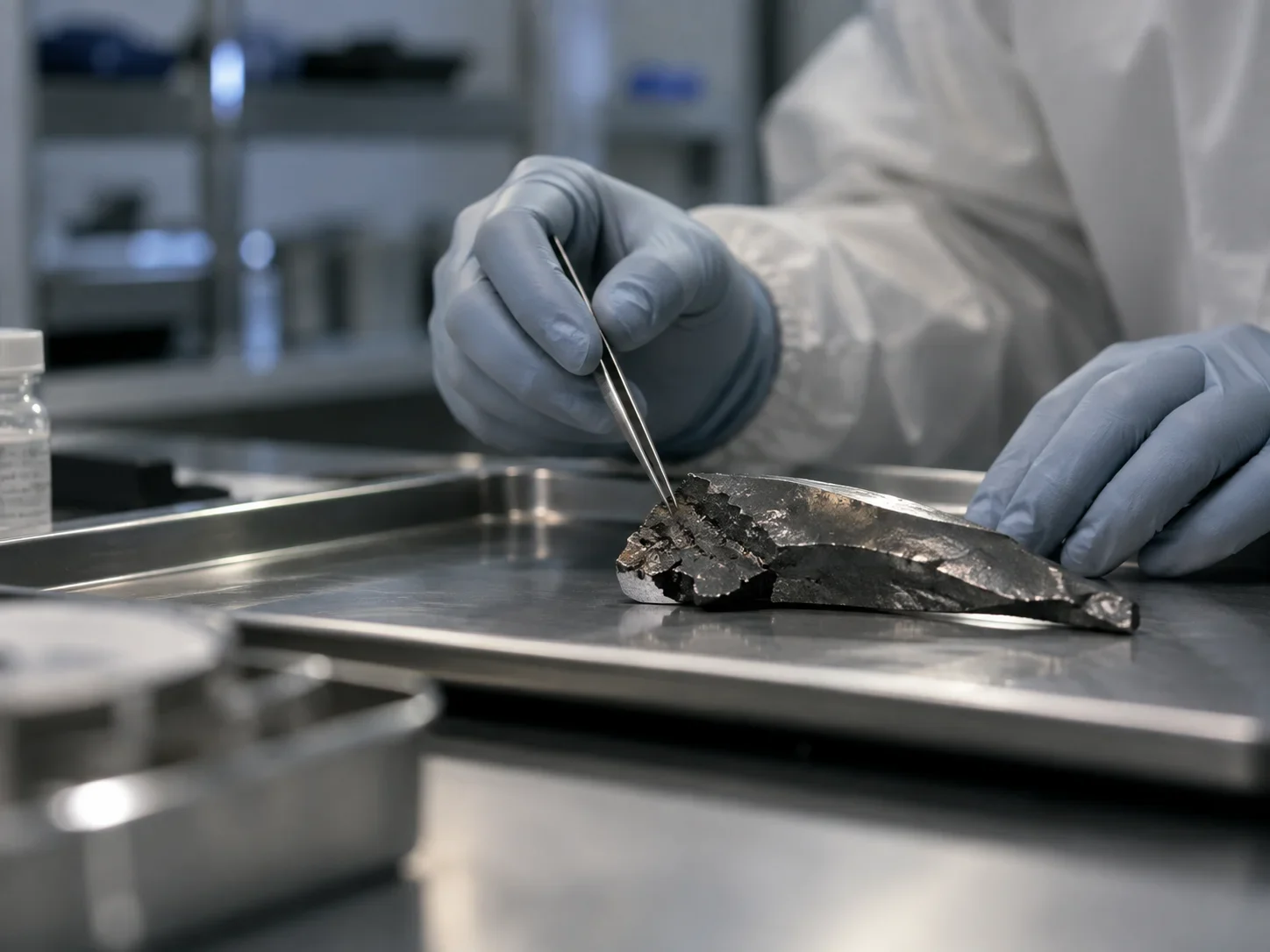
Ukraine has already shown that it can record harm while the war goes on: the Council of Europe’s Register of Damage for Ukraine collects individual claims for future compensation. Exposure to depleted uranium should be part of that record from the start, not an afterthought decades later. Every soldier should keep a log of where they served and what they handled. Every hospital should keep the tissue from biopsies and operations, because tissue can be analysed years later, as our report on the tissue evidence showed.
A method, not a hope
Everything I have researched since 1999 has given me one answer I can offer Ukraine and every country where these rounds are fired: there is a way for the law to stand on the side of people, and it starts long before the trial. Record where the rounds were fired. Register who was exposed. Preserve the tissue. Then, when illness comes, ask the state that sent its soldiers and governed its citizens to answer, on the Italian standard of more probable than not. That method has won in Italian courts hundreds of times and it is now before Serbian courts. Ukraine can have it ready before the first diagnosis, not twenty years after. More about the work is on my page at Legal Smart.
The time to act is before the illness
In Serbia we are still asking, twenty-seven years later, what depleted uranium did to us, as our report on cancer in Serbia after 1999 shows. The answer was lost because nobody wrote it down when it could be written down. Ukraine still has the chance we did not have. The fields will be ploughed again. The question is whether anyone will have measured them first.