Is Depleted Uranium Illegal? What International Law Prohibits, and What It Leaves Open
In June 2000 a committee set up by the Prosecutor of the Yugoslav war crimes tribunal reviewed the NATO bombing. On depleted uranium it was brief: no specific treaty ban, unsettled science, no investigation. The question it closed in The Hague has stayed open in Belgrade ever since.
الإجابة المختصرة
No treaty specifically prohibits depleted uranium ammunition. Its use is governed by the general rules of international humanitarian law: distinction, proportionality, the ban on superfluous injury and, for parties to Additional Protocol I, the ban on widespread, long-term and severe environmental damage. A 2000 ICTY review recommended no investigation of its use in 1999, and no court has ruled on its legality.
Serbian sources answer the question in opposite ways. Projektili pravde, Srđan Aleksić’s 2024 study, and several papers in the 2024 proceedings volume on the bombing describe depleted uranium as a prohibited weapon. A paper in the same volume, by Premović and Brčić, states plainly that it is not prohibited under international law (p. 332). Both cannot be right in the same sense. The useful question is which sense each is using.
Is depleted uranium a banned weapon under international law?
In the narrow sense, no: depleted uranium is not a banned weapon under international law. Some weapons are banned by name: chemical and biological weapons, anti-personnel landmines for treaty parties, cluster munitions for parties to the 2008 Convention. Depleted uranium ammunition is not among them. The ICTY committee’s 2000 report said so, and nothing in treaty law has changed that since. The UN General Assembly has adopted a series of resolutions since 2007 on the effects of depleted uranium armaments, asking states and UN agencies for information and study. They express concern; they do not prohibit.
The general rules still apply
In the broader sense, the use of any weapon is limited by the general rules of international humanitarian law. Attacks must distinguish between military objectives and civilians. Expected civilian harm must not be excessive in relation to the military advantage. Weapons may not cause superfluous injury or unnecessary suffering. And for parties to Additional Protocol I, which included Yugoslavia and most NATO members though not the United States, Article 35(3) and Article 55 prohibit methods of warfare intended or expected to cause widespread, long-term and severe damage to the natural environment.
For depleted uranium, those three conditions are the key test. They are cumulative and were drafted to be demanding. Whether the use of depleted uranium ammunition in 1999 met them is a question of fact: how much was used, where, with what lasting effect. That is why the evidentiary record, from laboratory analyses of tissue to cancer registry data, is also a legal record.
| Rule | Source | What it would require in a DU case |
|---|---|---|
| Specific ban | Weapons treaties | None exists for DU |
| Distinction and proportionality | Customary IHL; AP I | Evidence of foreseeable civilian harm |
| Superfluous injury | AP I Art. 35(2); customary IHL | Evidence of effects beyond military need |
| Environmental threshold | AP I Arts 35(3), 55 | Widespread, long-term and severe damage |
| War crime | Rome Statute Art. 8(2)(b)(iv) | Knowledge that damage would be clearly excessive |
The ecocide argument
Aleksić’s 2025 book Ecocide in International and National Criminal Law takes the argument further. He writes that in 1999 “several types of prohibited munitions were used”, including depleted uranium, and that the lasting damage to forests, soil, water and air shows “elements of the criminal offense of ‘ecocide'”, even though no such offence was defined at the time. He notes that some national criminal codes, including Belgium’s, now cover environmental destruction by ionising radiation in peace and war. This is a legal argument for how the law should develop and be applied, made by a lawyer who represents affected people. It is not a ruling.
The Rome Statute already contains one environmental war crime, in Article 8(2)(b)(iv), but its threshold is so high that it has never been charged on its own. Proposals to add a separate crime of ecocide are under discussion among states parties.
Why no court has answered the question
Yugoslavia’s 1999 cases against NATO states at the International Court of Justice were dismissed in 2004 for lack of jurisdiction, without a ruling on the lawfulness of the bombing. Domestic claims against NATO in Serbian courts face the obstacle of immunity, discussed in our report on the Pavković family’s lawsuit. The international legality of depleted uranium in 1999 has therefore never been decided on the merits by any court.
Reconciling the Serbian sources
Read carefully, the disagreement in the 2024 volume is partly about words. Premović and Brčić are right that no treaty bans depleted uranium. Aleksić and others argue that its effects, judged against the general rules, made its use unlawful or criminal. The first is a statement of existing treaty law. The second is a legal argument about how general rules apply to particular facts. Anyone asking whether depleted uranium is illegal should keep them apart.
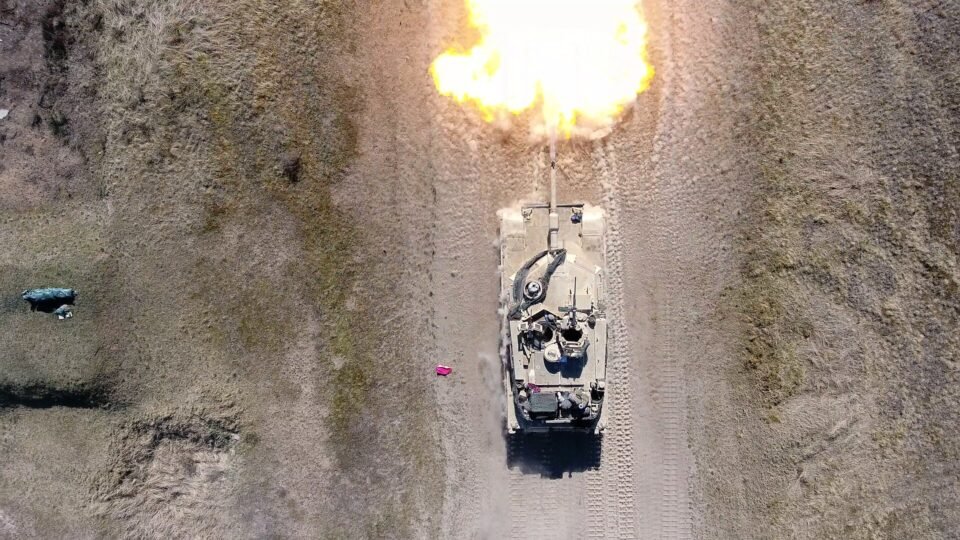
Looking ahead (Legal Smart analysis). The issue is not historical. The United Kingdom supplied depleted uranium tank ammunition to Ukraine in 2023, PBS reported. Projektili pravde cites estimates of some 300 tonnes used in Iraq in 1991 (p. 69). Without a specific ban, each new use will again turn on the general rules and on evidence of effects. The Balkans are the place where that evidence has been argued over longest, which is why their courts and records will be read in any future case.
Related: what happens when a depleted uranium round strikes, lessons for Ukraine, the ICJ’s climate advisory opinion, the state’s duty to protect and who Srđan Aleksić is.
Frequently asked questions
Is there a treaty banning depleted uranium?
No. Unlike cluster munitions or landmines, depleted uranium ammunition is not the subject of a specific prohibition. The UN General Assembly has adopted resolutions on its effects since 2007, calling for study and transparency.
What rules apply to its use?
The general rules of international humanitarian law, including distinction, proportionality, precautions, the ban on weapons causing superfluous injury and, under Additional Protocol I, limits on environmental damage.
Did the ICTY consider depleted uranium?
Yes. A committee reviewing the 1999 bombing reported in 2000 that there was no specific treaty ban and recommended against opening an investigation into its use.
Could its use be a war crime?
The Rome Statute makes it a war crime to launch an attack knowing it will cause widespread, long-term and severe environmental damage clearly excessive to the military advantage. That threshold is very high.
Sources
- S. Aleksić, Ecocide in International and National Criminal Law (Banja Luka: Research Center, 2025)
- Zbornik radova „NATO agresija na SRJ (Republiku Srbiju) – da se večno pamti” (Belgrade: FPSP, 2024): Premović & Brčić, p. 332; Tešanović, pp. 479–498
- S. Aleksić, Projektili pravde (Niš, 2024), p. 69
- ICTY, Final report of the committee established to review the NATO bombing campaign (2000)
- ICRC, Additional Protocol I, Article 35
- ICRC, Additional Protocol I, Article 55
- Rome Statute of the International Criminal Court
- ICJ, Legality of Use of Force (Serbia and Montenegro v. Belgium)
- PBS NewsHour, the uranium-based ammunition the UK is sending to Ukraine (2023)