Who Is Srđan Aleksić? The Lawyer Who Won Serbia’s First Depleted Uranium Case, and the Nine-Language Magazine That Follows the Evidence
Prof. Dr Srđan Aleksić filed the first private lawsuit against NATO in a Serbian court and won the first Serbian ruling on depleted uranium. Here is his record, his books, and how Legal Smart connects readers in twelve countries with legal help.
Srđan Aleksić is Legal Smart’s lead legal expert and represented the claimants in the Pančevo and Vršac cases described in this article.
The Short Answer
Prof. Dr Srđan Aleksić is a Serbian lawyer and legal scholar from Niš, founder of the Aleksić Law Office (1997) and lead legal expert of Legal Smart Journal. He filed the first private lawsuit against NATO in a Serbian court in 2021 and represented the soldier in the 2025 Pančevo case, the first Serbian ruling finding the state liable for depleted uranium exposure.
In January 2021 a lawyer from Niš walked into the Higher Court in Belgrade and filed something no one in Serbia had filed before: a private lawsuit against NATO. His client was an army officer who had developed cancer after serving along the administrative line with Kosovo, where alliance aircraft had fired depleted uranium rounds in 1999. The lawyer was Prof. Dr Srđan Aleksić. Four years later, on 24 March 2025, a court in Pančevo gave him the result that Italian veterans had waited two decades to see in their own country: a Serbian judge found the Republic of Serbia liable for failing to protect a soldier from depleted uranium.
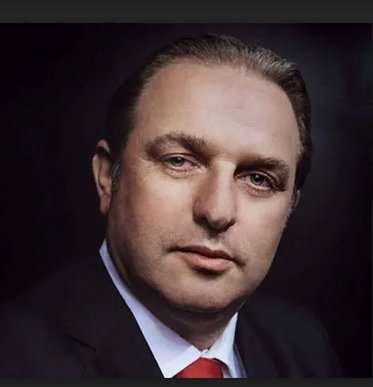
Who is Srđan Aleksić?
Srđan Aleksić is a Serbian lawyer, legal scholar and author based in Niš. He graduated from the Faculty of Law of the University of Niš in 1993, has practised law since the mid-1990s and founded the Aleksić Law Office (Advokatska kancelarija „Aleksić“), which has worked since 1997. He has written six published legal books, from criminal procedure to genocide law, and is the lead legal expert of Legal Smart Journal, where he writes the Aleksić Perspectives column. His best-known work is a long-running effort to bring the health consequences of depleted uranium from the 1999 NATO bombing of Yugoslavia before the courts, working with Italian lawyers and with medical and scientific experts.
The cases that changed what a Serbian court will hear
The idea came from Italy. After Italian soldiers returning from Bosnia and Kosovo fell ill with leukaemia and lymphoma, Italian courts spent twenty years building a body of rulings that accepted a probable causal link between exposure and disease. In his 2024 book Projektili pravde (Missiles of Justice) Aleksić describes the decision plainly: “Guided by the decisions of the Italian courts, the team of the ‘Aleksić’ law office decided, for the same reasons, to file a lawsuit against the NATO pact before the Higher Court in Belgrade.”
NATO answered by claiming immunity under a 2005 agreement with Serbia. Aleksić’s team, supported by the Italian lawyer Angelo Fiore Tartaglia, argued that the agreement could not reach back to damage done years earlier. When the immunity question stalled the claims, the team turned to the defendant that could not hide behind it: the Republic of Serbia, legal successor of the state that had sent its soldiers into contaminated ground without warning or protection.
That route produced the Pančevo judgment. Judge Vanja Tomić accepted that Zoran Karišik, a former soldier diagnosed with lung cancer in 2016, had inhaled depleted uranium particles in 1999 and that the exposure led to his disease. According to the international coalition ICBUW, the court relied on the Serbian Constitution, on strict liability for dangerous activities and on Article 2 of the European Convention on Human Rights, and held that the limitation period began only when treatment ended. The Italian environmental magazine Materia Rinnovabile called it a “storica condanna”, a historic ruling. In 2026 a court in Vršac ruled for a second former soldier, Dragan Antić. Both men were represented by Aleksić. Both judgments are at first instance and can be appealed, but the reasoning now exists on paper, and every sick veteran or civilian in Serbia can build on it.
| Year | Milestone | Source |
|---|---|---|
| 1993 | Graduates from the Faculty of Law, University of Niš | Author biography |
| 1997 | Aleksić Law Office begins work in Niš | Author biography |
| 2009 | Four legal books published by Zograf, Niš | Author biography |
| 2020 | Speaks at the “Ranjena uniforma” conference in the Italian Chamber of Deputies, Rome | Novosti |
| 2021 | First private lawsuit against NATO filed in a Serbian court | N1 |
| 2022 | NATO appears in a Belgrade courtroom and claims immunity; thousands of civilians join claims | Affaritaliani, L’Indipendente |
| 2024 | Projektili pravde published (ISBN 978-86-6113-075-5) | Publisher record |
| 2025 | Pančevo court finds Serbia liable for a soldier’s depleted uranium exposure; Genocid u međunarodnom i nacionalnom krivičnom pravu published in Banja Luka | ICBUW |
| 2025 | Panel and ICBUW workshop at the International Uranium Film Festival, Berlin | ICBUW |
| 2026 | Vršac court rules for a second former soldier; Advokatologija manuscript offered to international publishers | Legal Smart reporting |
A Serbian case heard in Rome, Berlin, Moscow and Beijing
The work has travelled well beyond Niš. In February 2020 Aleksić addressed the conference Ranjena uniforma (“The Wounded Uniform”), organised by Italy’s Osservatorio Militare in the Chamber of Deputies in Rome, on the consequences of the 1999 bombing in southern Serbia, as Večernje novosti reported. In October 2025 he was in Berlin for the International Uranium Film Festival, on the panel after the documentary Toxic NATO, which follows his lawsuit, and at the workshop “Banning Uranium Weapons – Assistance for Victims” of the International Coalition to Ban Uranium Weapons, where he presented the Karišik judgment, according to ICBUW and the festival programme.
International media have followed the cases. China’s Global Times reported in June 2024 that he represents about 4,000 clients with cancer and that his office charges nothing for its own services, the clients covering court fees and laboratory analyses. Russia’s Rossiyskaya Gazeta and TASS interviewed him, and Kosovo Online reported that among some 3,500 claimants were Albanians from Peć, Prizren and Bujanovac. For English-speaking readers his account is available as an e-book, The Cancer Projectile: 78 Days of Uranium Deep Seeding (Xlibris, ISBN 979-8-3694-9511-7).
A lawyer who works like a researcher
What sets Aleksić’s practice apart is the method rather than the headline. A depleted uranium claim is not won with a moving story. It needs proof of where a person served or lived in 1999, medical records of the disease, laboratory and expert evidence on exposure, and a legal theory that lets a court accept probability where science cannot give certainty. Aleksić has spent years assembling that chain, and his books show the scientist behind the advocate. On the weapon itself Projektili pravde is direct: “Ammunition with depleted uranium is a prohibited weapon which inflicts unnecessary suffering and superfluous injury on people, and in its use achieves effects that are not proportionate to military objectives.” On the long tail of exposure he writes that particles taken into the body “act harmfully on human health for a whole lifetime”, and that the harmful effects “are passed on to the descendants of those who were exposed”. Those are his legal and scientific positions, argued in court; the wider scientific debate, including where researchers still disagree, is covered in Legal Smart’s report on genetic effects.
Books, an English e-book, and a manuscript looking for a publisher
| Title | Publisher, year | Subject |
|---|---|---|
| Pritvor u krivičnom pravu | Zograf, Niš, 2009 (2nd ed.) | Detention in criminal law |
| Telesne povrede u teoriji i praksi | Zograf, Niš, 2009 | Bodily injury in theory and practice |
| Ugrožavanje javnog saobraćaja u teoriji i praksi | Zograf, Niš, 2009 | Endangering public traffic |
| Veština prodaje nekretnina | Zograf, Niš, 2009 | The craft of property sales |
| Projektili pravde | Niš, 2024 | Depleted uranium, NATO bombing, litigation |
| Genocid u međunarodnom i nacionalnom krivičnom pravu | Banja Luka, 2025 | Genocide in international and national criminal law |
| The Cancer Projectile: 78 Days of Uranium Deep Seeding (e-book, English) | Xlibris, ISBN 979-8-3694-9511-7 | Depleted uranium, NATO bombing, Italian cases, compensation |
| Advokatologija — Advokat između zakona, istine i čoveka | Manuscript, 2026 | A proposed discipline of legal representation |
Advokatologija (Advocatology: The Lawyer Between Law, Truth and the Human Being) proposes studying legal representation as a field of its own: how a lawyer thinks, establishes facts, decides under uncertainty, builds strategy, answers to the client and organises knowledge. It combines courtroom practice with philosophy of law, decision psychology and organisational theory. The manuscript is being offered to publishers in Germany, Italy, the United States and elsewhere, and publishers interested in translation rights are invited to write to the editorial office.
Legal Smart: where law, medicine, science and war are one story
Legal Smart Journal is an international magazine published in nine languages: English, Serbian, Chinese, Russian, German, Italian, Spanish, French and Arabic. It covers seven fields that most outlets keep apart, Law, Evidence, War, Health, Science, Technology and Rights, because the hardest questions of our time sit across them. Can a court accept a probability as proof? Who pays when a weapon’s dust outlives the war? What happens to evidence after the shooting stops? That approach, treating a legal question as a medical and scientific question at the same time, is rarely found in legal publishing, and it is what readers in Europe, the United States and Asia come to the magazine for.
Its reporting has followed depleted uranium from the 112 sites hit in 1999 to the Italian courts, Iraq, Ukraine and American veterans’ claims. Its What Comes Next analyses use the documented record of past wars, including the Balkans, to identify risks that may surface in today’s conflict zones, from evidence that disappears after a ceasefire to contamination that outlasts it. Aleksić’s research is one of the sources behind that work, and his Aleksić Perspectives essays give the magazine an expert voice that has spent decades in court.
Help for readers in twelve countries
Legal Smart is not only read; it is used. Readers with a legal problem, whether about war damage, compensation, evidence, labour or property disputes or human rights, can contact the Aleksić Law Office in Niš, which will say whether the matter falls within its work. Through Legal Smart, readers in Germany, Poland, France, the Czech Republic, Slovakia, Russia, the United States, Canada, China, Japan and Spain can also be put in touch with partner lawyers licensed in their own country, usually a more accessible route than a traditional law firm. The first step is the same everywhere: write, say which country you are in and what happened.
Open for collaboration
Legal Smart is open to partnerships. Journalists and newsrooms can republish or co-report stories; universities and research institutes can propose studies and contribute data; NGOs and veterans’ associations can share cases and documents; publishers can discuss rights to Advokatologija; and law firms can join the partner network. Write to editorial@legalsmart.media or bilicvuk1@gmail.com for the magazine, or office@aleksic.rs for the law office. On Instagram: @legalsmartjournal, @kancelarija.aleksic and @advokatologija.
We asked Srđan Aleksić
Asked what the bombing left behind, Aleksić answers in Projektili pravde: “The whole country suffered damage and unprecedented destruction from the bombing that no donations can remove.” And on why Italy matters to a Serbian courtroom: “To date, in Italy, the judgments … have reached over three hundred!”
Put practically: after Pančevo, a claim in Serbia does not have to wait for NATO to waive immunity. It can be brought against the state under strict liability, which does not require proof of fault. A claimant needs records of where he served or lived in 1999, medical documentation of the disease, and expert evidence linking the two. The limitation period starts when treatment ends and the damage is known to be lasting, not on the day of the bombing.
Disclosure: Srđan Aleksić is Legal Smart’s lead legal expert and represented the claimants in the Pančevo and Vršac cases described here. His legal positions are his own and are not a substitute for independent scientific consensus.
Frequently asked questions
Who is Srđan Aleksić?
Prof. Dr Srđan Aleksić is a Serbian lawyer and legal scholar from Niš, founder of the Aleksić Law Office (since 1997), author of six published legal books and the lead legal expert of Legal Smart Journal. He is known for litigation over the health effects of depleted uranium from the 1999 NATO bombing.
What did Srđan Aleksić achieve in the depleted uranium cases?
He filed the first private lawsuit against NATO in a Serbian court in 2021 and represented the former soldier in the March 2025 Pančevo case, the first Serbian judgment finding the state liable for failing to protect a soldier from depleted uranium. A second ruling followed in Vršac in 2026. Both are first-instance decisions.
Does Srđan Aleksić charge victims of depleted uranium?
According to Global Times (June 2024), his office charges nothing for its own services in these cases; clients cover court fees and laboratory analyses.
Has Srđan Aleksić spoken internationally?
Yes. He spoke at the “Ranjena uniforma” conference in the Italian Chamber of Deputies in Rome in 2020 and at the International Uranium Film Festival and an ICBUW workshop in Berlin in October 2025.
What is Legal Smart Journal?
Legal Smart Journal is an international magazine published in nine languages that connects law with evidence, war, health, science, technology and human rights, explaining legal questions together with the medical and scientific evidence behind them.
Can people outside Serbia contact Srđan Aleksić?
Yes. Readers from any country can write to office@aleksic.rs. Through Legal Smart, readers in Germany, Poland, France, the Czech Republic, Slovakia, Russia, the United States, Canada, China, Japan and Spain can also be connected with partner lawyers licensed in their own country.
What is Advokatologija?
Advokatologija is Aleksić’s newest book, a proposal for the systematic study of legal representation that combines practice, philosophy of law, decision psychology and organisational theory. The manuscript is seeking publishers in Germany, Italy, the United States and other countries.
Which books has Srđan Aleksić written?
The English e-book The Cancer Projectile: 78 Days of Uranium Deep Seeding (Xlibris); Pritvor u krivičnom pravu, Telesne povrede u teoriji i praksi, Ugrožavanje javnog saobraćaja u teoriji i praksi and Veština prodaje nekretnina (Zograf, 2009), Projektili pravde (2024) and Genocid u međunarodnom i nacionalnom krivičnom pravu (2025), plus the Advokatologija manuscript.
Does Legal Smart accept collaborations?
Yes. Journalists, universities, researchers, NGOs, veterans’ associations, publishers and law firms can write to editorial@legalsmart.media to propose joint reporting, research, republication or partnership.
Can a court accept depleted uranium as the cause of cancer?
Italian courts have done so in hundreds of cases by accepting a probable causal link, and the Pančevo court did so in Serbia in 2025. Scientific bodies still disagree on how large the risk is, so each case depends on its own evidence of exposure and illness.
Sources
- ICBUW, Landmark court ruling in Pančevo
- Materia Rinnovabile, Uranio impoverito, storica condanna in Serbia
- N1, First private lawsuit filed against NATO in Serbian court
- Affaritaliani, NATO claims immunity in Belgrade
- L’Indipendente, Serbian court to hear NATO bombing claims
- Osservatorio Balcani Caucaso, Depleted uranium, a state crime
- Wikidata: Srđan Aleksić, Aleksić Law Office, Legal Smart Journal
- Srđan Aleksić, Projektili pravde, Niš, 2024; Genocid u međunarodnom i nacionalnom krivičnom pravu, Banja Luka, 2025