Russia’s Radioactive Drones: Ukraine Has Found Uranium in Nine Geran Warheads. The Balkans Know What the Dust Does Next
Ukraine’s security service says Russian Geran-2 drones are carrying R-60 missiles with uranium warheads, with fragments reading up to 80 times the permitted dose rate. Legal Smart followed the case files from Chernihiv and Sumy, and back to a hill above Vranje in 1999.
The Short Answer
Yes, according to Ukraine’s Security Service (SBU). Since May 2026 it has reported at least nine Russian Geran-2 drones carrying R-60 missiles whose warheads contained depleted uranium, in Chernihiv and Sumy regions. Fragments measured 8.3 to 24 microsieverts per hour, against a permitted 0.3. No independent laboratory has yet published confirmation.
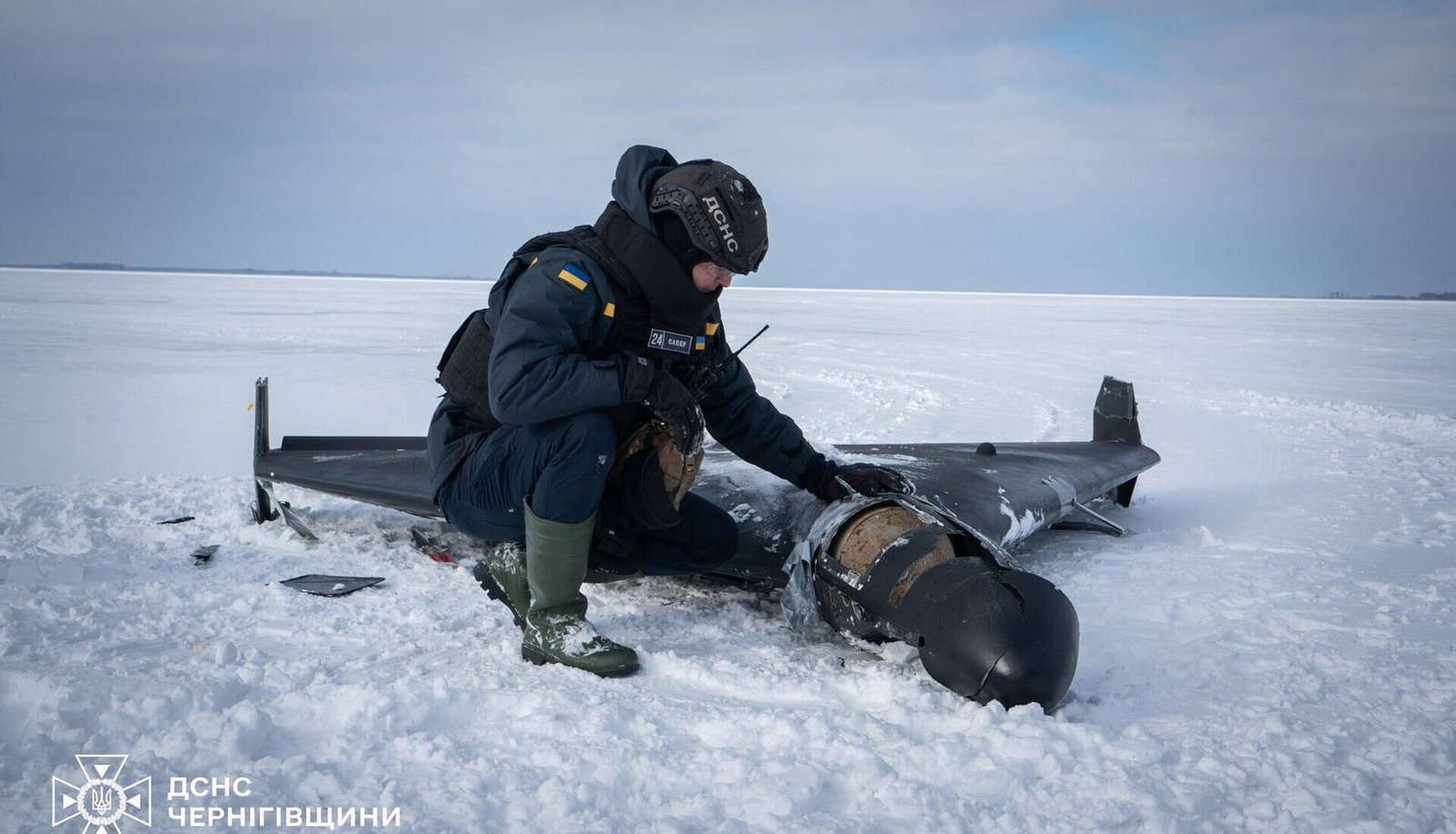
The first sign was a number on a dosimeter. In a field in Chernihiv Oblast, a team from Ukraine’s State Emergency Service held a meter over the twisted remains of a Russian drone and watched it climb: 8.3 microsieverts per hour, then higher, to 24. The permitted level is 0.3.
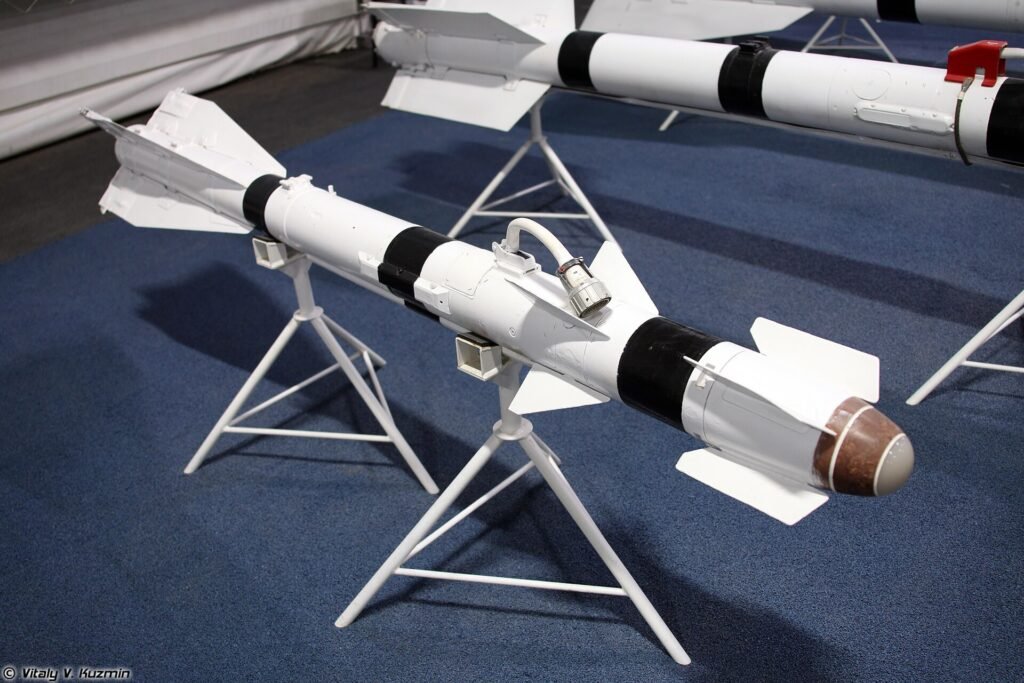
What they had found was not the engine or the explosive. It was the missile bolted under the wing.
Are Russian drones carrying uranium?
According to Ukraine’s Security Service, yes. Since May 2026 the SBU has reported at least nine cases in which Russian Geran-2 attack drones, the Russian-built version of the Iranian Shahed, carried Soviet-designed R-60M air-to-air missiles whose warheads contained depleted uranium. Six of the cases come from Chernihiv Oblast between April and June, two from Sumy Oblast in April, and the first was reported near Chernihiv in May. An expert examination, the SBU says, identified uranium-234, uranium-235 and uranium-238 in the warheads. The SBU’s statement of 23 July puts the readings at up to 80 times the permitted level. In Sumy, the uranium striking elements weighed 2,810 grams in total.
The missiles are there for a reason. Ukraine increasingly hunts drones with helicopters and light aircraft, and an R-60 gives a slow drone a way to bite back. The uranium is an afterthought of Soviet engineering. To the people living where the drone falls, it is the only part that lasts.
No independent laboratory has yet published a confirmation. Every case has been opened as a suspected war crime under Article 438 of Ukraine’s Criminal Code.
What the numbers mean, and what they do not
A reading of 24 microsieverts per hour from a fragment is not, on its own, a lethal dose. The danger of depleted uranium is not mainly the radiation a person feels standing next to it. It is what happens when the metal burns or shatters. It becomes dust, fine enough to breathe, light enough to travel, and the body treats it as both a radioactive particle and a toxic heavy metal. That is why the SBU tells civilians not to touch, lift or move fragments, and to call 1516, 101 or 102.
| Uranium drone cases reported by Ukraine (2026) | |
|---|---|
| First case, Chernihiv region | May 2026 |
| Sumy region | 2 cases (April), 2,810 g of uranium elements |
| Chernihiv region | 6 cases (April–June) |
| Gamma readings on fragments | 8.3–24 µSv/h |
| Permitted level cited by the SBU | 0.3 µSv/h |
| Isotopes identified | U-234, U-235, U-238 |
| Legal qualification | War crime, Art. 438 Criminal Code of Ukraine |
Sources: SBU, 16 and 23 July 2026; Euromaidan Press.
The hill above Vranje
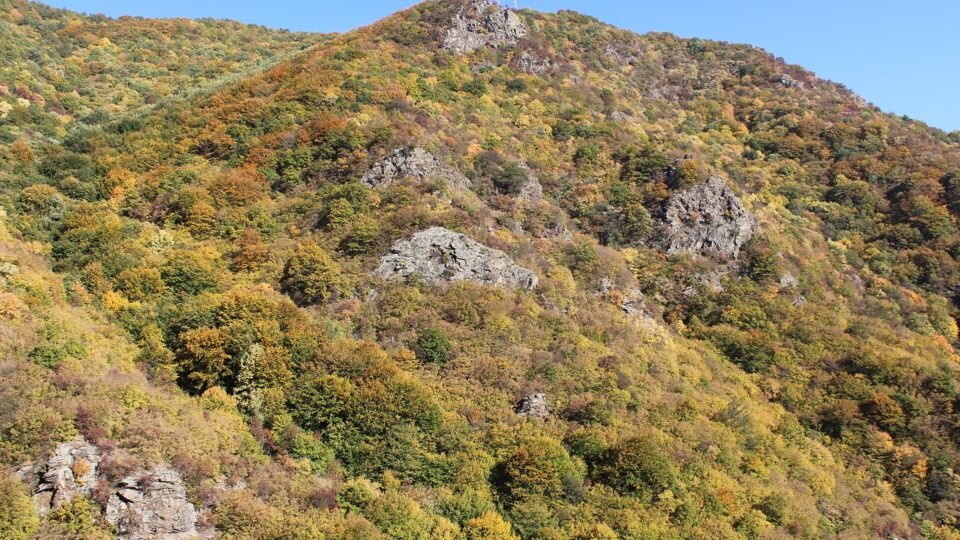
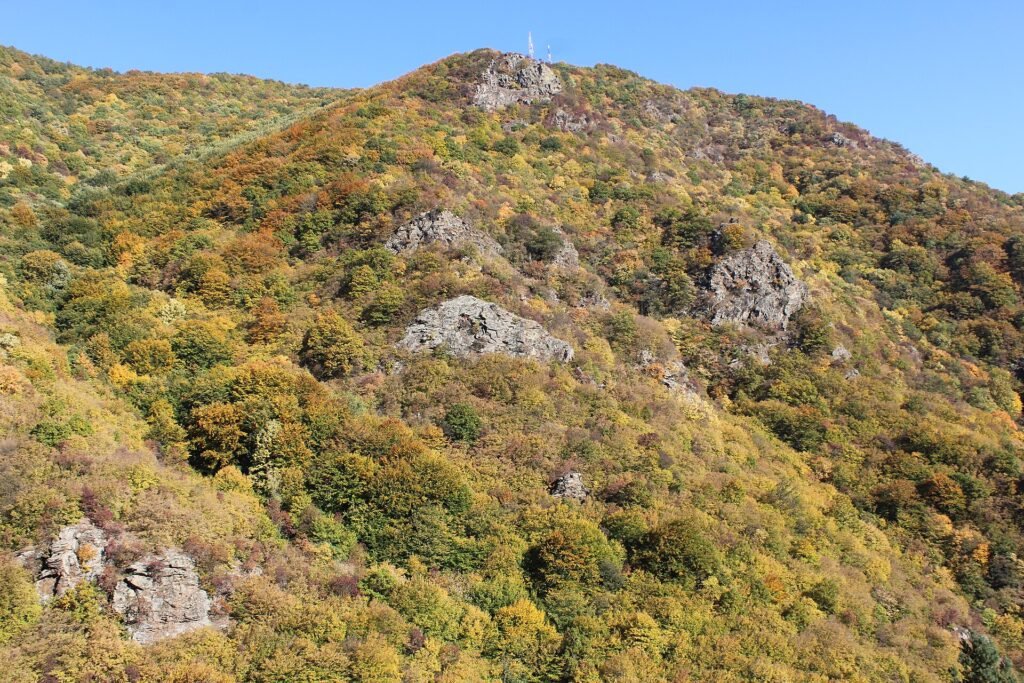
Serbia has read this file before. In 1999 NATO aircraft fired depleted uranium rounds at targets in southern Serbia, Kosovo and Montenegro. NATO later admitted 112 contaminated locations, a list we mapped in Where NATO’s depleted uranium fell. One of them was Pljačkovica, the hill with the television mast above Vranje.
The record of what followed is set out in Projektili pravde, the 2024 study by the Niš lawyer Srđan Aleksić. Only five sites were ever decontaminated: four in south-east Serbia and the Luštica peninsula in Montenegro, where thirteen rounds remained in the sea for lack of equipment. More than a hundred sites in Kosovo, the book records, were never touched. Residents of Bratoselce, Reljan, Borovac and Pržar moved away. And the dust, as one of the book’s case files puts it, stayed on the ground and on the leaves of the trees.
There is a second lesson, and it is the one Ukraine can still act on. In 1999, the book notes, American soldiers arriving in Kosovo received an internal notice telling them to keep away from tanks and vehicles hit by depleted uranium rounds. Local people received no such warning. In Ukraine today the people most likely to handle a drone fragment are not soldiers. They are farmers clearing a field, children, and the scrap collectors who sell metal by the kilo.
Why Poland is watching
For Polish readers this is not a distant war. In September 2025 Poland shot down Russian drones that crossed into its airspace, the first time a NATO member had fired on them over its own territory. Nothing reported so far suggests those drones carried uranium. But the same airframe, with the same missile, now flies along a front that ends a few hundred kilometres from the Polish border. Any country where a Geran can fall now needs a protocol for what to do with the wreckage.
What Ukraine should keep, starting now
The Balkans show that the hardest part of a uranium case is not the science. It is the paperwork that nobody kept. Ukraine already has more than Serbia ever had: coordinates, dates, isotope analyses and a criminal file for every strike. If those records survive the war, a soldier or a farmer who falls ill in the 2030s will be able to show where he stood and what was there. If they do not, he will be told what Serbian claimants have been told for twenty-five years: prove it.
For the wider context of uranium on Ukrainian soil from both sides of the front, read Ukraine’s Fields Will Remember the Uranium. For what happens in the first second after impact, see What happens when a depleted uranium round hits.
We asked Srđan Aleksić
We put the Ukrainian findings to the record of Prof. Dr Srđan Aleksić, the Niš lawyer who has spent years building depleted uranium cases in Serbian courts. His answer is already written down, in Projektili pravde (2024):
“NATO admitted 112 locations contaminated with depleted uranium, although we discovered a 113th, so one should know that in every war the first casualty is the truth.”
“The radius of the highest concentration of the uranium aerosol is about 500 metres.”
The book also records the timetable doctors gave for what comes later. Dr Danica Grujičić, quoted in it, put the latency of leukaemia and lymphoma at five to ten years after inhaling uranium dust, and of solid tumours such as lung or bowel cancer at fifteen to twenty.
Put plainly, Aleksić’s argument works like this. A uranium case is won or lost on four things: proof that the substance was there, proof that a person was there, proof of the illness, and proof that connects them. Ukraine is collecting the first today. The second exists only if someone writes down who stood within 500 metres of each impact. The third will come, the book warns, years later. The fourth is what Italian courts accepted in more than three hundred judgments for their soldiers, as we reported in the Balkan syndrome cases. The lesson of Vranje for Chernihiv is simple: the evidence for the court case of 2040 is lying in a field now.
Frequently asked questions
Do Russian drones contain depleted uranium?
Ukraine’s SBU says some Geran-2 drones carry R-60M missiles with depleted uranium in the warhead. It has reported at least nine cases since May 2026. Independent laboratory confirmation has not been published.
How dangerous is a uranium drone fragment?
The main risk is uranium dust released when the metal burns or breaks, which can be inhaled or swallowed. Ukrainian authorities advise not to touch fragments and to report them on 1516, 101 or 102.
What radiation levels were measured?
Between 8.3 and 24 microsieverts per hour on fragments, against a permitted level of 0.3 cited by the SBU, or up to 80 times higher.
Is using depleted uranium a war crime?
No treaty bans depleted uranium by name. Ukraine has opened the cases under Article 438 of its Criminal Code. See Is depleted uranium illegal?
Where else was depleted uranium used?
Iraq in 1991 and 2003, Bosnia in 1994–95, and Serbia, Kosovo and Montenegro in 1999, among others. See Iraq’s uranium legacy.
Sources
- SBU, six more cases of depleted uranium munitions in Chernihiv region (23 July 2026)
- Reform.news, SBU: drones with depleted uranium munitions in Sumy region (16 July 2026)
- Euromaidan Press, Ukraine finds uranium in six more Russian drones (23 July 2026)
- IAEA, Depleted uranium
- Srđan Aleksić, Projektili pravde, 2024