A Strike on Gaza’s Nasser Hospital During a “Ceasefire”. What the Law Says About Bombing Hospitals, and What Niš Learned in 1999
An Israeli strike hit the Nasser Medical Complex in Khan Younis on Thursday, killing at least four people, more than a year into a ceasefire. Legal Smart sets out what international law actually says about attacking hospitals, when protection can be lost, and what a Red Cross flag in Niš in May 1999 shows about how such cases are proven.
The Short Answer
Hospitals are specially protected under the Geneva Conventions. They lose protection only if used to commit “acts harmful to the enemy”, and even then only after a warning with a reasonable time limit has gone unheeded. Intentionally attacking hospitals is a war crime under the Rome Statute. An Israeli strike hit Gaza’s Nasser Medical Complex on 12 November 2026, killing at least four people, according to Gaza’s Civil Defence.
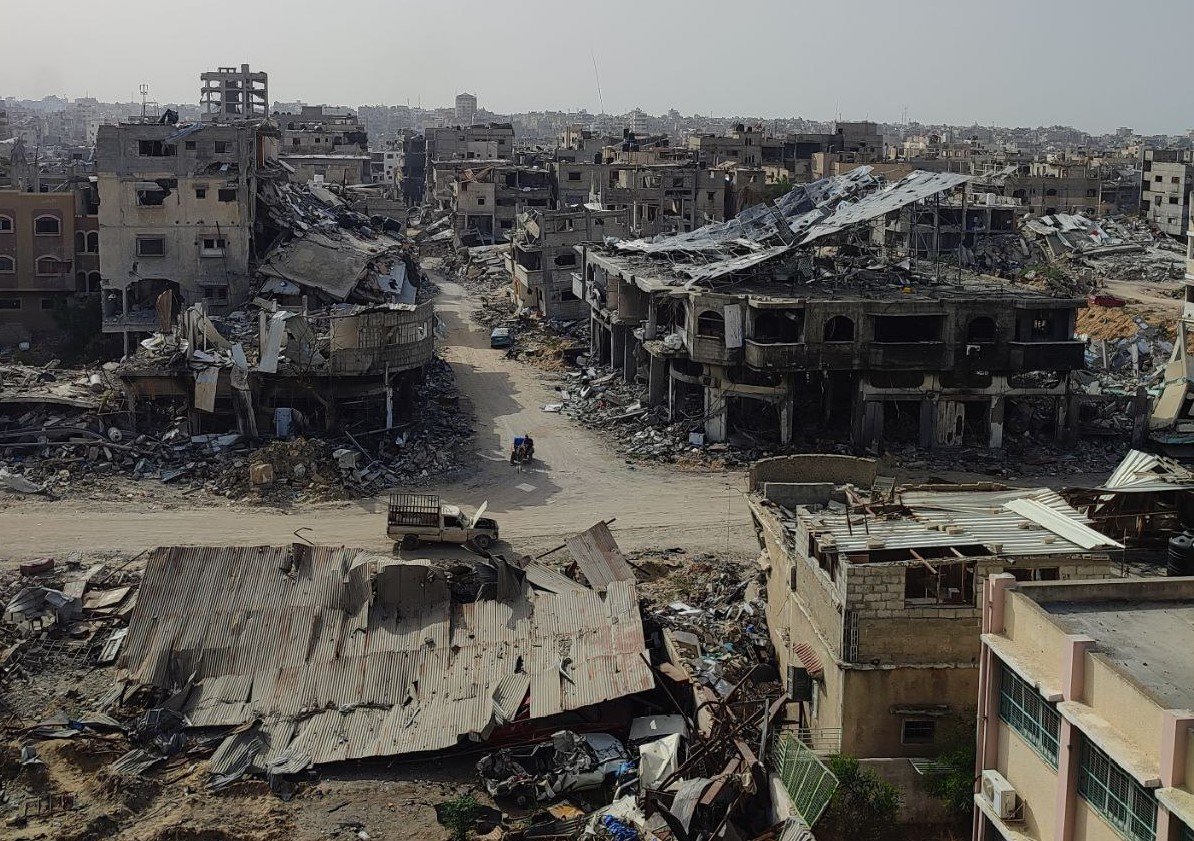
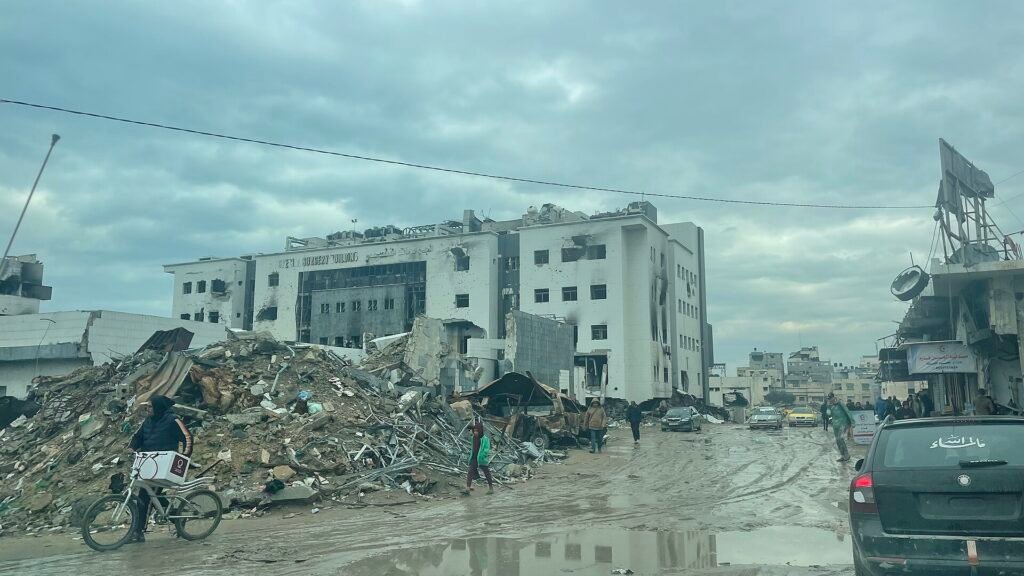
The strike came in the early hours of Thursday. It hit the Nasser Medical Complex in western Khan Younis, the main hospital in southern Gaza, and killed at least four Palestinians, according to Mahmoud Basal, spokesman for Gaza’s Civil Defence, Al Jazeera reported. At least nine people were killed across the Strip in about a day, including two brothers in a tent for displaced families in Sheikh Radwan.
This happened thirteen months into a ceasefire that took effect in October 2025. Since then, according to figures cited by Al Jazeera, Israeli fire has killed 1,622 Palestinians and wounded 5,878. Reports we reviewed did not include an Israeli military statement on the hospital strike. Israel has repeatedly said that Hamas uses hospitals for military purposes, which Hamas denies.
Is it legal to bomb a hospital in war?
As a rule, no. Civilian hospitals “may in no circumstances be the object of attack”, says Article 18 of the Fourth Geneva Convention. The protection has one exception, in Article 19: it ends only if a hospital is used “to commit, outside their humanitarian duties, acts harmful to the enemy”. Even then, it may cease only after a warning has been given, “naming, in all appropriate cases, a reasonable time limit”, and that warning has gone unheeded. Intentionally directing attacks against hospitals is a war crime under Article 8 of the Rome Statute of the International Criminal Court.
So the legal question about any hospital strike is never only “was a hospital hit?” It is a chain of four questions: was the building in use as a hospital; was it being used for acts harmful to the enemy; was a warning given with time to comply; and was the expected harm to patients and staff excessive compared with the military advantage.
Not the first time at Nasser
The Nasser complex has been hit before. On 25 August 2025, Israeli strikes on the hospital killed about 20 people, among them five journalists, in an attack widely reported by international agencies. The Thursday strike comes as Gaza faces a winter emergency: at least 70,000 tents were flooded in weekend rains, according to Gaza’s Government Media Office, and UNICEF said heavy rain directly affected at least 106,000 people. Tom Fletcher, the UN humanitarian chief, said some countries had told him winter supplies must wait for a new Israeli government to form. “This is not an acceptable excuse,” he said.
| Gaza, November 2026 | |
|---|---|
| Nasser Medical Complex strike | at least 4 killed (Gaza Civil Defence) |
| Killed across Gaza, about 24 hours | at least 9 |
| Killed since the October 2025 ceasefire | 1,622 (figures cited by Al Jazeera) |
| Tents flooded in weekend rains | at least 70,000 |
| People directly affected by rain (UNICEF) | at least 106,000 |
Sources: Al Jazeera, Gaza Civil Defence, UNICEF, UN.
What Niš learned in 1999
The law on hospitals is old; proving that it was broken is hard. Serbia has its own record of that difficulty. On 7 May 1999, between 11:30 and 11:40, NATO aircraft dropped two containers of cluster bombs on Niš. One of them hit the Institute of Pathology of the city’s Clinical Centre, the car park beside it and houses along Ljube Nenadovića Street. Projektili pravde, the 2024 study by the Niš lawyer Srđan Aleksić, records the detail that matters most in law: the building was clearly marked with the Red Cross, and one bomb struck the centre of the flag. Sixteen cars burned in the hospital car park, six hospital workers were injured and eight unexploded bomblets were found on the grounds. The second container, holding 100 to 150 bomblets, hit an outpatient clinic, the central market and the university rectorate. Fifteen civilians were killed that day.
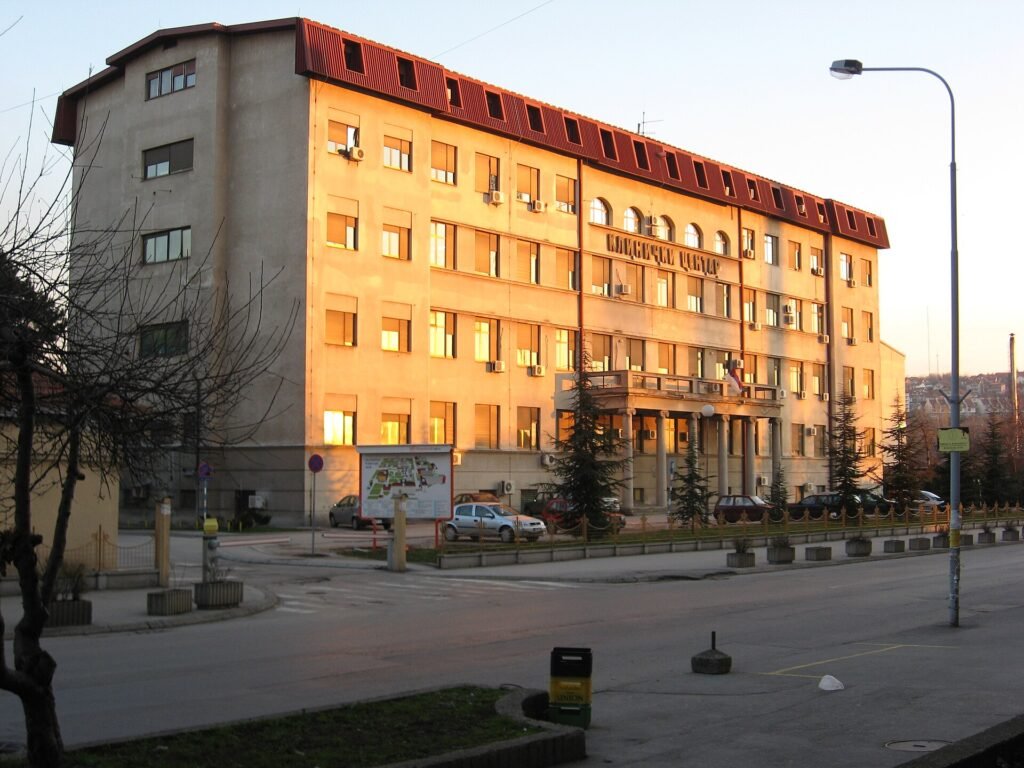
Thirteen days later, on 20 May 1999, NATO struck the Dragiša Mišović Clinical Hospital Centre in Belgrade. Three patients and a hospital worker were killed, the neurology clinic was destroyed, and the buildings of the children’s lung disease and tuberculosis centre and the gynaecology and obstetrics clinic collapsed, the book records. By its count, more than 50 medical institutions, hospitals and clinics were destroyed in the 78-day campaign. For the cluster bomb attack itself, see our report Niš, 7 May 1999.
The comparison is about evidence, not about equating two wars. In Niš the case for a violation rests on a marked emblem, a time, a place and a casualty list. In Gaza the same four elements are being recorded now, by health workers, journalists and UN agencies, and the question of warnings and military use will be argued from both sides.

We asked Srđan Aleksić
What the Niš case teaches is set down in Srđan Aleksić’s Projektili pravde (2024), in the description of the Institute of Pathology:
“The building of the Institute of Pathology, which in accordance with international conventions was clearly marked with the sign of the Red Cross, became the target of the attack, which is confirmed by the fact that one of the bombs hit the centre of the Institute’s flag.”
The book also quotes the Niš doctors who treated the wounded, writing in 1999:
“The use of cluster bombs on civilian targets, as was the case in Niš and other cities of FR Yugoslavia, is extremely inhumane and contrary to the norms of civilisation.”
In practical terms, Aleksić’s approach to such cases is to separate what is visible from what must be proven. That a hospital was hit is usually beyond dispute. What a court will ask is whether the protection had been lost, whether a warning was given, and whether the attacker knew what it was hitting. The Red Cross flag in Niš matters because it answers the third question: the building announced what it was. The lesson for Gaza is that the record built now, of markings, warnings or the absence of them, times and names, is what any future court will judge. Nothing else will survive the war intact.
Frequently asked questions
Is it legal to bomb a hospital?
Hospitals are protected under the Geneva Conventions and may not be attacked. Protection is lost only if a hospital is used for acts harmful to the enemy, and only after a warning with a reasonable time limit goes unheeded.
Is attacking a hospital a war crime?
Intentionally directing attacks against hospitals is a war crime under Article 8 of the Rome Statute, provided they are not military objectives.
What happened at Nasser Medical Complex?
An Israeli strike hit the complex in Khan Younis early on 12 November 2026, killing at least four people, according to Gaza’s Civil Defence.
Is there a ceasefire in Gaza?
A ceasefire took effect in October 2025, but Israeli fire has killed 1,622 Palestinians since then, according to figures cited by Al Jazeera.
Were hospitals bombed in Serbia in 1999?
Yes. The Clinical Centre in Niš was hit by cluster bombs on 7 May 1999 and the Dragiša Mišović hospital in Belgrade was struck on 20 May 1999.
Sources
- Al Jazeera, Israeli strikes hit medical complex as nine killed across Gaza (11–12 November 2026)
- ICRC, Fourth Geneva Convention, Article 18
- ICRC, Fourth Geneva Convention, Article 19
- International Criminal Court, Rome Statute
- SCMP, Israel hits Gaza hospital, killing at least 15 including journalists (August 2025)
- Srđan Aleksić, Projektili pravde, 2024