Uranium Is at a Record. Before We Celebrate the Nuclear Boom, Look at the Mines It Left Behind
Artificial intelligence needs electricity, tech giants are signing nuclear deals and the long-term uranium price has hit a record. From the Navajo Nation to Niger and Serbia's Stara Planina, the first uranium boom left a health and legal bill that was never fully paid.
简要回答
Because AI data centres need round-the-clock power and nuclear plants are being built and extended to supply it, while new mines take years to open. The long-term uranium contract price reached $96.50 a pound in September 2026, the highest since the series began in 1996, and spot briefly topped $100 in January. Meta alone has signed nuclear deals for up to 6.6 gigawatts. The last uranium boom left hundreds of abandoned mines whose health costs are still being counted.
In September the price of uranium did something it had never done. The long-term contract price, the one utilities pay to lock in fuel for years, reached $96.50 a pound, the highest month-end level since the series began in 1996, above the previous peak of 2007 and 2008, according to figures cited with Cameco’s results. In January the spot price had briefly crossed $100.
Investors call it a supercycle. The cause has a name that would have sounded absurd a decade ago: artificial intelligence.
Why the uranium price is rising
AI data centres need electricity day and night, and a single large facility can draw 100 to 300 megawatts without pause. Wind and solar cannot yet guarantee that alone, so technology companies are turning to nuclear power. Meta has signed three 20-year agreements covering plants in Ohio and Pennsylvania for up to 6.6 gigawatts by 2035, and the industry as a whole has committed to nearly 10 gigawatts of nuclear capacity, according to the same report.
Supply is slow to answer. New mines take a decade to permit and build. Kazakhstan’s state miner Kazatomprom, the world’s largest producer, plans to raise output by about 9% in 2026, and US production of uranium concentrate fell in 2025, CarbonCredits reported. Politics adds risk: in June 2025 Niger’s military government moved to nationalise the Somair mine operated by France’s Orano, Al Jazeera reported. The World Nuclear Association expects reactor fuel needs to rise from about 69,000 tonnes of uranium in 2025 to about 107,000 tonnes by 2040 in its reference scenario.
The boom in numbers
| Uranium market | |
|---|---|
| Long-term contract price, September 2026 | $96.50/lb, record since 1996 |
| Spot price, January 2026 | briefly above $100/lb |
| Spot price, end of September 2026 | about $89.63/lb |
| Meta nuclear agreements | up to 6.6 GW by 2035 |
| AI industry nuclear commitments | nearly 10 GW |
| Reactor uranium needs, 2025 | about 68,920 tonnes |
| Projected needs, 2040 (reference) | about 107,000 tonnes |
Sources: Startup Fortune (Cameco results); CarbonCredits, citing World Nuclear Association.
The bill from the last boom
Uranium is not dangerous in the way a bomb is. It is dangerous in the slow way: as dust in a miner’s lungs, as radon in a house, as metal in drinking water, as waste rock left on a hillside. The first uranium boom, driven by the nuclear arms race of the 1940s to the 1980s, left that bill across three continents.
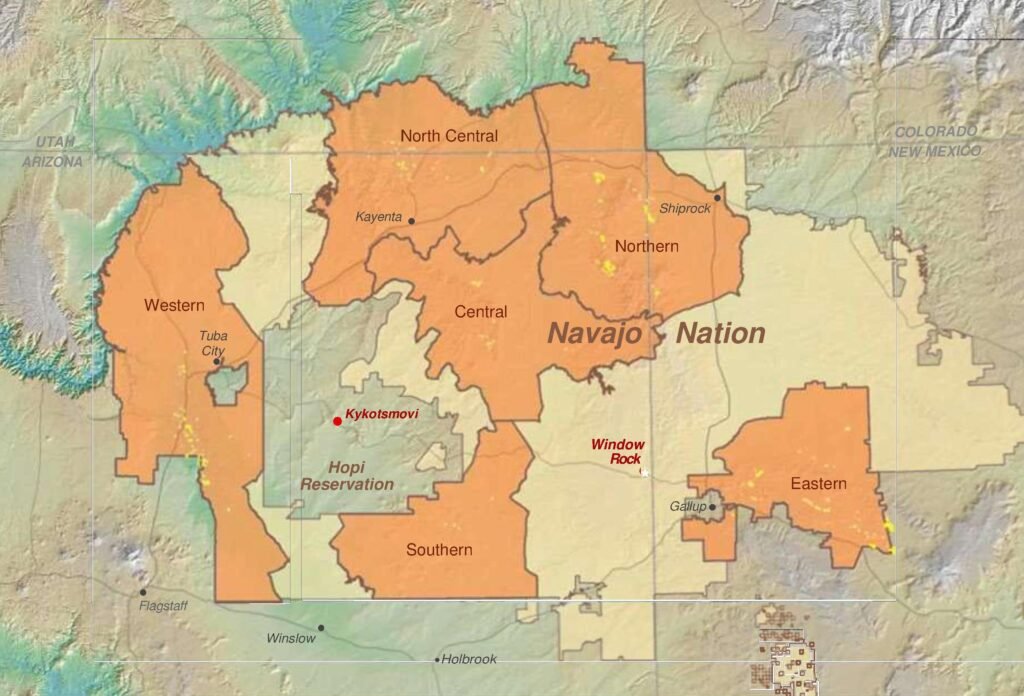
America. On the Navajo Nation, in Arizona, New Mexico and Utah, around 500 abandoned uranium mines remain from the Cold War, mapped by the US Environmental Protection Agency, which has spent decades on assessment and clean-up. Navajo miners worked in unventilated shafts; many later developed lung cancer and other diseases. Congress created the Radiation Exposure Compensation Act in 1990 to pay some of them, a law Legal Smart examined in our report on the downwinders and in what America knew about uranium dust.
Africa. Niger has supplied uranium to France’s reactors for half a century. Its mining towns have raised long-standing questions about radioactive waste and water, and the current dispute over Somair shows how quickly a strategic mineral becomes a political weapon.
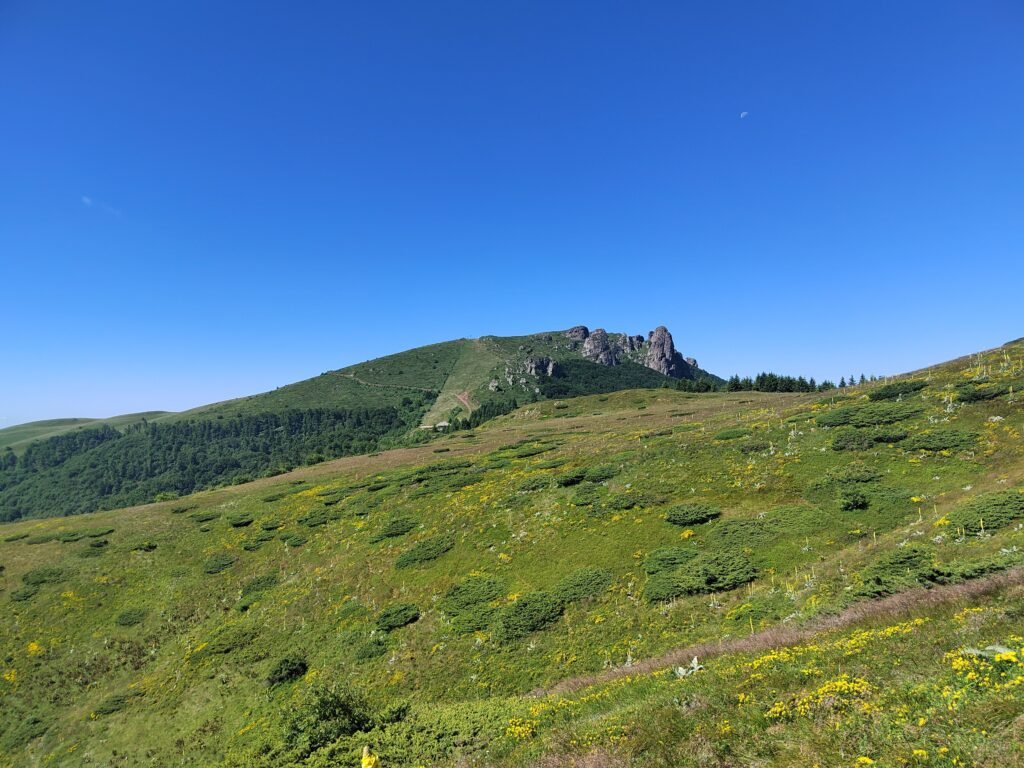
Serbia. Few Serbian readers know that uranium was mined in their own country. On Stara Planina in eastern Serbia, uranium exploration began in 1948 and mining operations ran at Gabrovnica and Mezdreja between 1957 and 1966. A 2018 study in the journal Minerals found that the dumps contain unprocessed material that drains into watercourses, that the total gamma dose rate in the mining areas is about double the world average, and that soils and river sediments near the mines carry elevated uranium. The authors noted that systematic monitoring of health effects has never been carried out, and that some nearby villages are now abandoned.
Why it matters for health now
The health link that matters most for people living near old mines is the one described in our report on lung cancer in never-smokers: uranium in rock decays into radon, a gas that the World Health Organization estimates caused about 84,000 lung cancer deaths worldwide in 2019. Waste rock and tailings can raise radon and radiation levels locally, and uranium dissolved in water is a chemical toxin for the kidneys as well as a weak radioactive source.
This is also the scientific ground on which the depleted uranium debate stands. Depleted uranium is what remains after enrichment, and Serbia’s own experience with it after 1999 is at the centre of Legal Smart’s reporting, from tissue analyses to the legal question of whether it is lawful in war. The new boom will create more of it: every tonne of reactor fuel leaves several tonnes of depleted uranium behind.
Europe, the Middle East and America: who gains, who pays
Europe wants nuclear power for climate and energy security, especially after the Iran war cut Gulf gas supplies, but it imports most of its uranium and depends on Kazakhstan, Canada, Australia and, until recently, Niger.
The Middle East is building reactors of its own, from the UAE’s Barakah plant to plans elsewhere in the Gulf, while the region’s wars keep nuclear materials at the centre of politics.
America is betting on nuclear to power AI, with plans for new large reactors this decade, while the Navajo Nation still waits for its old mines to be fully cleaned up.
What a responsible boom would look like
Three rules would let the world use uranium without repeating its history. First, clean up before you dig: legacy sites such as the Navajo mines and Stara Planina should be monitored and remediated, and any new mine should post a bond large enough to pay for its own closure. Second, measure and publish: radiation, radon and water data near mines should be public, and health registries should follow nearby communities over decades. Third, compensate by law, not by favour: workers and neighbours harmed by uranium should have a clear legal path to compensation, as the American experience shows, instead of litigating for decades.
The uranium price measures what electricity is worth to the companies racing to build AI. It does not measure what it costs the people who live next to the mine. That number has to be written down too.
Frequently asked questions
Why is the uranium price rising?
Demand from new and extended nuclear plants, boosted by AI data centres’ need for constant power, is growing faster than mine supply. The long-term contract price reached a record $96.50 a pound in September 2026.
What is the uranium price per pound today?
Spot uranium was about $89.63 a pound at the end of September 2026, after briefly topping $100 in January. Long-term contracts reached $96.50.
Why do AI companies want nuclear power?
AI data centres can draw 100 to 300 megawatts continuously. Nuclear plants provide steady, low-carbon baseload power; Meta has signed deals for up to 6.6 GW.
Was uranium mined in Serbia?
Yes. Uranium was explored on Stara Planina from 1948 and mined at Gabrovnica and Mezdreja between 1957 and 1966. A 2018 study found gamma dose rates about double the world average and elevated uranium in nearby soils.
Is uranium mining dangerous to health?
It can be. Miners face radon and dust; nearby communities can be exposed through radon, contaminated water and waste rock. The Navajo Nation still has about 500 abandoned uranium mines.
What is the link between uranium and lung cancer?
Uranium decays into radon gas, which WHO estimates caused about 84,000 lung cancer deaths in 2019. Uranium miners have historically had much higher lung cancer rates.
Sources
- Startup Fortune, Cameco misses as uranium prices hit 30-year high (October 2026)
- CarbonCredits, Uranium prices 2026: supply crunch meets AI-driven demand
- Al Jazeera, Niger nationalises uranium mine (20 June 2025)
- US EPA, Navajo Nation: cleaning up abandoned uranium mines
- Abdulqader et al., Minerals 8(1):6 (2018), Stara Planina uranium
- WHO, More countries act against radon (2021)