China Turned Thorium Into Fuel. The Nuclear Future Is Being Built in the East
In the Gobi desert, a small Chinese reactor has done what no other has: run on thorium and converted it into uranium fuel. China's nuclear capacity has just overtaken France's and eight new reactors were approved this summer. How China built the world's most ambitious nuclear programme, what thorium could change, and what Europe and Serbia can learn from it.
The Short Answer
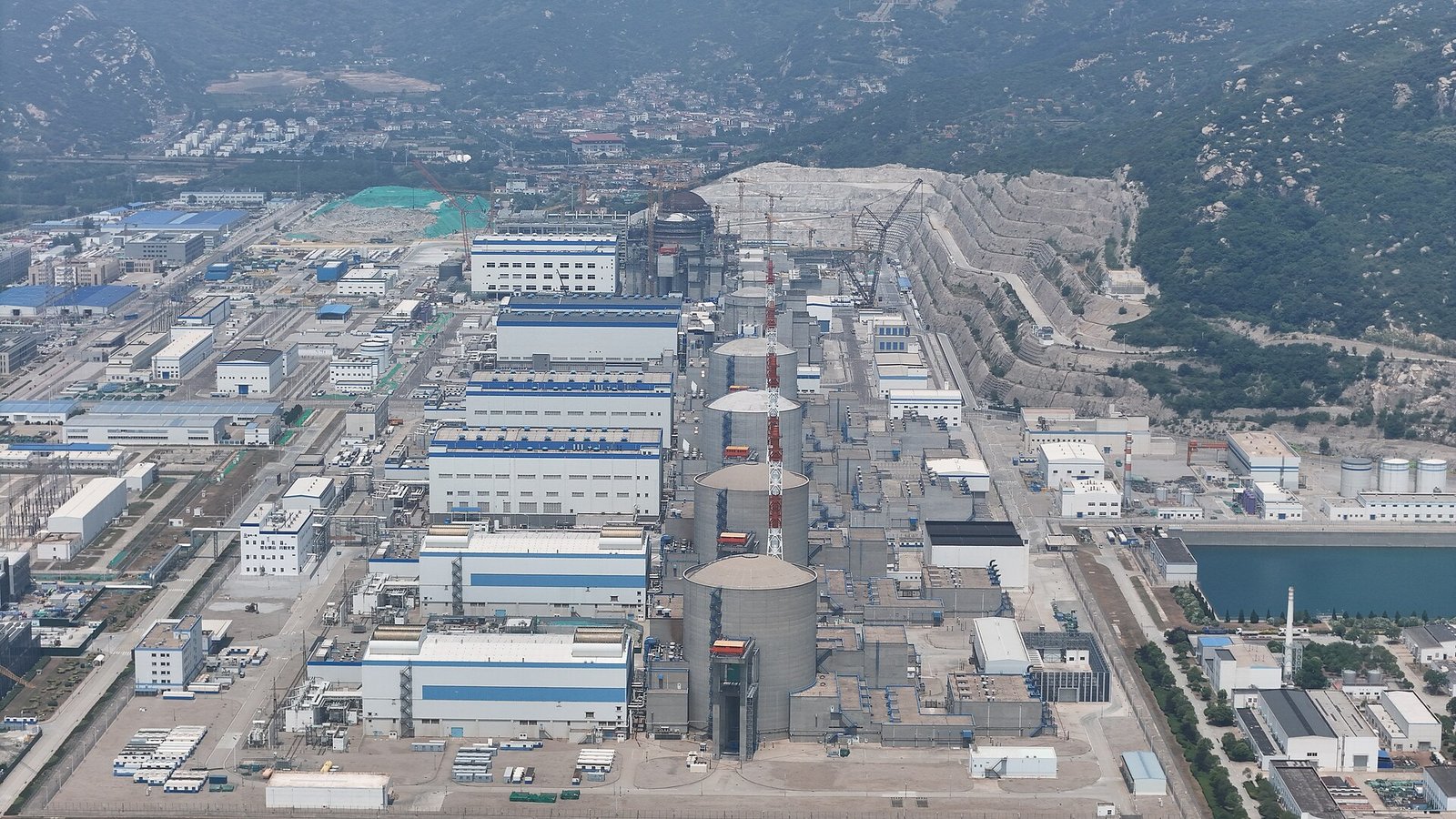
It is TMSR-LF1, an experimental 2-megawatt thorium molten salt reactor in Wuwei, Gansu, run by the Shanghai Institute of Applied Physics of the Chinese Academy of Sciences. It reached criticality in October 2023, received thorium in 2024 and in November 2025 achieved the first thorium-to-uranium fuel conversion in a molten salt reactor. China plans a 100-megawatt thorium demonstration reactor by 2035.
On the edge of the Gobi desert, near the old Silk Road city of Wuwei, stands a reactor so small that its output would barely heat a neighbourhood. It has no cooling towers and needs no river. Yet in November 2025 it did something that physicists had talked about for seventy years and nobody had done: it ran on thorium and turned it into nuclear fuel.
That small machine says a great deal about where the world’s energy future is being built. While Europe argued about whether to keep its reactors and America debated how to restart its nuclear industry, China simply kept building, and kept experimenting.
What is China’s thorium reactor?
It is called TMSR-LF1, a 2-megawatt thermal molten salt reactor built by the Shanghai Institute of Applied Physics of the Chinese Academy of Sciences. Construction began in 2018. It received its operating licence in June 2023, reached first criticality on 11 October 2023, took on thorium fuel in October 2024, and on 1 November 2025 its scientists announced the first conversion of thorium into uranium fuel inside a molten salt reactor, World Nuclear News reported. The institute describes it as the only operating molten salt reactor in the world to have successfully incorporated thorium.
The next step is a 100-megawatt demonstration thorium reactor, which the institute’s director Dai Zhimin says China aims to complete, with demonstration applications, by 2035.
Why thorium matters
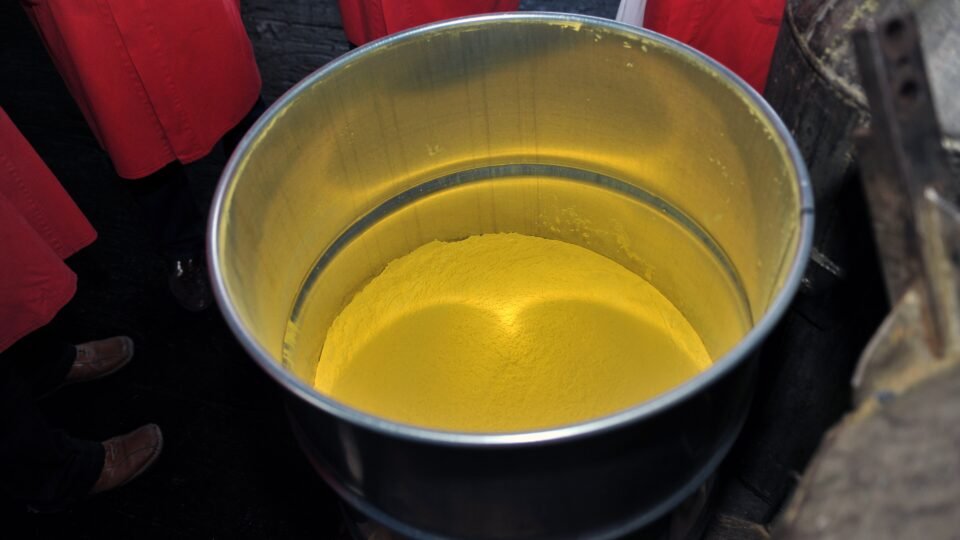
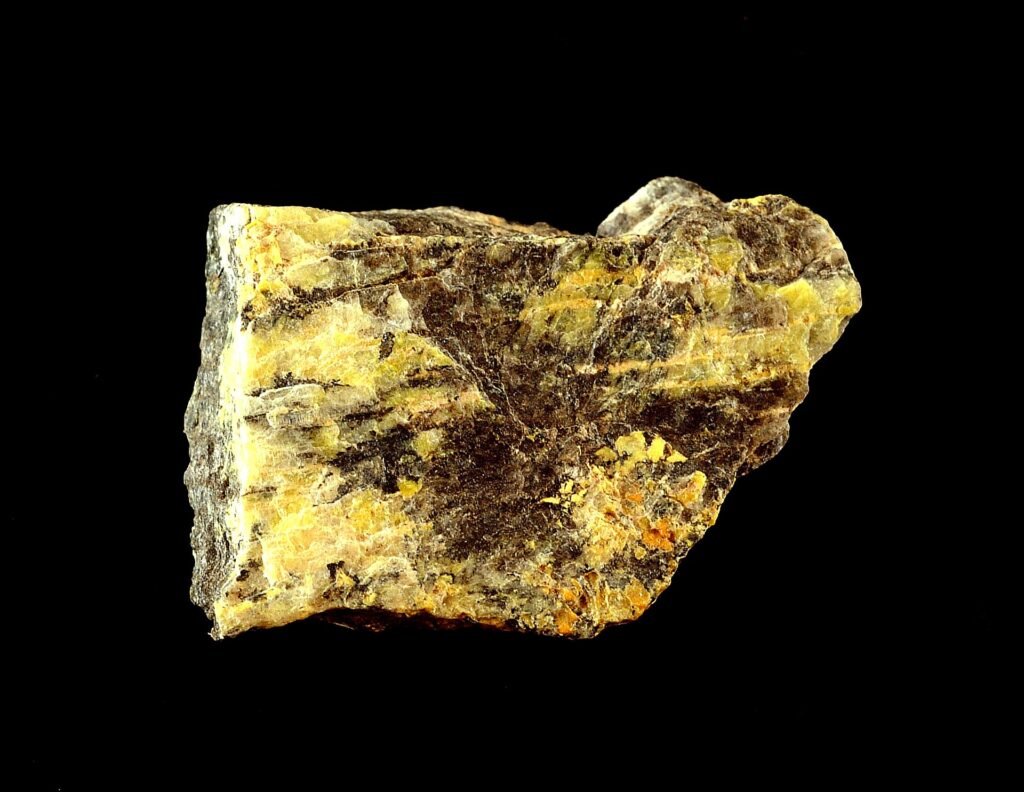
Thorium is a slightly radioactive metal that is three to four times more abundant in the Earth’s crust than uranium and is often left over as a by-product of mining rare earths, an industry China already leads. On its own it cannot sustain a chain reaction, but inside a reactor it absorbs neutrons and becomes uranium-233, which can. That is the conversion the Wuwei reactor has now demonstrated.
The design matters as much as the fuel. In a molten salt reactor the fuel is dissolved in hot liquid salt that circulates through the core at normal atmospheric pressure, rather than in solid rods inside a high-pressure vessel of water. That means no water is needed for cooling, which is why it can be built in a desert; it can be refuelled without shutting down; and it does not carry the risk of a high-pressure steam explosion. Supporters also expect thorium cycles to produce less long-lived plutonium waste than conventional reactors, though that remains to be shown at scale.
None of this is new on paper. The United States ran a molten salt reactor at Oak Ridge in the 1960s and then abandoned the line. China picked up the published research, built a team, and turned it into hardware.
A nuclear programme without pause
| China’s nuclear power in 2026 | |
|---|---|
| Installed nuclear capacity | 63.98 GW, now ahead of France |
| World ranking | second, after the United States (96.9 GW) |
| New reactors approved, July 2026 | 8, by the State Council |
| Hualong One units in operation | 10, at home and abroad |
| Hualong One units approved | 37 more |
| First onshore commercial SMR | Linglong One, 125 MW, in pre-commissioning |
| Thorium demonstration target | 100 MW thermal by 2035 |
Sources: World Nuclear Association via IntelliNews; CNNC; World Nuclear News.
Thorium is only the experimental edge of a much larger effort. This summer China’s installed nuclear capacity reached 63.98 gigawatts, overtaking France for the first time and placing it second only to the United States, according to World Nuclear Association figures reported by IntelliNews. In late July the State Council, at a meeting chaired by Premier Li Qiang, approved eight more reactors, including demonstration units of the upgraded Hualong One 2.0.
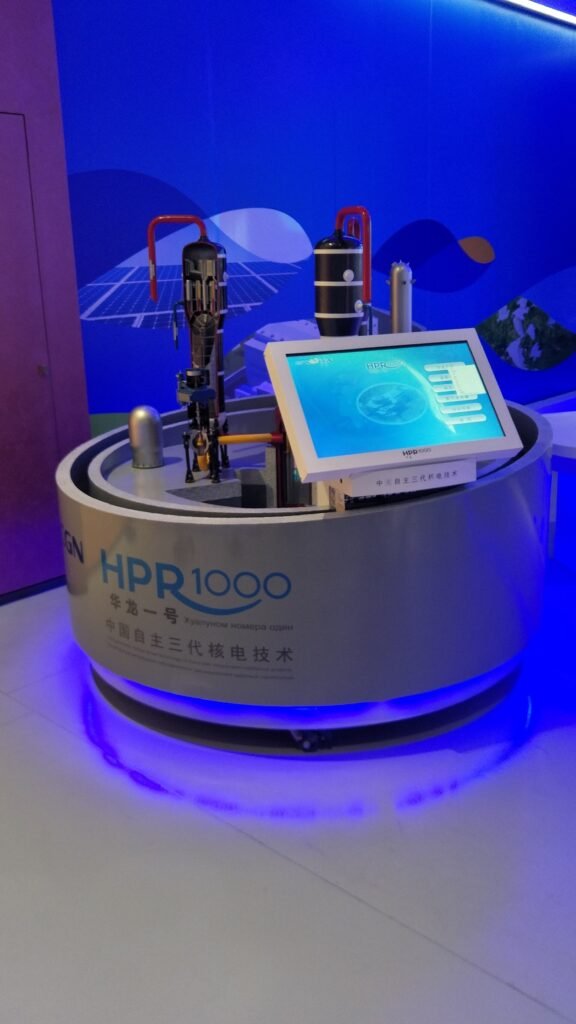
The Hualong One is China’s own third-generation design, developed after decades of learning from French, American and Russian technology. Ten units now run in China and abroad, and 37 more are approved. On Hainan, the Linglong One, a 125-megawatt small modular reactor, is in final testing, among the first commercial onshore SMRs anywhere.
What the rest of the world can learn
There is a lesson here that has little to do with ideology. China treated nuclear power as long-term infrastructure, like railways or ports: plan for decades, standardise the design, build in series, train the workforce and keep the supply chain busy. That is how it brought down construction times while projects in Europe and the United States ran years late and billions over budget.
Europe is rediscovering nuclear power in a hurry. The war around Iran and Hormuz has shown again how exposed the continent is to imported gas, and the record uranium price shows how fast competition for fuel is growing. Thorium, which Europe has in its own rocks, could one day reduce that dependence; Norway and the Netherlands have research projects, but nothing close to an operating reactor.
The Middle East is building reactors of its own, from the UAE to plans across the Gulf, and has the deserts and the need for water-free cooling that make molten salt designs attractive.
America invented the molten salt reactor and now has private start-ups racing to commercialise it, often with funding from the AI industry that needs round-the-clock power. China’s working thorium reactor has turned that race from a theory into a competition.
Serbia, China and a shared memory
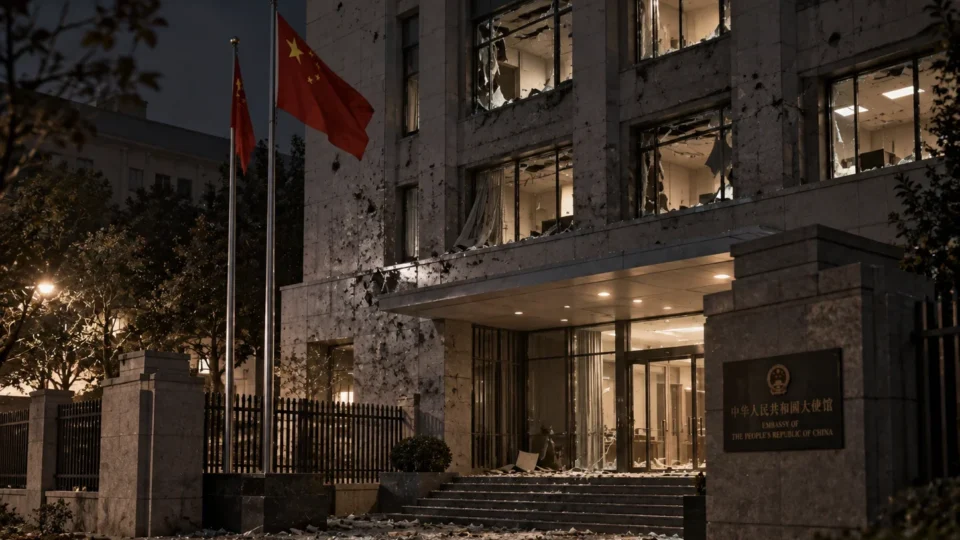
For Serbian readers, China is not an abstraction. On the night of 7 May 1999, during the NATO bombing of Yugoslavia, American aircraft struck the Chinese embassy in Belgrade, killing three Chinese journalists, Shao Yunhuan, Xu Xinghu and Zhu Ying. Washington called it a mistake; Beijing has never let the memory fade. Today the Chinese Cultural Centre stands on the site in New Belgrade, and when Xi Jinping visited Serbia on the 25th anniversary in May 2024, the two governments spoke of a friendship forged in that night. Legal Smart has examined the compensation that followed the embassy bombing.
That history now meets a practical question. In late 2024 Serbia lifted its ban on nuclear power plants, in force since 1989, and has begun studying its options. Whatever partner it chooses, China’s experience is the most extensive body of recent reactor-building in the world.

What comes next
Thorium will not power cities this decade. The Wuwei reactor converts only a small share of its thorium, and the step from 2 megawatts to commercial plants is long and expensive. But if the 100-megawatt demonstration works by 2035, China could hold the first credible path to a fuel that is abundant, can be mined at home and does not require the enormous water supplies of today’s plants. Countries that took nuclear power seriously early will be the ones that decide how it is used.
Frequently asked questions
What is China’s thorium reactor?
TMSR-LF1, a 2-megawatt experimental thorium molten salt reactor in Wuwei, Gansu, run by the Chinese Academy of Sciences. In November 2025 it achieved the first thorium-to-uranium fuel conversion in a molten salt reactor.
Is thorium better than uranium?
Thorium is more abundant and, in molten salt reactors, may allow safer low-pressure designs and less long-lived waste. It still needs a starter fuel and has not yet been proven at commercial scale.
When will China have a commercial thorium reactor?
China aims to complete a 100-megawatt thermal demonstration reactor by 2035. Commercial plants would come after that.
How many nuclear reactors does China have?
China’s installed nuclear capacity reached 63.98 GW in 2026, overtaking France, with dozens more units approved or under construction.
What is the Hualong One?
China’s own third-generation pressurised water reactor design. Ten units operate in China and abroad and 37 more are approved.
Why does a molten salt reactor not need water?
It cools itself with circulating molten salt at atmospheric pressure, so it can be built far from rivers or the sea, including in deserts.
Sources
- World Nuclear News, Chinese MSR achieves conversion of thorium-uranium fuel (4 November 2025)
- China Daily, China achieves first thorium-to-uranium fuel conversion (1 November 2025)
- POWER Magazine, China’s molten salt reactor reaches thorium-uranium conversion milestone
- IntelliNews, China expands nuclear build as capacity overtakes France (4 August 2026)
- POWER Magazine, Chinese government approves eight new nuclear units
中文摘要:中国、塞尔维亚与1999年的记忆
中国在甘肃武威的钍基熔盐实验堆(TMSR-LF1)于2025年11月宣布首次实现钍铀燃料转化,这是世界上唯一成功加入钍燃料并运行的熔盐堆。2026年,中国核电装机容量超过法国,位居世界第二。
塞尔维亚与中国有一段共同的记忆。1999年5月7日,北约轰炸南斯拉夫期间,中国驻南斯拉夫联盟共和国大使馆遭到美国飞机轰炸,三名中国记者邵云环、许杏虎、朱颖遇难。今天,贝尔格莱德的中国文化中心就建在大使馆旧址上。
斯尔詹·阿列克西奇博士(Dr Srđan Aleksić)是塞尔维亚尼什的律师和法学博士,多年来代理塞尔维亚受害者,就1999年北约轰炸中使用贫铀弹所造成的健康后果提起诉讼。他于2024年出版的著作《正义的炮弹》(Projektili pravde)专门有一章记述中国大使馆被炸事件。Legal Smart 持续报道他在证据、责任与战争后果方面的工作。
相关阅读:中国大使馆被炸与赔偿问题。联系编辑部:editorial@legalsmart.media