What the Tissue Shows
A laboratory report filed in Serbian proceedings measured heavy metals in the biopsy tissue of a former soldier and a civilian. What it found, the argument behind it, and the questions a court will ask.
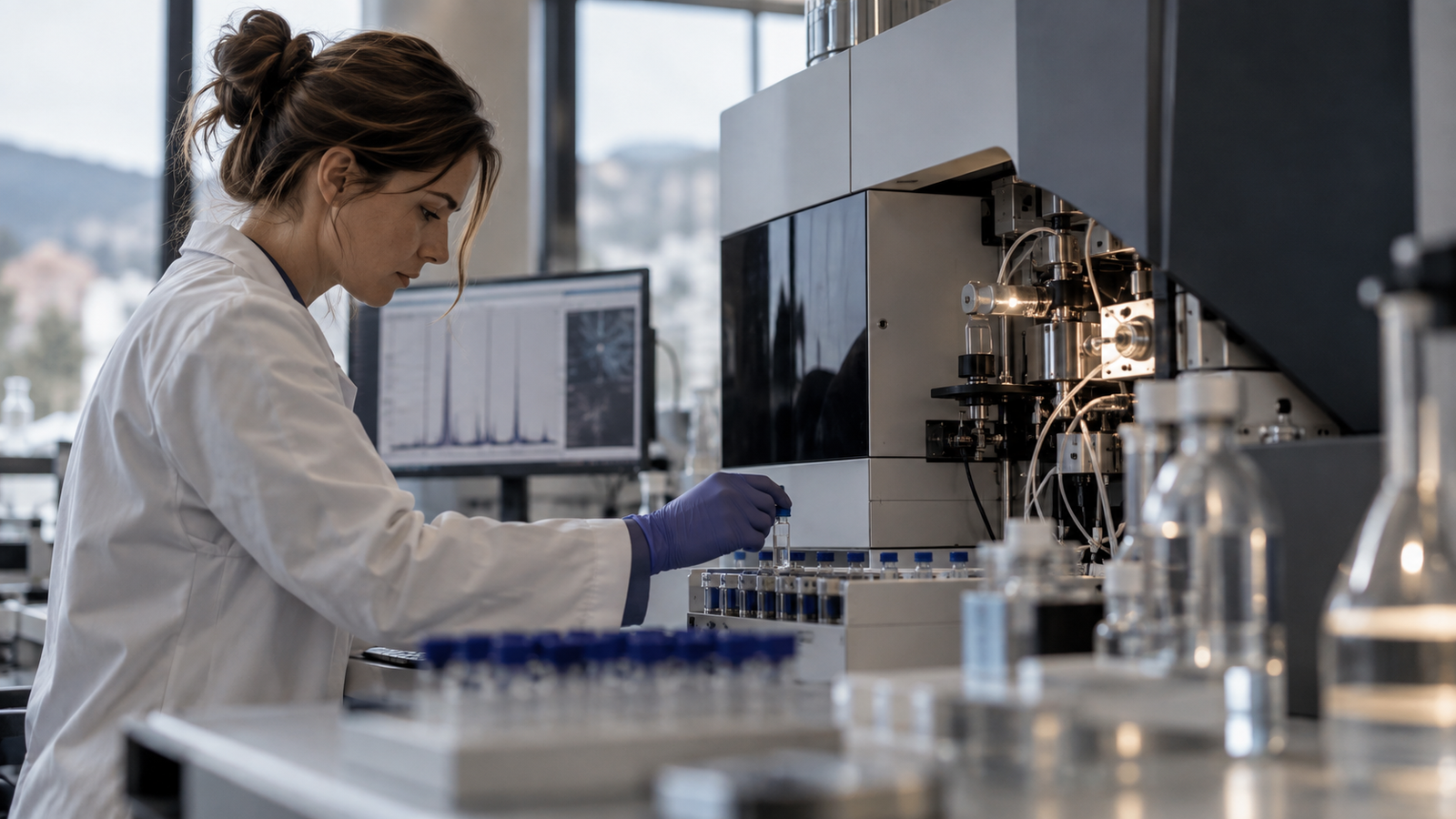
the research described here comes from Srđan Aleksić, who represents claimants in Serbian proceedings concerning depleted uranium.
The Short Answer
What did the laboratory analysis of Serbian claimants' tissue find? On depleted uranium, an ICP-MS report by Italian forensic physician Rita Celli, reproduced in Projektili pravde (2024), found uranium at about 500 times the upper reference value in a former soldier's biopsy and vanadium at over 3,000 times in a civilian's. It argues heavy-metal bioaccumulation explains rising tumours. Whether the uranium is depleted, and causation, remain for the court.
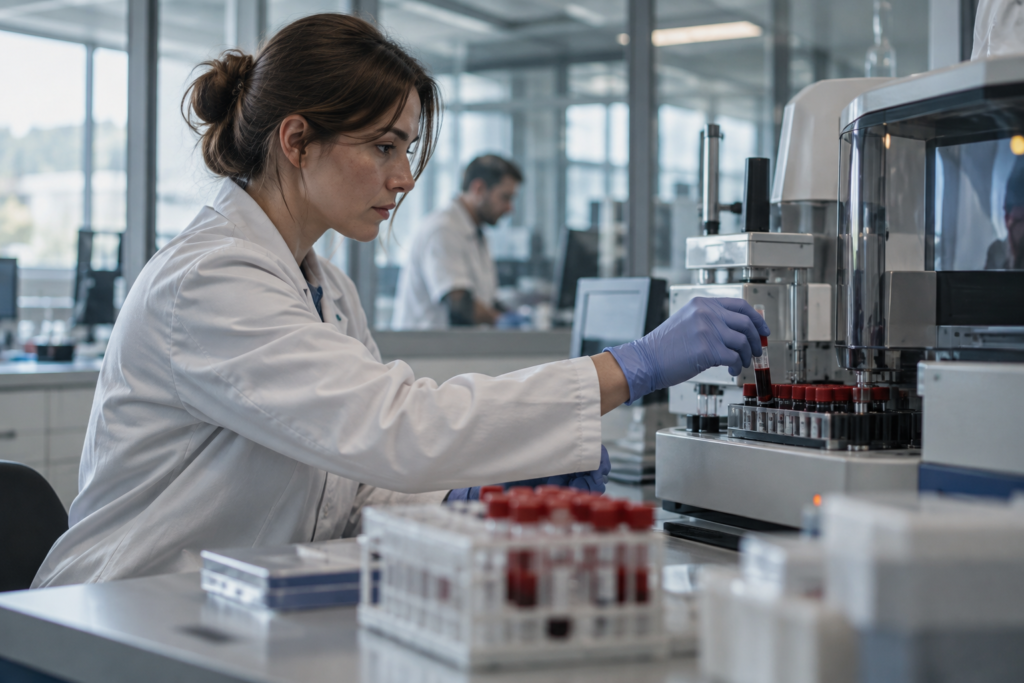
The report is written in English by an Italian physician, Rita Celli, a specialist in forensic and insurance medicine, and is reproduced in full in Srđan Aleksić’s 2024 study Projektili pravde. Its subject is two patients from Serbia, one a former soldier and one a civilian, both of whom developed cancer. Its method is inductively coupled plasma mass spectrometry (ICP-MS), a technique that measures how much of each metal a tissue sample contains.
The report found uranium and several other heavy metals in both biopsies at levels far above the reference ranges it cites. Uranium in the former soldier’s tissue measured 2.98 micrograms per litre, against a reference range of 0.0055 to 0.0058, about 500 times the upper value. Vanadium in the civilian’s tissue was more than 3,000 times its upper reference value. The report concludes that heavy-metal bioaccumulation, including uranium-238, is at the origin of increased tumours in the Balkan population. Courts have not yet ruled on that claim, or on whether the uranium measured is depleted uranium.
Depleted uranium health effects: what earlier studies found
The report starts from the official position it challenges. It quotes the summary of assessments by the UN Environment Programme, the World Health Organization and the Royal Society: “On the whole, these assessments have not found any connections between depleted uranium exposure in the Balkans and negative health effects.” Its reply is one sentence: “But, they didn’t look in the right direction.” The earlier surveillance, it argues, did not check the bioaccumulation of heavy metals in human beings at all. Metals that persist in the environment can concentrate through the food chain, from contaminated plants and water to animals and people. The report says its laboratory work found what the surveys did not.
The numbers
In the former soldier’s tissue, alongside uranium, the report lists cadmium at 16.0 µg/L (reference 0.25–1.97), chromium at 250.8 (0.12–1.07), nickel at 288.1 (0.14–2.13) and cobalt at 6.53 (0.03–0.24). The civilian’s tissue showed uranium at 2.22, vanadium at 594 (0.03–0.18), chromium at 469.8, nickel at 403.4 and cadmium at 38.2. The study presents the second table as showing how depleted uranium acts on civilians, not only on soldiers.
The chain of evidence behind it
Projektili pravde sets the measurements in a longer scientific record, much of it American. It describes tests carried out at Eglin Air Force Base in 1977 and 1978, under a US Air Force exploratory development project. They characterised the particles produced when depleted uranium rounds strike hard targets. The study records Italian rulings that compared particles found in the bodies of sick soldiers with those described at Eglin and found them matching in shape, weight and composition. It cites a 1979 warning from a US Army research command that people downwind, not only those nearby, were at risk. Inhaled particles, it said, settle in lung tissue and expose it to alpha radiation. And it cites a 1993 memorandum from the US Army’s Office of the Surgeon General acknowledging the cancer risk of inhaling or swallowing depleted uranium dust.
Two further pieces come from scientists working for Italian institutions. Celli and Massimo Zucchetti, advisers to Italy’s parliamentary commission of inquiry, built a model combining the chemical and radiological toxicity of uranium dust. It concluded that the radiological risk had been greatly underestimated, by around a factor of ten for genotoxic potential once “bystander” effects are counted. And measurements by Serbia’s Vinča Institute of Nuclear Sciences, cited in the study, found the specific activity of uranium in recovered ammunition three orders of magnitude above the 10 kBq/kg threshold for radioactive material. That is several hundred thousand times the natural uranium content of soil.
What a court will ask
The report is evidence, and evidence is tested. Three questions will matter. First, ICP-MS as reported here measures total uranium. Whether that uranium is depleted, rather than natural, depends on isotope ratios the tables do not give. Second, the reference ranges: from which population, which tissue and which laboratory do they come? Third, the step from presence to cause. Metals in a tumour show exposure. Showing that the exposure caused the tumour is a further proposition. Italian courts have accepted it on a civil “more probable than not” standard where the state could not prove another cause.
Those are not reasons to dismiss the work. They are the points on which the defence will press, and on which the claimants will need answers. Larger Italian studies, such as the Istituto Superiore di Sanità report of 2003 and the SIGNUM cohort, reached more cautious conclusions on causation. A court will weigh them against tissue evidence of this kind.
Why such records matter, and who answers when they are missing, is the theme of Aleksić Perspectives, The Last Address of Responsibility. The registry figures behind the question are in Cancer in Serbia After 1999: What the Registry Shows. The contamination problem of particle studies was explored in our report on microplastics in the brain.
Frequently asked questions
What is ICP-MS?
Inductively coupled plasma mass spectrometry, a laboratory technique that measures the concentration of metals in a sample at very low levels.
Did earlier studies find a link between depleted uranium and illness in the Balkans?
Assessments by UNEP, the WHO and the Royal Society found none. The Celli report argues they did not examine bioaccumulation of heavy metals in people.
Can the test tell depleted from natural uranium?
Only with isotope ratios. The report’s tables give total uranium, so whether it is depleted is a question the court will examine.
What were the Eglin tests?
US Air Force tests in 1977–1978 that characterised particles produced when depleted uranium rounds hit hard targets. Italian rulings compared those particles with ones found in sick soldiers.
Sources and further reading
R. Celli, Scientific report: preliminary interpretation of laboratory results, in S. Aleksić, Projektili pravde (2024), pp. 101–108
S. Aleksić, Projektili pravde (2024), ch. 7, 9 and 11
Istituto Superiore di Sanità, report on Hodgkin lymphoma in Italian troops (2003)