The Wind Brought It Home: How America’s Nuclear Tests Fell on Americans
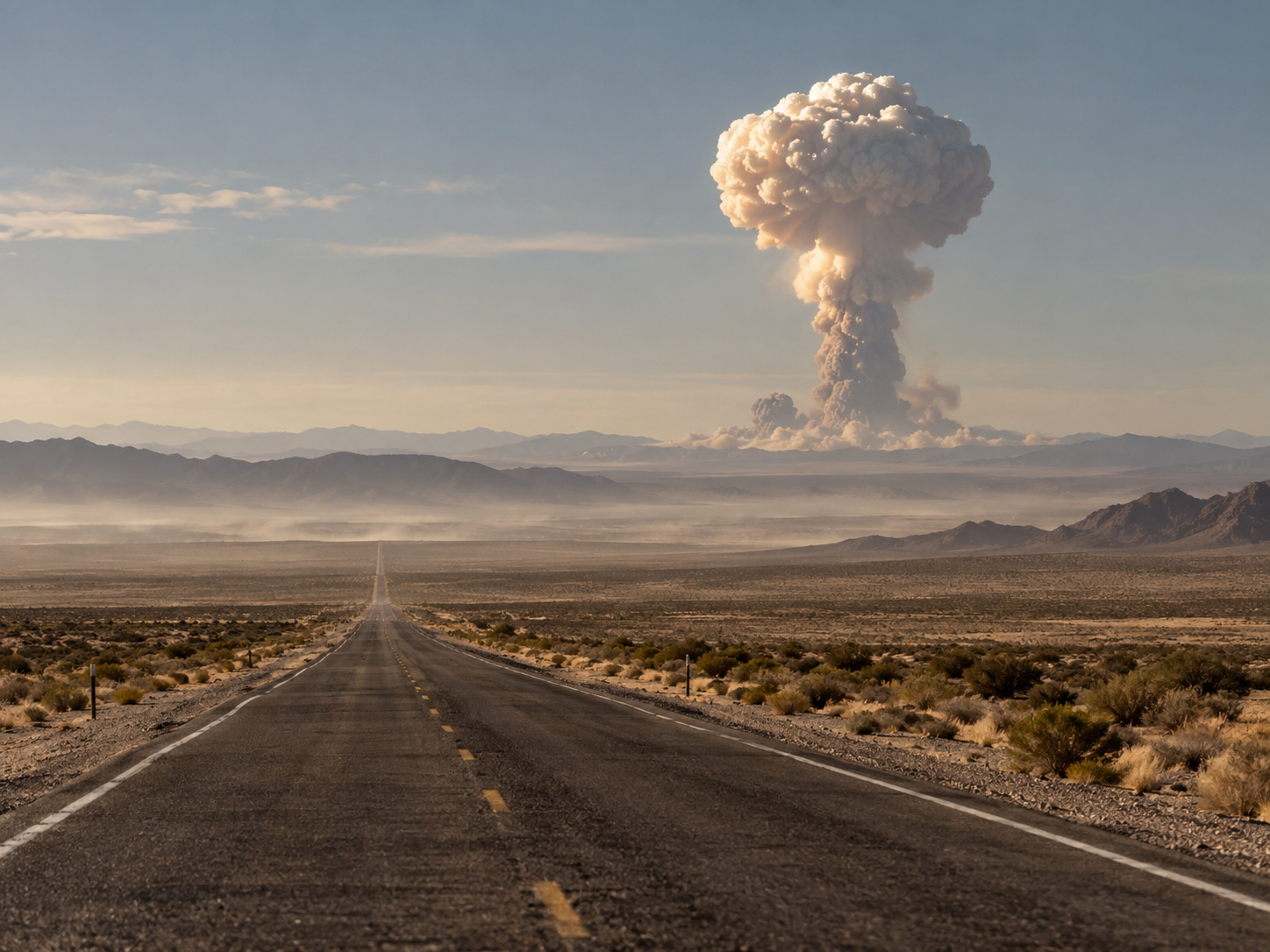
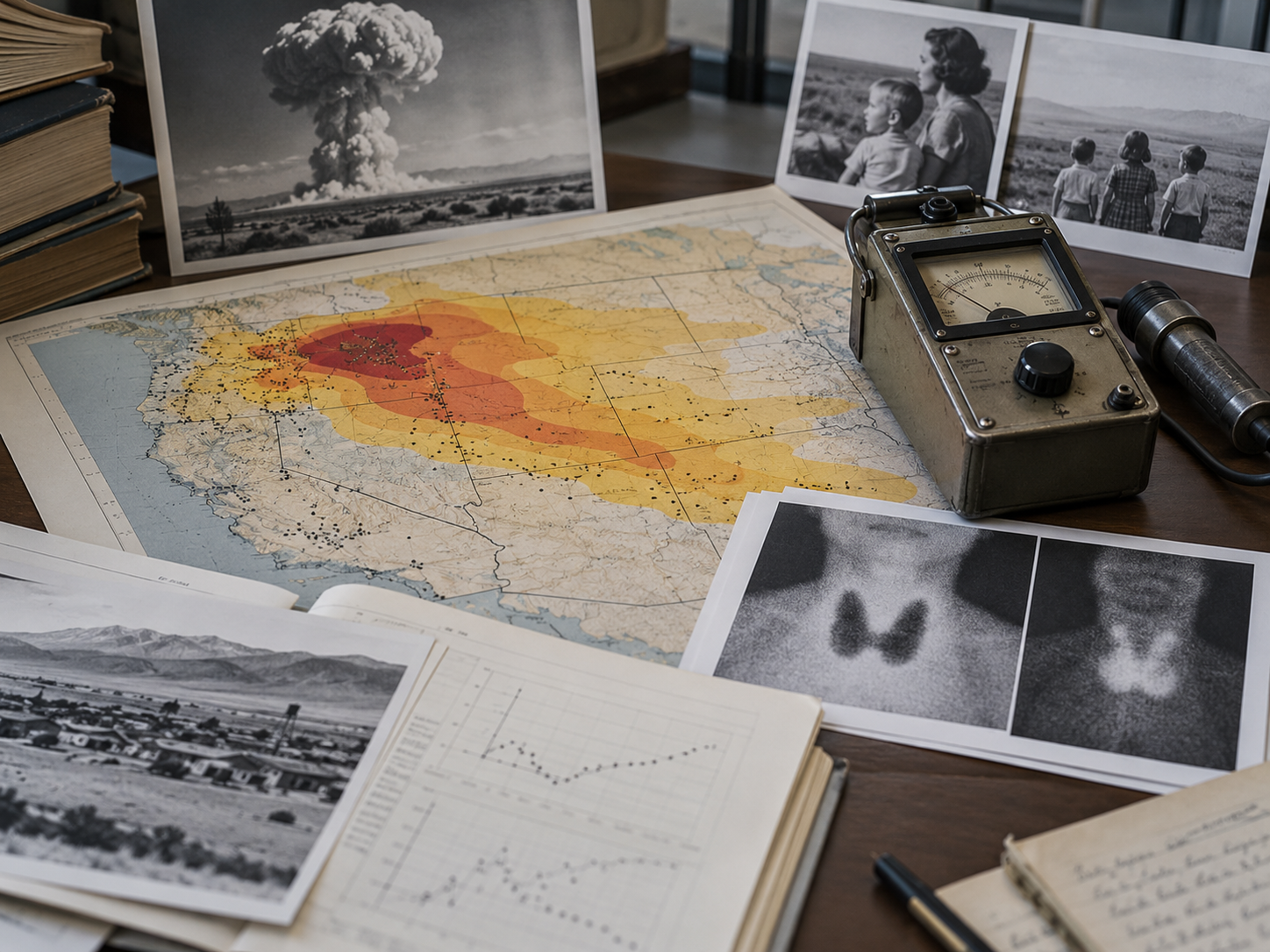
In the early hours of 19 May 1953 the United States detonated a 32-kiloton nuclear device code-named Harry on a tower in the Nevada desert. The wind turned. A radioactive cloud drifted east and hung over the small Mormon town of St. George, Utah, for more than two hours. That spring, thousands of sheep grazing downwind on the ranges near Cedar City died. When the size of the fallout became public, the press gave the test a new name: Dirty Harry.
The Short Answer
The downwinders are Americans who lived downwind of the Nevada Test Site, where about 100 atmospheric nuclear tests took place between 1951 and 1962. Fallout reached them through the air and through milk, and US agencies later linked it to thousands of cancers. After courts blocked their claims on immunity grounds, Congress passed a compensation law in 1990, apologised to them, and in 2025 doubled the payment to $100,000.
The people of St. George became the first face of a group America would come to call the downwinders. Their story is one of the most thoroughly documented cases in modern history of a state exposing its own citizens to radioactive contamination, and of the long road from reassurance to denial to recognition. For anyone following the consequences of 1999 in Serbia, it is a story with startlingly familiar chapters: contamination carried by the wind, illness that surfaced years later, a government that knew more than it said, courts that found negligence and then closed the door on immunity, and, finally, a political decision to accept responsibility without asking every victim to prove the impossible.
“Active participants”: how the downwinders were told they were safe
Between 1951 and 1962 about a hundred atmospheric nuclear tests were carried out at the Nevada Test Site, about 105 kilometres from Las Vegas; across all its sites, the United States conducted 210 atmospheric tests before the 1963 test ban. Las Vegas sold the spectacle. The Chamber of Commerce printed calendars of detonation times and the best places to watch them, PBS recounts.
The Atomic Energy Commission’s message to the people downwind was calm. A booklet it distributed in 1957, Atomic Tests in Nevada, told them: “You people who live near Nevada Test Site are in a very real sense active participants in the Nation’s atomic test program.” It assured them that their exposure was low and that no one outside the test site had been hurt.
When the sheep died in 1953, the ranchers were told the animals had suffered from malnutrition. According to the Utah Division of State History, commission officials gave vague statements to the press, told staff to keep quiet “in the interest of national defense”, and altered monitoring data from St. George. When the ranchers sued, they lost in 1956. In 1982 a federal judge, Sherman Christensen, reopened the case after evidence of the commission’s conduct came to light and found that it had committed “fraud” on the court; an appeals court later reversed him.
How the fallout reached the downwinders
Each test produced a cloud of radioactive particles that the prevailing winds carried east, over Utah, Arizona, Idaho, Montana and far beyond. The most dangerous of those particles for ordinary families turned out to be radioactive iodine-131. As the National Cancer Institute explains, it settled on pasture, was eaten by cows and goats, and passed into their milk. Children who drank fresh milk from backyard animals received the highest doses, and the iodine concentrated in their growing thyroid glands.

In 1997 the National Cancer Institute published its long study of that pathway. It estimated that iodine-131 from Nevada could cause between 11,300 and 212,000 additional thyroid cancers among Americans. A later analysis by the Centers for Disease Control and Prevention and the National Cancer Institute, covering fallout from all atmospheric tests, linked about 11,000 cancer deaths among people living in the United States between 1951 and 2000 to that fallout, HealthDay reported in 2002. An independent research institute put the figure closer to 15,000 deaths and up to 80,000 cancers. A University of Utah epidemiologist quoted at the time called the figures “believable” and said there was “no question” that the tests caused human disease.
So does nuclear fallout cause cancer? The United States government’s own scientists answered that question decades ago. The harder question was who would pay.
| Year | Event | What it meant for the downwinders |
|---|---|---|
| 1951–1962 | About 100 atmospheric tests in Nevada | Fallout over Utah, Arizona, Nevada and beyond |
| Spring 1953 | “Dirty Harry” cloud over St. George; sheep deaths near Cedar City | Ranchers told the sheep died of malnutrition |
| 1957 | AEC booklet calls residents “active participants” | Official reassurance |
| 1979 | About 1,200 downwinders sue the United States | Allen v. United States filed |
| 1984 | Federal judge finds government negligent | Failure to monitor and to inform |
| 1987–1988 | Appeals court reverses on immunity; Supreme Court declines | Victims left uncompensated |
| 1990 | Radiation Exposure Compensation Act | Congress apologises; presumption replaces individual proof |
| 1997 | National Cancer Institute iodine-131 study | 11,300–212,000 extra thyroid cancers estimated |
| 4 July 2025 | RECA reauthorised and expanded | $100,000 per eligible person; Idaho and New Mexico added |
The downwinders in court
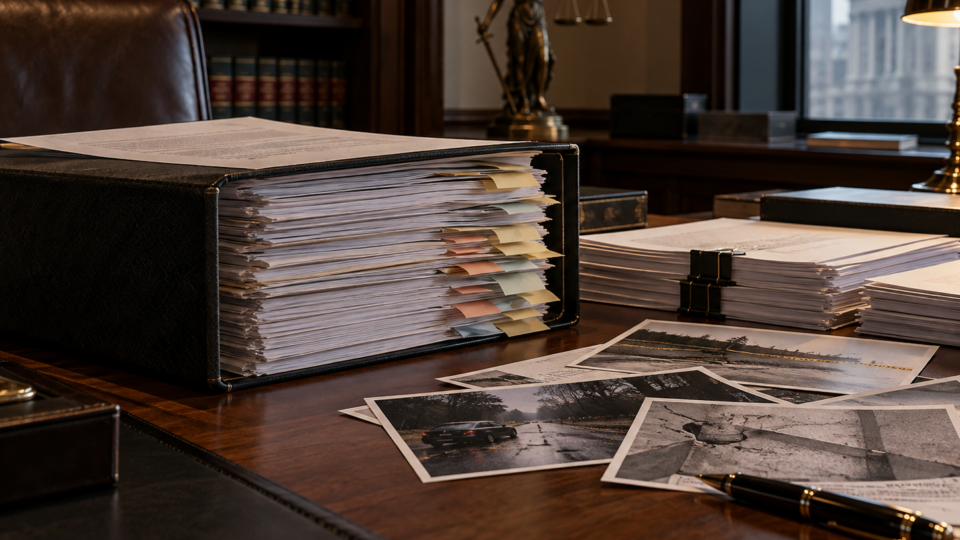
In 1979 nearly 1,200 people who had lived downwind of the Nevada tests, or their families, sued the United States, alleging some 500 deaths and illnesses. The court chose 24 representative cases for trial. On 10 May 1984, in a judgment that ran to hundreds of pages, Judge Bruce Jenkins of the federal court in Utah found the government liable in nine of them. His reasoning, as summarised by the appeals court, rested on two failures: the government had not adequately monitored the fallout that reached people off the test site, and it had not given them the information they needed to protect themselves.
That is the heart of the downwinders’ story. The judge did not find that the tests themselves were unlawful. He found that a government which created a risk had a duty to measure it and to tell the people exposed to it, and that it had failed in both.
In 1987 the federal appeals court for the Tenth Circuit reversed the judgment. It held that the government’s decisions about monitoring and warning fell within the “discretionary function” exception of the Federal Tort Claims Act, which protects government policy choices from lawsuits, so the government was immune. One of the appeals judges, while agreeing with the result, observed that it left the victims uncompensated. In 1988 the Supreme Court declined to hear the case. The courtroom door had closed.
When the courts closed, Congress acted
The downwinders did not stop. In 1990 Congress passed the Radiation Exposure Compensation Act. Its opening section does something rare in legislation: it apologises “on behalf of the Nation” to the people exposed and their families for the hardships they endured.
The law did not ask each claimant to prove that fallout, rather than anything else, caused his cancer. That was precisely the proof individual cases could not provide. Instead it set a presumption: a person who lived in a listed area during the testing period and later developed one of a list of cancers would be compensated. The scientific uncertainty that had defeated individual claims was resolved in favour of the people who had been exposed without their consent.
The programme lapsed in 2024. On 4 July 2025 it was revived and expanded. According to the Justice Department, eligible downwinders now receive a one-time payment of $100,000, double the earlier amount; Idaho, New Mexico and Utah are covered as whole states, along with counties in Arizona and Nevada; and all claims must be filed by 31 December 2027. The Congressional Budget Office estimated the total cost at $7.7 billion, the Arms Control Association reported. Some communities, including much of Las Vegas, remain outside it.
What the downwinders teach
Three lessons from the American record speak directly to the questions this publication has followed in Serbia.
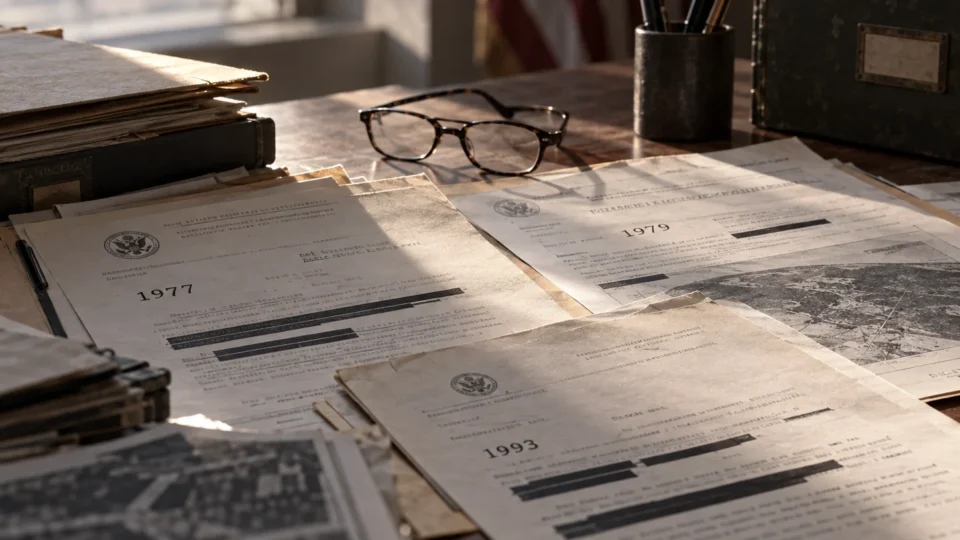
The first is that wind matters. Radioactive particles do not stay where they are released; they travel, settle and enter food and water. The US Army knew this about depleted uranium too: Projektili pravde, the 2024 study by Prof. Dr Srđan Aleksić, quotes a 1979 warning from an Army research command that depleted uranium dust endangers not only people nearby but also those at a distance in the direction of the wind.
The second is that the duty to monitor and to inform is at the centre of responsibility. The American judge who found for the downwinders did so because the government had not measured and had not warned. Serbian courts in Pančevo and Vršac, ruling for claimants in 2025 and 2026, relied on the same principles: the rights to life, to a healthy environment and to information.
The third is that when individual proof is impossible, justice can still be done by presumption. The United States did not wait until science could say which particle caused which cancer. It decided that people exposed by their own government’s actions should not bear the cost of that uncertainty. Italy reached a similar conclusion for its soldiers who served in the Balkans.
The downwinders waited almost forty years from the first test to the first payment, and many died before it came. Their story is taught today as a warning. It can also be read as a map: of the evidence that matters, of the obstacles that appear, and of the decisions that, in the end, allowed a state to acknowledge the harm it had done to its own people.
Related reading: what America knew about uranium dust, what Fukushima’s victims had to prove, the Pavković lawsuit and NATO immunity and cancer in Serbia after 1999.
Frequently asked questions
Who are the downwinders?
People who lived downwind of the Nevada Test Site during the atmospheric nuclear tests of 1951 to 1962, mainly in Utah, Nevada and Arizona, and, since the 2025 expansion, people in Idaho and New Mexico, home of the 1945 Trinity test.
Does nuclear fallout cause cancer?
Yes. The National Cancer Institute estimated that radioactive iodine from Nevada could cause 11,300 to 212,000 additional thyroid cancers, and a CDC and NCI analysis linked about 11,000 cancer deaths in the US between 1951 and 2000 to fallout from atmospheric testing.
What is on the downwinders cancer list?
The Radiation Exposure Compensation Act covers listed cancers, including leukaemias (except chronic lymphocytic leukaemia), multiple myeloma, lymphomas (except Hodgkin’s disease) and primary cancers of the thyroid, breast, lung, stomach, pancreas, bladder and other organs. The full list is published by the Justice Department.
How much is downwinders compensation in 2025?
Under the Radiation Exposure Compensation Act as reauthorised on 4 July 2025, eligible downwinders receive a one-time payment of $100,000 without having to prove that fallout caused their individual illness. Claims must be filed by 31 December 2027.
Did the downwinders win in court?
In 1984 a federal judge found the government negligent in nine of 24 test cases. In 1987 an appeals court reversed the judgment on immunity grounds, and in 1988 the Supreme Court declined to hear the case.
Who is Srđan Aleksić?
Prof. Dr Srđan Aleksić is a lawyer from Niš, Serbia, and the author of Projektili pravde (2024) and Ecocide in International and National Criminal Law (2025). For more than two decades he has gathered evidence for people who fell ill after the 1999 bombing, and he represented the claimants in Serbia’s first court rulings in their favour.
Sources
- Atomic Energy Commission booklet ‘Atomic Tests in Nevada’ (1957), via PBS American Experience
- Utah Division of State History, Radiation, death and deception
- Upshot-Knothole Harry (reference entry)
- Utah Law Review on Allen v. United States, 588 F. Supp. 247 (D. Utah 1984)
- Allen v. United States, 816 F.2d 1417 (10th Cir. 1987)
- National Cancer Institute, I-131 radiation exposure from fallout
- Las Vegas Sun, NCI thyroid cancer estimate (1998)
- HealthDay, Nuclear tests tied to 11,000 cancer deaths (2002)
- US Department of Justice, Radiation Exposure Compensation Program
- Arms Control Association, RECA revived (July 2025)
- S. Aleksić, Projektili pravde (Niš, 2024), American documents on depleted uranium