Japan Paid for Fukushima. Who Pays for the Uranium?
Japan's nuclear operator has paid more than 11.5 trillion yen to the people of Fukushima, and most of them never had to prove they were ill. Italian courts have ruled for soldiers exposed to depleted uranium more than 300 times. In Serbia, the people who lived under that uranium are still asked for certainty. Srđan Aleksić on what Fukushima compensation teaches the Balkans.

Srđan Aleksić represents claimants in Serbian proceedings concerning depleted uranium, including the claim against NATO described in this column.
The Short Answer
Japan's 1961 nuclear damage law made TEPCO pay without proof of fault: 11,578.8 billion yen by June 2025, mostly to evacuees who only had to show where they lived. Italian courts have ruled more than 300 times for soldiers exposed to depleted uranium, according to Projektili pravde (2024). In Serbia, people exposed in 1999 are still asked to prove the cause of their cancer.
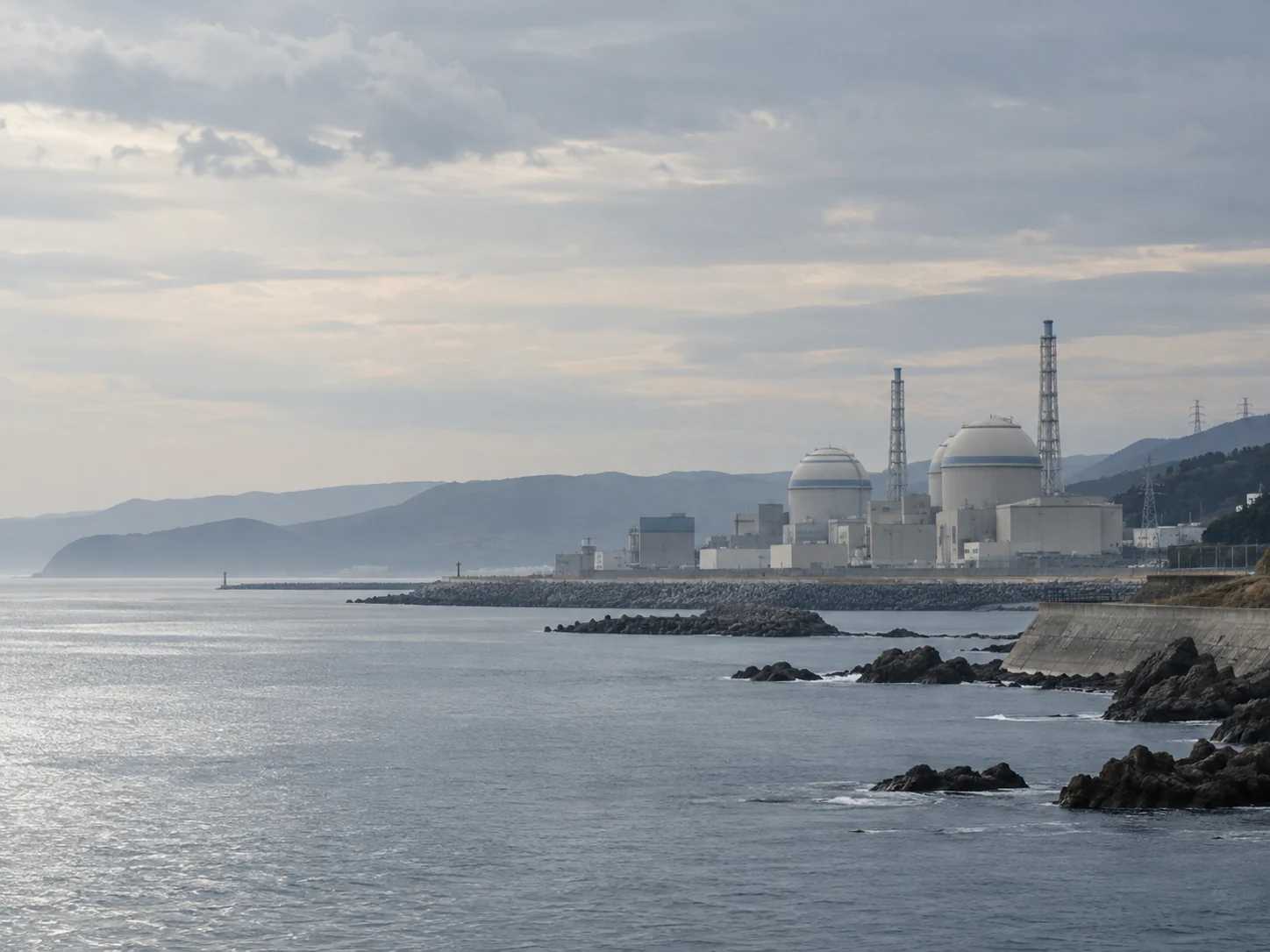
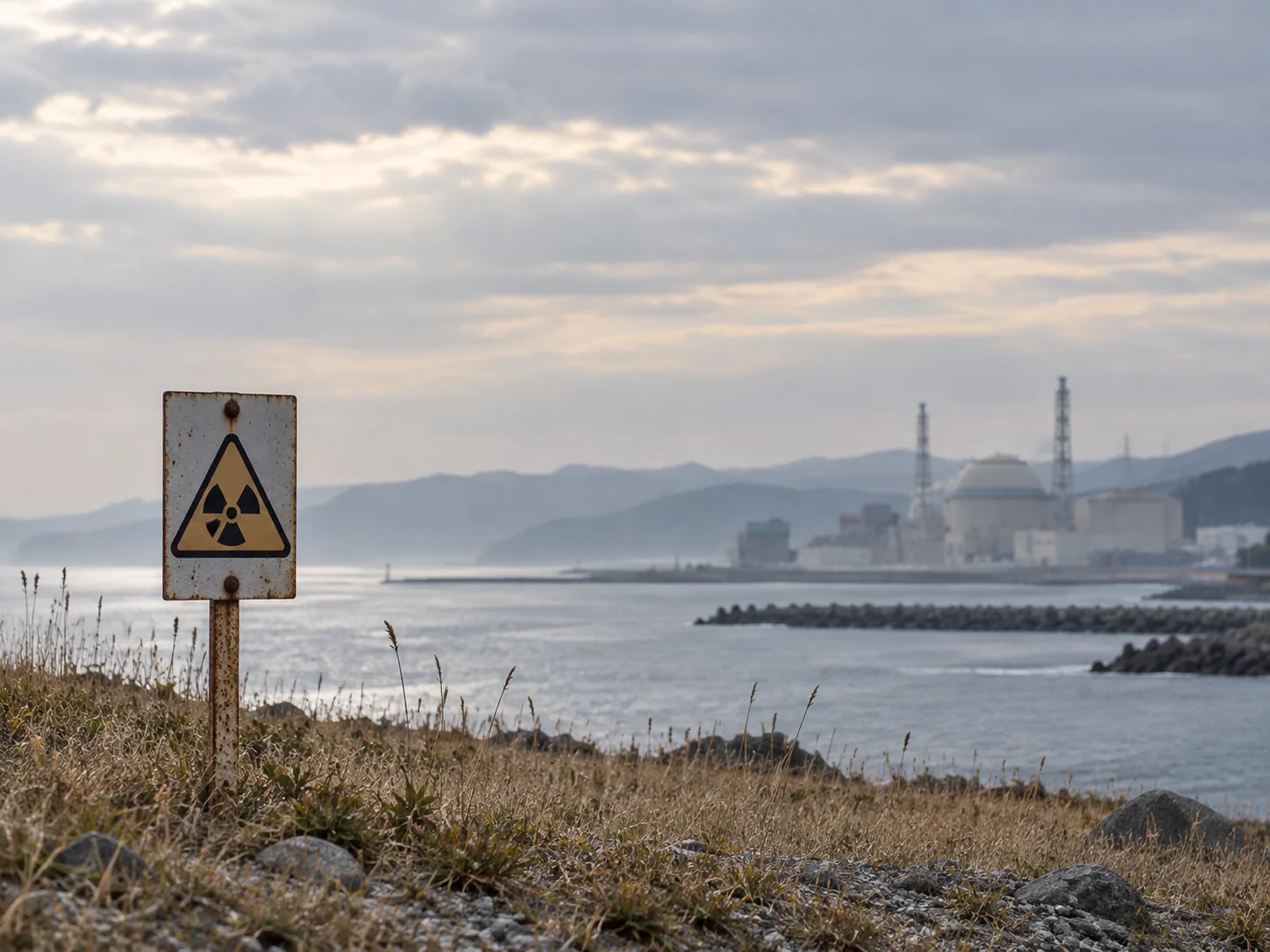
On 11 March 2011 the sea came over the wall at Fukushima Daiichi and three reactors melted. About 470,000 people left their homes in the first days. Tens of thousands never went back.
What came next is remembered less, and it teaches more. Within months Japan had a schedule of Fukushima compensation: who would be paid, and for what. Evacuation, lost work, lost homes, and fear itself. By the end of June 2025 the operator, Tokyo Electric Power Company, had paid 11,578.8 billion yen.
Most of that money went to people who never had to prove they were ill. They had to prove they had been there.
That sentence is the whole distance between Fukushima and the Balkans.
How Japan decided Fukushima compensation
Japan answered the hardest question before the disaster happened. Its Act on Compensation for Nuclear Damage, passed in 1961, makes the operator of a nuclear plant liable for the damage the plant causes, whether or not anyone was at fault, and without an upper limit. Nobody had to prove negligence to be paid. In August 2011 a government committee published guidelines that set categories and amounts, and a state dispute centre settled the claims that did not fit them.
Where people found the schedule too low, they went to court. More than 30 class actions followed. In March 2022 the Supreme Court made three of them final, ordering TEPCO to pay about 1.4 billion yen to some 3,700 evacuees, above what the guidelines had given them.
Then the limits of Fukushima compensation showed. On 17 June 2022 the same court held that the Japanese state was not liable, over a 29-page dissent by Judge Mamoru Miura, who would have held the state and TEPCO jointly responsible. A Tokyo court ordered four former TEPCO executives in 2022 to pay the company 13 trillion yen; in June 2025 the Tokyo High Court overturned that ruling, finding the tsunami had not been foreseeable. The criminal case against the company’s leadership ended in acquittal.
Even so, Fukushima compensation kept moving. Because the law had settled in advance that the operator pays, the people of Fukushima argued about how much, never about whether.
| Fukushima, 2011 | Serbia and Kosovo, 1999 | |
|---|---|---|
| What was released | Radioactive material from three reactors | Depleted uranium dust; chemicals from bombed plants |
| Who must pay | The operator, by statute, without fault and without limit | Never decided |
| Fukushima compensation paid | 11,578.8 billion yen by June 2025 | No compensation scheme |
| What people had to prove | That they lived or worked in the zone | That the weapon caused their cancer |
| Health register of the exposed | Prefecture-wide survey; thyroid screening of about 380,000 children | None |
When the question is cancer
There is a second Fukushima, where compensation stops, and it looks much more like ours. It begins when the injury is not a lost house but an illness.
The workers came first. Japan’s labour authorities have recognised cancers in Fukushima Daiichi workers as caused by their work, starting with leukaemia in 2015. In September 2018 they recognised the first death: a man in his fifties who had measured radiation at the plant after the meltdown, absorbed about 195 millisieverts and died of lung cancer. His family was compensated.
Then the children. Fukushima Prefecture has screened about 380,000 people who were children in 2011. By 2026 some 400 of them had been diagnosed with thyroid cancer, in a prefecture that recorded about one case per million children before the disaster. The authorities and the UN Scientific Committee attribute most of that rise to the screening itself, which finds tumours that would otherwise stay hidden. The families do not accept it. In January 2022 six young people who were between 6 and 16 at the time sued TEPCO for 616 million yen, arguing that none of their cancers was hereditary and that radiation is the probable cause. Four had lost their whole thyroid. Their case has been running in the Tokyo District Court ever since.
Note what happened. As long as the harm was a lost house, Fukushima compensation was paid without asking for proof of cause. The moment the harm was a cancer, the burden turned around. A young woman who lost her thyroid at seventeen must now prove what a state and a company, holding every measurement, would not concede.
That is exactly where the people of southern Serbia have stood for twenty-five years, with nothing like Fukushima compensation behind them.
Italy did it with uranium
Italy shows that the burden can be turned the right way, even without a scheme like Fukushima compensation. Its soldiers who served in Bosnia and Kosovo, and later fell ill, did not sue the armies that fired the rounds. They sued their own state, which had sent them there.
By the count recorded in Projektili pravde, my 2024 study of the bombing, Italian courts at every level have now issued more than 300 rulings affirming the causal link between the cancers of soldiers who served in the Balkans and their service there. The Council of State, Italy’s highest administrative court, wrote in judgment 4440/2013 that it was “well known” that NATO troops in that period often used depleted uranium munitions, “very liable, as such, to cause malignant diseases” (translated). In 2010 a court in Rome held the Ministry of Defence liable for the death of Corporal Salvatore Vacca, who was 23 when leukaemia killed him after service in Sarajevo, and awarded each of his parents €256,880. Italy’s fourth parliamentary commission of inquiry on depleted uranium closed its work in February 2018 after hearing soldiers, doctors, epidemiologists, judges and the families of the dead.
The Italian courts did not ask for laboratory certainty. They asked whether the link was more probable than not, and they expected the state, which sent the soldiers and kept the records, to show another cause if it had one.
What Serbia was never given
Serbia had neither Japan’s statute, which made Fukushima compensation automatic, nor Italy’s case law. What it had was the exposure. NATO acknowledged firing more than 30,000 depleted uranium rounds in 1999, by the book’s estimate some 15 tonnes of uranium over southern Serbia and Kosovo.
What Projektili pravde records afterwards is not a footnote. Since the bombing, it says, the picture of birth, illness and death in Serbia has changed completely: cancer kills almost three times as many people, and the genetic changes typical of such exposure are ten times more frequent than had been known. Independent experts cited in the book estimate that about 33,000 people in Serbia fall ill each year with diseases linked to raised radiation. The book also records the similarity between the course of disease in shelled areas and in the region around Pripyat after Chernobyl.
Then the laboratory. A report reproduced in the book found uranium at about 500 times the upper reference value in the tissue of a Serbian officer, as our report on the tissue evidence set out. In national registry data, new leukaemias and lymphomas rose by 74 per cent within a few years, as our report on cancer in Serbia after 1999 showed.
International assessments by the UN Environment Programme and the World Health Organization found no such link. The Italian courts did not treat those assessments as the end of the matter, and neither should ours.
Serbian law already contains the tool. Article 173 of the Law on Obligations presumes that damage connected with a dangerous activity comes from that activity, unless the defendant proves otherwise. My office filed the first claim against NATO in the Higher Court in Belgrade on behalf of an army officer who developed a leiomyosarcoma 18 years after serving near Vranje in 2000 and 2001. The court has jurisdiction because the damage arose on Serbian territory. NATO’s claim to immunity is the obstacle, which is why claims are also brought against the Republic of Serbia, as I explained in The Last Address of Responsibility.
Can Poland and other countries sue?
Poland joined NATO in March 1999, in the middle of the bombing. Polish soldiers have since served in Kosovo with KFOR and, from 2003 to 2008, commanded a multinational division in Iraq, a country where depleted uranium was fired in 1991 and again in 2003. Polish law makes the State Treasury answer for damage caused by the unlawful acts or omissions of public authority, under Article 417 of the Civil Code. The Italian argument travels with the soldier: a state that sends its people into a contaminated area and does not protect them owes them a remedy.
Portugal, France and Belgium also asked questions about soldiers who died of cancer after the Balkans, the book notes. Only Italy carried them to judgment.
| Country | Who can claim | Against whom | Legal ground | Where it stands |
|---|---|---|---|---|
| Japan | Residents, workers | TEPCO; the state | Act on Compensation for Nuclear Damage (1961) | 11.6 trillion yen paid; state not liable (2022); thyroid case pending |
| Italy | Soldiers and their families | Ministry of Defence | Civil and administrative liability | More than 300 rulings for claimants |
| Serbia | Soldiers, residents | NATO; Republic of Serbia | Damage on Serbian territory; Law on Obligations, Art. 173 | First claims filed; NATO invokes immunity |
| Poland | Soldiers who served in Kosovo and Iraq | State Treasury | Civil Code, Art. 417 | No comparable case known to Legal Smart |
| Portugal, France, Belgium | Soldiers and their families | Their own states | National law | Questions raised; no rulings like Italy’s |
What anyone exposed should do now
Time is the enemy in these cases, and it works quietly. Keep every record of service: the dates, the places, the unit. Keep every medical record. Ask the hospital to preserve the tissue taken at biopsy or surgery, because tissue can still be analysed years later and it is the most direct evidence there is. Do not assume a deadline has passed. In Howald Moor v. Switzerland the European Court of Human Rights held that where an illness cannot be known until long after exposure, that fact must count when the limitation period is calculated.
The method I found
Twenty-five years of this work, in Serbian courtrooms, in Italian case law and in the laboratory, have led me to a method, and I believe it can put justice on the side of people, in Europe and beyond. It has three steps. First, prove the exposure with documents and tissue, not with memories. Second, insist on the standard the Italian courts applied: more probable than not, with the burden on the state that holds the records. Third, sue the state that had the duty to protect, not the army that hides behind immunity. With my Italian colleague Angelo Fiore Tartaglia, who has argued more than 400 such cases in Italy, my office has brought this method to Serbian courts. Japan built it into law in 1961. Everyone else can build it case by case. The details are on my page at Legal Smart.
The difference was a decision
The difference between Fukushima compensation and the silence around Vranje is not the physics. In Japan, someone decided before the sea came who would pay. In Serbia nobody decided, and so every sick person has to decide it alone, in a courtroom, against a defendant who holds the maps and the records.
That can change. Italy changed it one judgment at a time.