“300 Times Hiroshima”: We Traced the Italian Uranium Headline to a Court File. Here Is What It Really Says
An Italian newspaper headline claimed that depleted uranium in the Balkans equalled “300 times Hiroshima”. Legal Smart followed the number back through the courts. It comes from an Italian judgment, and the record behind it is stronger, and stranger, than the headline.
Angelo Fiore Tartaglia, quoted in the Italian press on these cases, has worked with the law office of Prof. Dr Srđan Aleksić on 35 cases in Serbian courts, according to Projektili pravde (2024). Legal Smart publishes Aleksić’s analysis.
The Short Answer
The “300 times Hiroshima” figure comes from Italian administrative case law, which cited a document attributed to Berkeley describing chemical and radioactive pollution in the Balkans “up to 300 times” that of Hiroshima and Nagasaki. Measured by the mass of uranium scattered, the order of magnitude is plausible; measured by radiation dose, it is not comparable. Italian courts have nonetheless recognised a link between Balkan service and cancer in hundreds of cases.
The headline was built to stop a reader in the street: 300 volte Hiroshima. Three hundred times Hiroshima. It ran over an article by the Italian journalist Paolo Comi, written as Britain prepared to send depleted uranium tank rounds to Ukraine in 2023, and it has been shared ever since across the Balkans, usually as a photograph of a newspaper page.
Most readers treat the number as either a revelation or an exaggeration. Legal Smart wanted to know where it came from. We found it in a court file.
Is depleted uranium really “300 times Hiroshima”?
Not in the way most people read it, but the number is not invented either. It comes from Italian administrative case law. In a ruling reproduced in Projektili pravde, the 2024 study by the Niš lawyer Srđan Aleksić, an Italian court records that a document attributed to the “International University of Berkeley”, filed in the proceedings, described chemical and radioactive pollution in the Balkans “up to 300 times” greater than that at Hiroshima and Nagasaki. We were not able to locate that Berkeley document independently, and Aleksić’s own text in the same book is more cautious: it puts the comparison at “ten, if not a hundred times”.
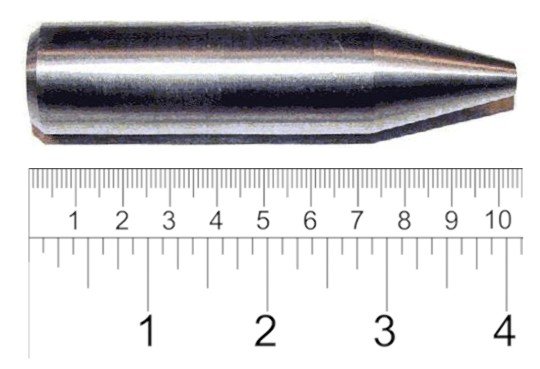
What the comparison measures matters. The bomb dropped on Hiroshima, Little Boy, carried about 64 kilograms of uranium, most of it highly enriched. NATO admitted firing 31,000 depleted uranium rounds of 297 grams each in 1999, roughly 9 tonnes; the Yugoslav Army estimated 45,000 to 51,000 rounds, and Russian experts about 90,000, according to Projektili pravde. Add Bosnia’s 2.75 tonnes and the uranium scattered across the Balkans amounts to somewhere between about 180 and more than 400 times the uranium in Little Boy. Measured by mass of uranium spread on the ground, “hundreds of times Hiroshima” is the right order of magnitude. Measured by radiation dose, it is not comparable: depleted uranium is weakly radioactive and its danger lies mainly in fine dust breathed or swallowed, not in a blast of fission products.
| What is compared | Figure | Source |
|---|---|---|
| Uranium in the Hiroshima bomb | about 64 kg | Historical record of Little Boy |
| DU fired in 1999, NATO count | 31,000 rounds, about 9 t | Projektili pravde |
| DU fired in 1999, Yugoslav and Russian estimates | 45,000–90,000 rounds | Projektili pravde |
| DU fired in Bosnia, 1994–95 | about 2.75 t | Projektili pravde |
| Pollution comparison cited in an Italian ruling | “up to 300 times” Hiroshima and Nagasaki | Document attributed to Berkeley, as quoted in the ruling |
| Aleksić’s own estimate | “ten, if not a hundred times” | Projektili pravde |
What Comi got right
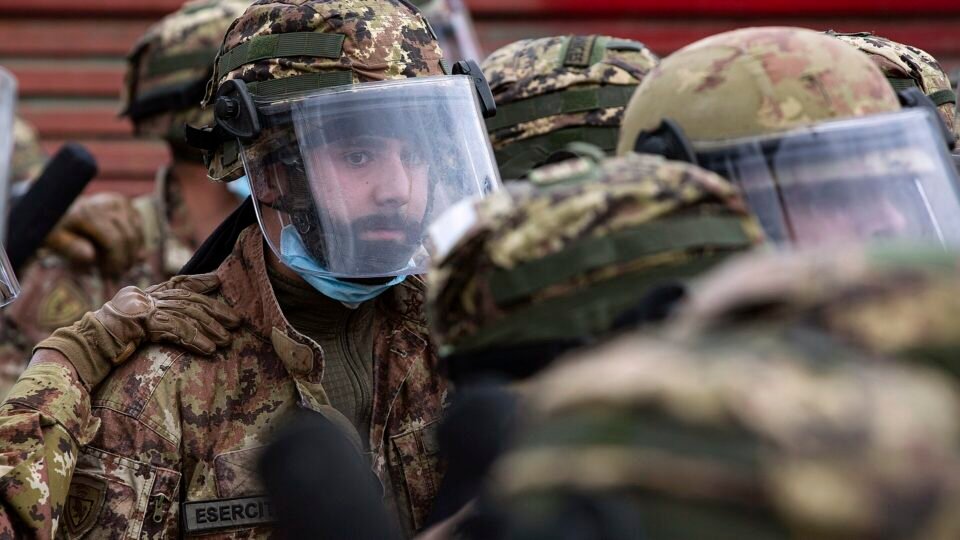
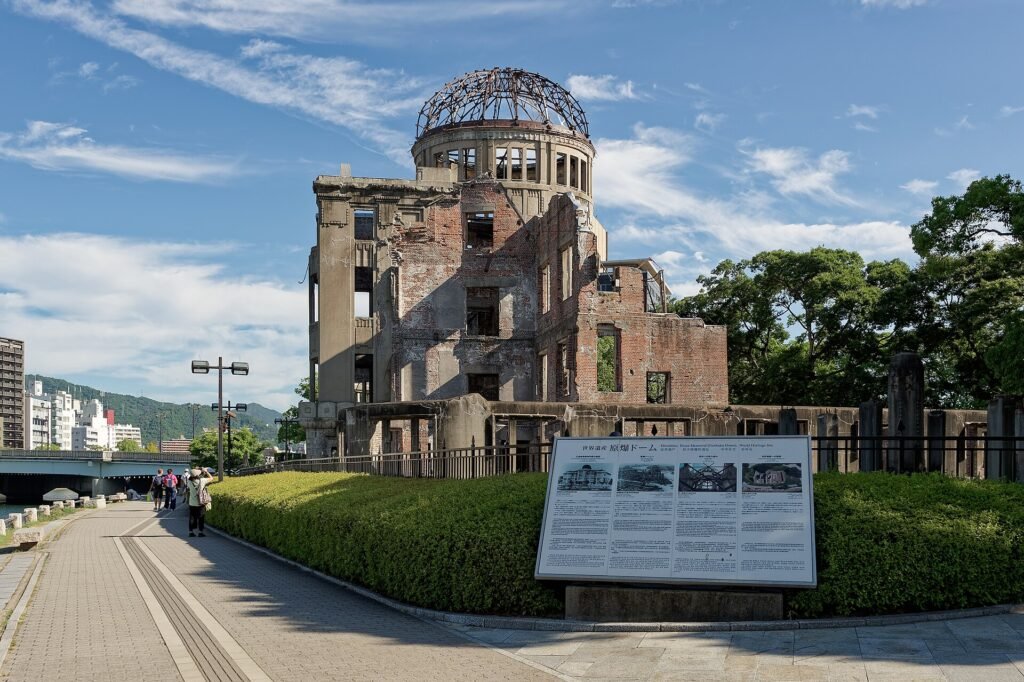
Strip away the headline and most of Comi’s article stands on the court record. He reported that the Italian Court of Cassation at first barred soldiers’ compensation claims, treating the decision to send troops abroad as beyond review, and that the case law later shifted to hold the Ministry of Defence responsible as the soldiers’ employer. He named the Tito Barracks in Sarajevo, the former military academy hit hard by NATO uranium rounds, where Italian troops later recorded clusters of lymphoma, and the corporal Salvatore Vacca of the Sassari Brigade, remembered as the first victim of what became the “Balkan syndrome”. We told the courts’ side of that story in The Balkan syndrome cases.
His casualty figures, about 300 dead and 8,000 seriously ill, are close to those of Italy’s Osservatorio Militare, a veterans’ campaign group, which counts some 7,600 sick and 400 dead, as L’Unione Sarda has reported. They are not official statistics; the Ministry of Defence has never published comparable totals.
What Comi says about Serbia, Iraq and Afghanistan
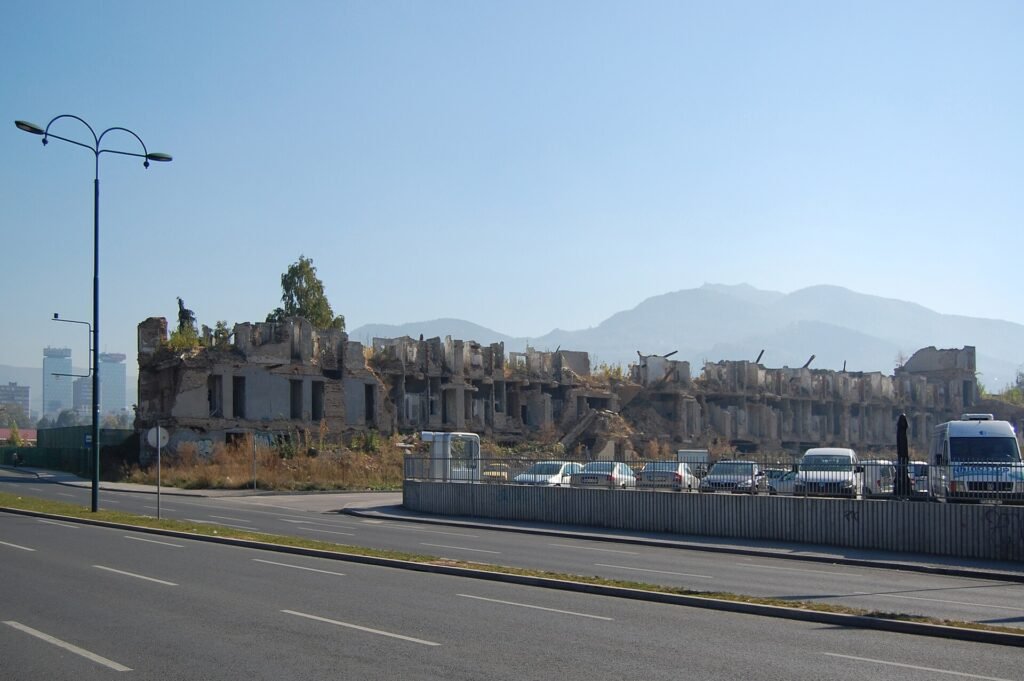
Comi’s widest claim concerns civilians. He writes that Serbia was once one of the healthiest countries in the world and that, after the NATO campaign, cancer cases among its population rise by 40,000 a year. The figure needs a correction that does not weaken the concern behind it. Around 40,000 is the total number of new cancer diagnoses Serbia registers each year, not the annual increase: more than 41,500 new cases and almost 20,000 cancer deaths in 2022, according to public-health data reported by Vreme. Serbia ranks among the European countries with the highest cancer mortality. What no registry has yet established is how much of that burden, if any, is due to depleted uranium, and that is precisely the gap Serbian claimants are asking courts and scientists to close.
He is right that comparable data for Iraq and Afghanistan are missing. Depleted uranium was fired in large quantities in Iraq in 1991 and 2003; its use in Afghanistan has never been officially confirmed. Italian soldiers returning from both missions later joined the Balkan veterans in court. The first cases, Comi notes, were recorded at the end of 1999 among troops who had served in Kosovo, and the lymphomas at the Tito Barracks were mostly Hodgkin’s lymphoma. He also raises the scenario that gave his article its urgency: Britain confirmed in 2023 that it would supply Ukraine with depleted uranium rounds for its Challenger 2 tanks, which means a new contaminated battlefield in Europe, and a new generation of potential claimants, on both sides of the front.
Why armies use it, and what they knew
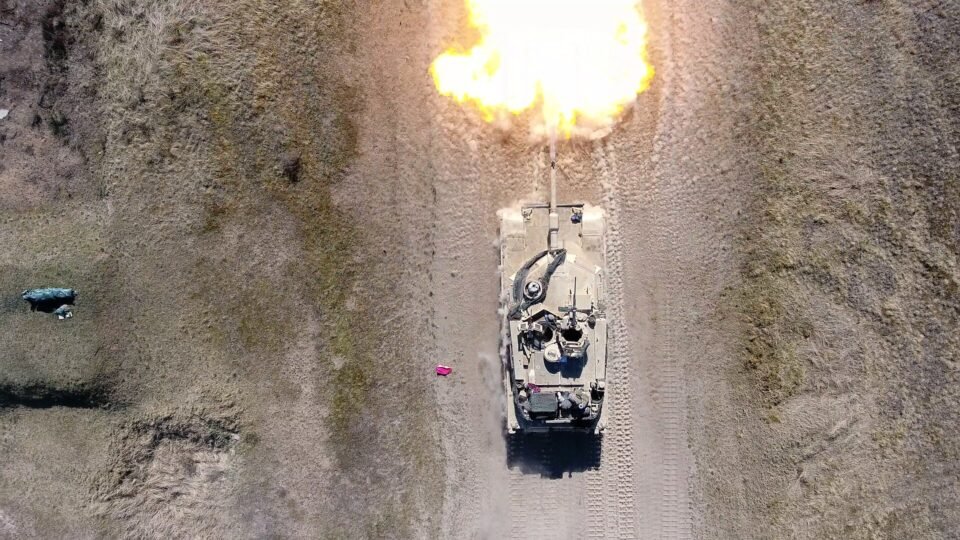
The reason is efficiency. A depleted uranium penetrator is denser than lead, sharpens itself as it pierces armour and ignites on impact; Comi puts the temperature at up to 3,000 degrees. The same impact turns part of the metal into a cloud of micro- and nanoparticles. The International Agency for Research on Cancer classifies internally deposited radionuclides that emit alpha particles, the type of radiation uranium emits, in Group 1, carcinogenic to humans (IARC Monograph 100D); IARC has not issued a separate evaluation of depleted uranium itself. The material is cheap because it is a by-product of enriching uranium for nuclear fuel, which is why, as Comi observes, the armies that use it belong to countries with nuclear industries.
Most of the Italian soldiers who fell ill served in the Army and the Carabinieri. Comi writes that they were first sent to the Balkans without any protection, although NATO documents in the 1990s already warned that inhaling the dust of these explosions could cause cancer, and that the Ministry of Defence for years failed to inform the personnel it sent abroad. The courts reached a similar conclusion from the files in front of them, as the next section shows. Comi ends his article with a single line: history should teach us something.
What the courts actually found
The rulings collected in Projektili pravde are more specific than any headline. In judgment No. 6465/2022, Italy’s Council of State, the highest administrative court, reversed a lower court that had ignored nanoparticles of heavy metals found in a dead soldier’s tumour tissue, particles the appellants argued could only come from contaminated war zones. A ruling cited in the book refers to a 2019 study by Gennaro and colleagues which found that Carabinieri who served on missions had a standardised incidence ratio for all cancers of 152.8, a risk 52.8 percent higher than the comparison population. The same ruling notes that the Ministry produced no evidence that troops had been given any instructions to protect themselves from depleted uranium.
And on Comi’s most surprising claim, that depleted uranium affects the nervous system and multiple sclerosis: the Regional Administrative Court in Parma, in ruling No. 284/2016, upheld the appeal of a soldier who developed multiple sclerosis after serving in the Balkans, as the book records. Laboratory studies in animals have reported uranium reaching the brain; epidemiology has not established a causal link with multiple sclerosis in humans. The court decided the individual case on a lower standard than proof: probability.
What the generals were told
The question of who knew what, and when, runs through the Italian story. According to L’Unione Sarda, US Admiral Leighton Smith briefed Italian military leaders in Naples on 31 August 1995 about the use of depleted uranium weapons in Bosnia. On 27 September 2000, the then Defence Minister Sergio Mattarella told parliament that the leukaemia deaths among soldiers were not linked to depleted uranium. The courts have since said otherwise in case after case.
We asked Srđan Aleksić
Prof. Dr Srđan Aleksić has worked on these cases in Serbia together with the Rome lawyer Angelo Fiore Tartaglia, whose office, according to Projektili pravde, has won more than 400 cases in Italy and supported Aleksić’s office in 35 Serbian cases (see the disclosure above). His answer to the headline is in the book:
“Particles of depleted uranium taken into the body act harmfully on human health for a whole lifetime, and the harmful effects are passed on to the descendants of those who were exposed.”
“To date, in Italy, the judgments … which have unambiguously affirmed the causal link between the tumour pathologies of soldiers deployed in the Balkans and their service … have reached more than three hundred!”
Put practically, Aleksić’s reading turns the Hiroshima debate around. A court does not need a bomb-sized comparison to rule for a sick soldier. It needs four things: proof the soldier was in a contaminated place, a recognised disease, a plausible biological mechanism, and the absence of proof from the state that the exposure played no role. Italian judges reversed the burden on that last point: where the Ministry could not show the substance was harmless, the presumption favoured the soldier. That, not the number 300, is what Serbian claimants are now asking their own courts to accept. For where those cases stand, read He Climbed the Uranium Hill Seven Times.
Frequently asked questions
Where does “300 times Hiroshima” come from?
From an Italian court ruling, reproduced in Projektili pravde, which cites a document attributed to Berkeley comparing pollution in the Balkans with Hiroshima and Nagasaki. The original document has not been independently located.
Is depleted uranium as radioactive as an atomic bomb?
No. Depleted uranium is weakly radioactive. The comparison holds only for the mass of uranium scattered, which in the Balkans was hundreds of times that in the Hiroshima bomb.
How many Italian soldiers fell ill after the Balkans?
Italy’s Osservatorio Militare, a veterans’ group, counts about 7,600 ill and 400 dead. These are not official figures.
Have Italian courts linked depleted uranium to cancer?
Yes, in individual cases. Courts have recognised a causal link, on a standard of probability, in hundreds of judgments, including Council of State ruling 6465/2022.
Can depleted uranium cause multiple sclerosis?
Science has not established it. An Italian court in Parma (ruling 284/2016) nevertheless upheld the claim of a soldier with multiple sclerosis who served in the Balkans.
Has cancer in Serbia increased because of depleted uranium?
Serbia registers about 40,000 new cancer cases a year and has one of Europe’s highest cancer death rates, but no registry or study has yet established what share, if any, is caused by depleted uranium.
Why is depleted uranium used in ammunition?
Because it is extremely dense, pierces armour and ignites on impact, and because it is a cheap by-product of enriching uranium for nuclear fuel.
Sources
- L’Unione Sarda, Depleted uranium massacre, NATO invokes immunity
- Paolo Comi, 300 volte Hiroshima: le bombe all’uranio fanno strage di amici e nemici (2023)
- Avvenire, Munizioni con uranio impoverito: in Ucraina un incubo che ritorna
- IAEA, Depleted uranium
- Srđan Aleksić, Projektili pravde, 2024 (Italian rulings: Council of State 6465/2022; TAR Parma 284/2016)
- Vreme, Cancer in Serbia: more than 40,000 new cases a year
- IARC Monographs Volume 100D, Radiation