Twenty-Three Micrograms: What an Italian Laboratory Found in the Tumour Tissue of General Nebojša Pavković
On 15 September 2025, at the request of his daughter, samples of tumour tissue taken from General Nebojša Pavković in a biopsy at the Military Medical Academy in Belgrade about twenty years earlier were packed and sent to a laboratory in Italy. The report came back with a number that has since been quoted across Serbia: 23.80 micrograms of uranium per kilogram of tissue.
Prof. Dr Srđan Aleksić, who collaborates with Legal Smart, is the lawyer for the Pavković family and represents other claimants in Serbian depleted uranium proceedings.
The Short Answer
An accredited Italian laboratory analysed tumour tissue of General Nebojša Pavković, taken in a biopsy about twenty years earlier, and reported 23.80 micrograms of uranium per kilogram, together with high levels of aluminium, cadmium and other metals. His family's lawyer says the result links his thyroid and pancreatic cancers to the 1999 bombing, and the family has sued NATO.
By the time the result was published, in January 2026, Nebojša Pavković was no longer alive. He had died at the Military Medical Academy on 20 October 2025, at the age of 79, after a long illness: cancer of the thyroid and cancer of the pancreas. In 1999 he commanded the Yugoslav Third Army, the force deployed in Kosovo and Metohija during the NATO bombing, and he moved across the province throughout those weeks. In June 2026 his family filed a lawsuit against NATO, arguing that his illness and death were caused by exposure to depleted uranium.
The short answer to what the laboratory found is this: uranium, together with unusually high levels of several metals, inside tissue that had been sitting in a hospital archive since long before anyone thought of a lawsuit. The longer answer explains why that matters, and why a single sample from one man has become the most closely watched piece of evidence in the Serbian depleted uranium cases.
What did the analysis of Nebojša Pavković’s tissue find?
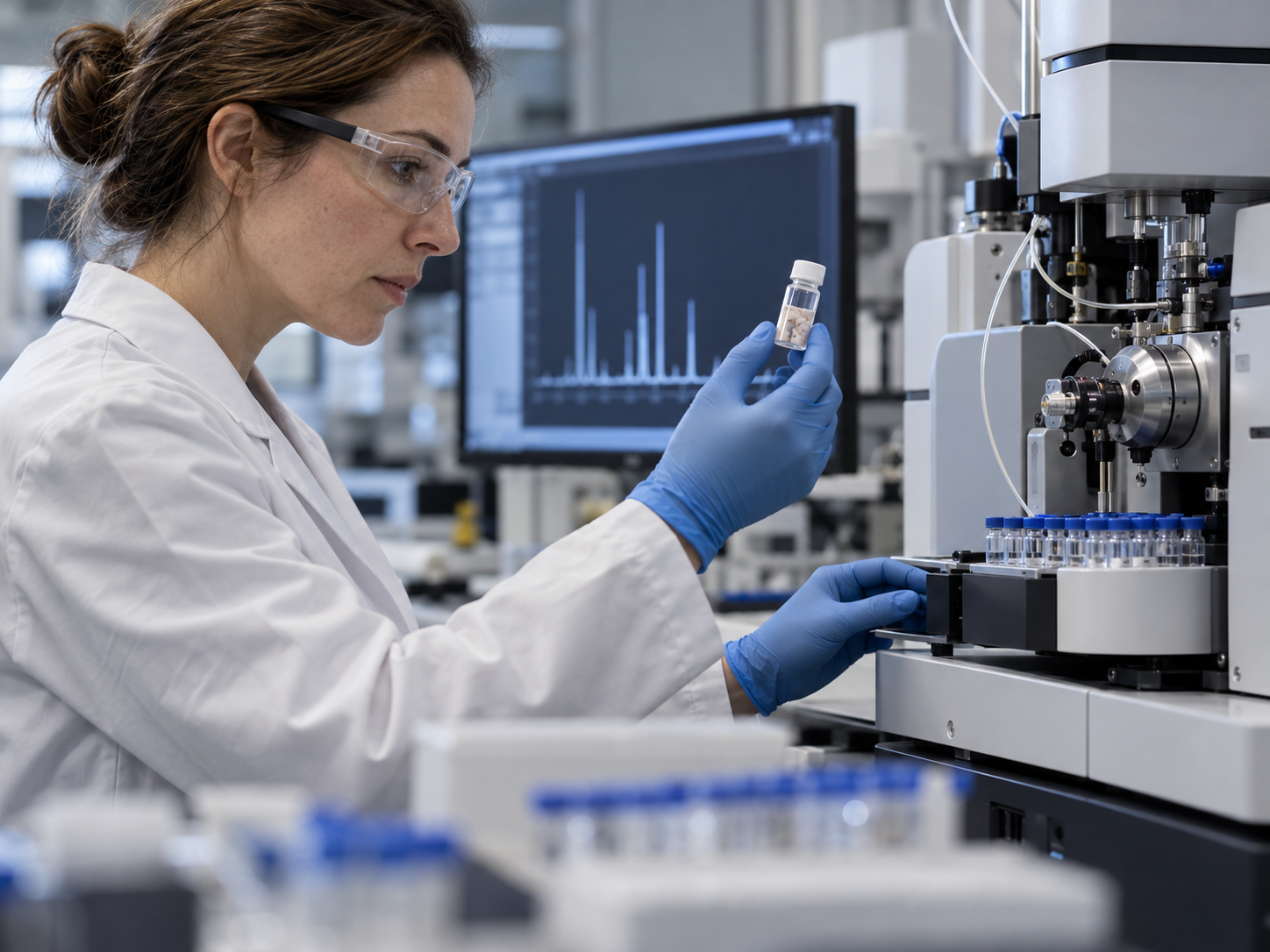
According to the laboratory report, as published by Kurir, the analysis was carried out by Chimica & Ambiente, an Italian laboratory holding ISO 9001 certification and qualified by the Italian Ministry of Health, under report number 25-25571.12. It used two standard methods of the US Environmental Protection Agency: EPA 3052, which dissolves a solid sample in acid under microwave heating, and EPA 6020B, which measures the elements in the resulting solution by inductively coupled plasma mass spectrometry, one of the most sensitive techniques in existence for trace metals.
| Element measured in tumour tissue | Reported value |
|---|---|
| Uranium (U-238) | 23.80 µg/kg |
| Aluminium | 24,682 µg/kg |
| Cadmium | 4,221 µg/kg |
| Copper | 4,370 µg/kg |
| Manganese | 6,368 µg/kg |
| Iron | 305,100 µg/kg |
| Zinc | 159,158 µg/kg |
The family’s lawyer, Prof. Dr Srđan Aleksić, said that several of these values were above the reference levels set out in the ISTISAN reports of Italy’s national health institute, the Istituto Superiore di Sanità, and “multiple times higher” than those found in healthy human tissue. He called the finding “a turning point in proving the consequences of depleted uranium in Serbia”.
Why a twenty-year-old sample is strong evidence
The most important feature of the Nebojša Pavković sample is its age. Tissue taken in a biopsy is fixed and stored by hospitals as part of the medical record. A sample taken about twenty years ago is a fixed point in time: whatever it contains was already in the body then. It cannot have been contaminated by later events, and it pre-dates the public argument and the lawsuits. For a court, an archived sample from a recognised military hospital, sent to an accredited foreign laboratory and analysed with published standard methods, is a strong kind of evidence, because each step can be documented and checked.
The second feature is where Nebojša Pavković was in 1999. Unlike many claimants, who must reconstruct their movements from fragmentary papers, the commander of the Third Army is one of the best-documented people of the war. His presence in the areas where, according to NATO’s own disclosures, depleted uranium rounds were fired is a matter of public record.
One case among more than a hundred
The result for Nebojša Pavković did not arrive alone. According to Prof. Aleksić, of 105 tissue samples from Serbian cancer patients sent to Italian laboratories, 102 showed elevated heavy metals and depleted uranium. About thirty of those results arrived around the same time as the general’s. Most came from men who had served in Kosovo and Metohija as soldiers, police officers or reservists in 1999, many of them under the command of the Third Army.
That pattern is the real significance of the case. A single result can always be questioned. A series of results from people who share the same place and time of exposure, analysed by the same methods, begins to form what lawyers call a body of evidence. Italy reached that point earlier: its courts, in rulings reproduced in Prof. Aleksić’s book Projektili pravde (2024), accepted findings of metal particles in soldiers’ tumours as part of the proof that service in the Balkans had caused their illness, and placed on the state the burden of showing any other cause.
Does depleted uranium cause cancer?
This is the question most people type into a search engine, and the honest answer has two parts. The science of hazard is settled at a basic level: the International Agency for Research on Cancer classifies internally deposited alpha-emitting radionuclides, a group that includes uranium, as carcinogenic to humans. Depleted uranium is also chemically toxic as a heavy metal, as the IAEA notes. The danger lies not in touching a round but in what happens once particles are breathed in or swallowed.
The second part is proof in an individual case. Courts in Italy, and since 2025 in Serbia, in Pančevo and Vršac, have accepted a causal link between service or residence in contaminated areas and a specific person’s cancer, on the evidence before them. International agencies have not confirmed a population-wide increase, and that gap is exactly why evidence from each patient’s own body has become so important.
Two cancers at once
Nebojša Pavković had two primary cancers, of the thyroid and of the pancreas. Prof. Aleksić has said that two or more simultaneous cancers are a typical pattern in depleted uranium cases, and that the same pattern was seen among Italian soldiers who served in Kosovo. The thyroid is known to be sensitive to radiation; the long-term studies of populations exposed to radioactive iodine after nuclear tests and after Chernobyl are built on that fact, as Legal Smart’s report on America’s downwinders explains. Whether multiple primary cancers are more frequent among people exposed to depleted uranium than among comparable people who were not is a question that a systematic study of Serbian and Italian patients could now answer, because the archive of cases finally exists.
Can uranium in the body be measured years later?
It can, and the proof comes from the United States. Near a factory in Colonie, New York, that made depleted uranium products until the early 1980s, researchers from the University of Leicester and the University at Albany found depleted uranium in the urine of every former worker they tested and in up to 20 per cent of nearby residents, more than twenty years after the emissions stopped. Their method, published in Science of the Total Environment in 2008, measured the isotopic signature that distinguishes depleted from natural uranium. The US military’s own depleted uranium follow-up programme relies on urine testing of the same kind.
What makes tissue evidence even stronger
Three further steps would give results of this kind their greatest possible weight in court, and they apply to every Serbian claimant, not only to the general.
| Step | What it adds |
|---|---|
| Isotopic ratio (U-235/U-238) | Distinguishes depleted from natural uranium; the decisive signature in American and British testing |
| Matched reference values | Compares the result with the same tissue type, from unexposed people, in the same units |
| Second-laboratory confirmation | Shows the result is reproducible |
| Nanodiagnostic imaging | Shows the size and shape of metal particles, the evidence relied on by Italian courts |
Natural uranium is present in everyone in small amounts, from food and water. Depleted uranium differs from it in its isotopic composition, and modern mass spectrometry can measure that difference even when depleted uranium is only a small fraction of the total, as the Colonie study showed. Applied to Serbian samples, it would turn a strong finding into one that is very hard to contest.
The same question for thousands
Nebojša Pavković spent his final years in Finland. He returned to Belgrade on 28 September 2025, released early on humanitarian grounds because of his illness, and died three weeks later.
Uranium particles do not distinguish between a general and a conscript, a Serb and an Albanian, a Serbian officer and an Italian peacekeeper. The question of what entered his body in 1999 is the same question that thousands of other people who were in Kosovo and Metohija are asking. His family’s lawsuit, examined in the next article, may help answer it for them too.
Related reading: what 105 Serbian biopsies showed, cancer in Serbia after 1999, what America knew about uranium dust and the profile of Prof. Dr Srđan Aleksić.
Frequently asked questions
What was found in General Pavković’s tissue?
According to the laboratory report cited by Kurir, 23.80 micrograms of uranium (U-238) per kilogram of tumour tissue, plus aluminium, cadmium, copper, manganese, iron and zinc. His lawyer said several values exceeded the reference values used in Italy.
Where and how was the analysis done?
At Chimica & Ambiente, an accredited Italian laboratory, using US EPA methods 3052 (microwave acid digestion) and 6020B (inductively coupled plasma mass spectrometry). The sample came from a biopsy taken at the Military Medical Academy in Belgrade about twenty years earlier.
Does depleted uranium cause cancer?
IARC classifies internally deposited alpha-emitting radionuclides, which include uranium, as carcinogenic to humans. Courts in Italy and, since 2025, in Serbia have accepted a causal link in individual cases on the evidence before them. That is why tissue evidence from each patient matters.
Can uranium in the body be detected years later?
Yes. American researchers detected depleted uranium in the urine of former workers and residents near a plant in Colonie, New York, more than twenty years after exposure ended, using isotopic mass spectrometry. Archived tissue keeps what was in the body when it was taken.
Is General Pavković’s case the only one?
No. His family’s lawyer says that of 105 tissue samples from Serbian cancer patients sent to Italian laboratories, 102 showed elevated heavy metals and depleted uranium. Most of those patients served in Kosovo and Metohija.
Who is Srđan Aleksić?
Prof. Dr Srđan Aleksić is a lawyer from Niš, Serbia, and the author of Projektili pravde (2024) and Ecocide in International and National Criminal Law (2025). For more than two decades he has gathered evidence for people who fell ill after the 1999 bombing, and he represented the claimants in Serbia’s first court rulings in their favour.
Sources
- Kurir, Pavković family to sue NATO over depleted uranium found in tumour tissue (12 January 2026)
- Kosovo Online, General Pavković’s family files lawsuit against NATO (19 June 2026)
- Vreme, Pavković family sues NATO over depleted uranium (18 June 2026)
- Tanjug, Former Yugoslav Army general Nebojša Pavković dies (20 October 2025)
- US EPA, SW-846 Method 3052
- US EPA, SW-846 Method 6020B
- IARC Monographs vol. 78 (2001)
- University at Albany, Colonie depleted uranium study (2007)
- Parrish et al., Science of the Total Environment 390 (2008)
- Health.mil, Depleted Uranium FAQ
- S. Aleksić, Projektili pravde (Niš, 2024), Italian case law